
- September 23, 2026
- Posted by: wellcoindustries
- Category: Fiberglass fire blanket
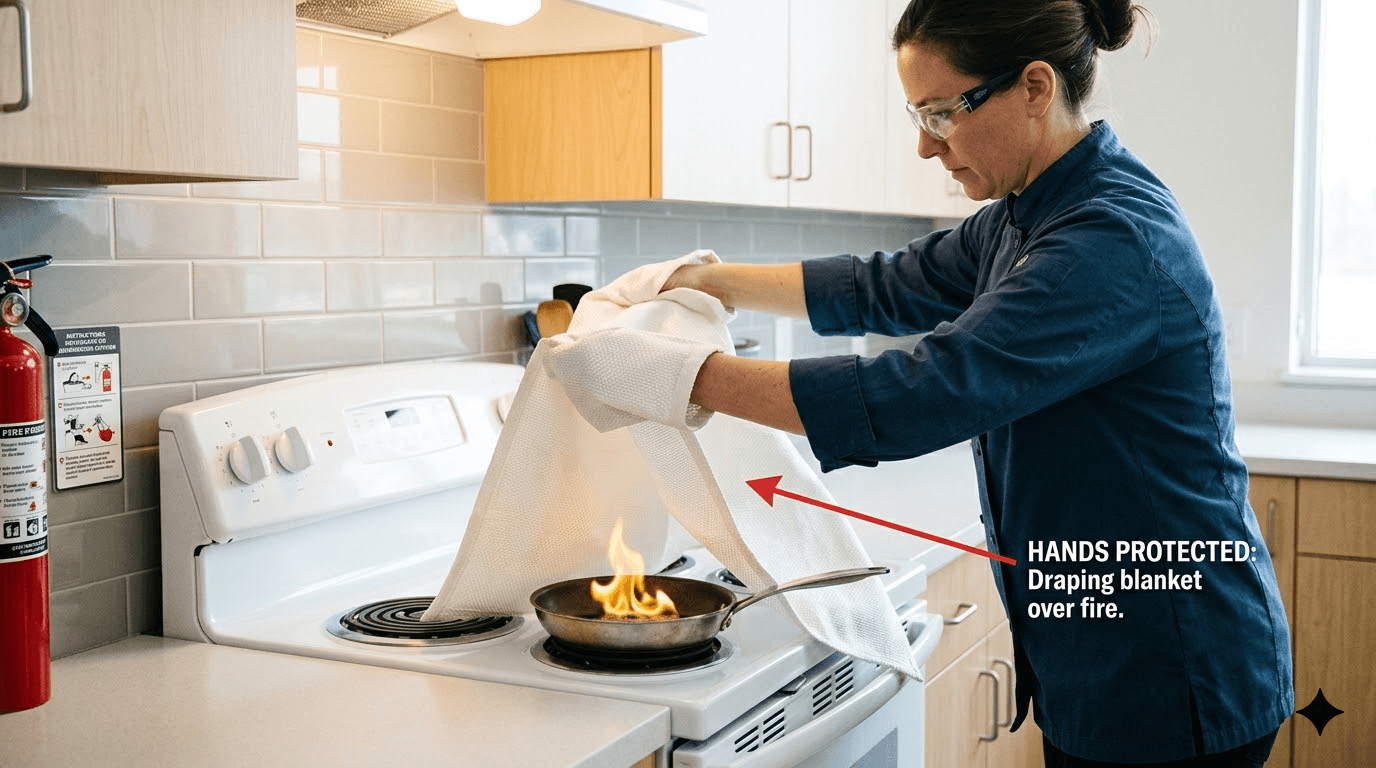
To use a fire blanket, first check that the label and instructions for the specific blanket in your hands permit the intended use. For a small, contained pan fire, the general sequence is to pull the tabs, shield your hands, cover the pan, and leave the blanket in place. Turn off the heat only if you can do so safely. If the instructions are missing, the fire is spreading, or you cannot act safely, leave and call 911 from outside [1].
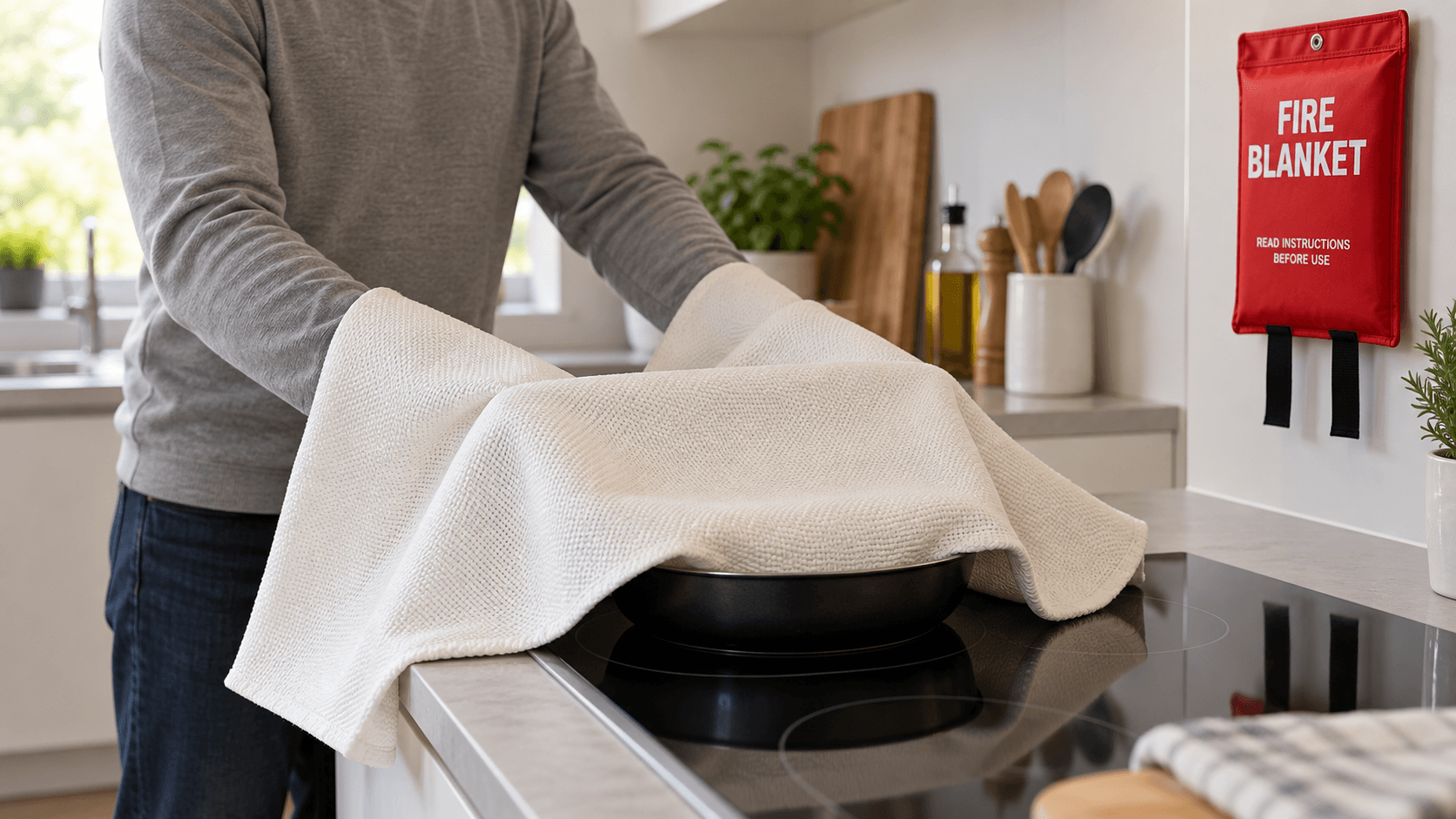
First, confirm that this is the right equipment
The label matters even when an item is described as a fiberglass fire blanket: fabric composition alone does not establish its intended use. Look for a legible product label and instructions identifying the intended fire situation, how to remove and hold the blanket, and what to do after use. Keep the blanket accessible without having to reach over the stove. If a site uses several blanket types, make sure the selected unit’s instructions match the task; a welding blanket or fabric roll is not automatically an emergency cooking-fire blanket.
For a small grease fire in a pan, a blanket is not the only possible response. Sliding a lid over the pan, turning off the burner, leaving the pan in place, and keeping it covered until cool is another recommended response [2].
General steps for a labeled pan-fire blanket
Use the table only for a blanket labeled for this purpose. These general actions are adapted from fire-service guidance [3]; the product instructions and local fire-safety procedures take priority.
| Stage | General action | Check on the actual product |
|---|---|---|
| Before approaching | Confirm the fire is small and contained, the exit remains clear, and you can act safely. | Is this blanket labeled for the fire situation? |
| Remove and hold | Pull the release tabs and hold the blanket so your hands are protected. | Do its label and pouch show the same release and grip method? |
| Cover | Approach carefully and place the blanket over the pan without moving the pan. | Does the manufacturer’s diagram specify a different deployment method? |
| After covering | Leave it in place; turn off the heat only if you can do so safely. Do not lift it to check the fire. | What cooling time, emergency call, and post-use actions does the manufacturer require? |
If the fire spreads beyond the pan, smoke or heat blocks a safe approach, or you are unsure what to do, stop trying to control it. Alert others, get out, stay out, and call 911 from outside. Do not carry a burning pan or pour water onto burning cooking oil [1].
After the incident
Do not assume a blanket can be folded away and used again. Some emergency fire blankets are single-use; BS EN 1869:2019 covers non-reusable blankets [4]. That does not establish how an unverified product should be handled. Follow the selected blanket’s instructions and your site’s fire-safety procedure for cooling, replacement, and incident reporting.
Check before specifying a blanket for a business site
Use this short check when selecting equipment or asking a supplier for documentation:
- State the intended fire situation and where the blanket will be installed.
- Identify the exact model, not just the material name or nominal size.
- Obtain that model’s use instructions, warnings, limitations, and post-use directions.
- Ask which test report or standard applies to that exact model and intended use; do not infer compliance from a standard mentioned on a website.
- Include the destination market, required labeling language, and any site-specific fire-safety requirements.
If you are comparing B2B product options, see our Fiberglass Fire Blanket page and send our team your intended application, target market, size, quantity, and required documentation. We can discuss the relevant configuration; do not place any model into service until its own instructions and suitability for the intended use have been verified.