
- November 11, 2026
- Posted by: wellcoindustries
- Category: Fiberglass fire blanket
A kitchen fire blanket is an option for a small, contained pan fire only when its instructions cover that use and a person can act safely. [1, 2] A portable extinguisher releases an agent selected for the fire hazard. In the U.S. classification system, Class K addresses cooking oils and fats in cooking appliances. [2] Commercial kitchens must assess that protection together with their installed suppression system and staff procedures. [3, 5]
If flames are spreading, smoke or heat makes approach unsafe, the exit is threatened, or you are unsure what to do, alert others and get out. Call 911 from a safe location. Trying another tool must never delay escape. [2]
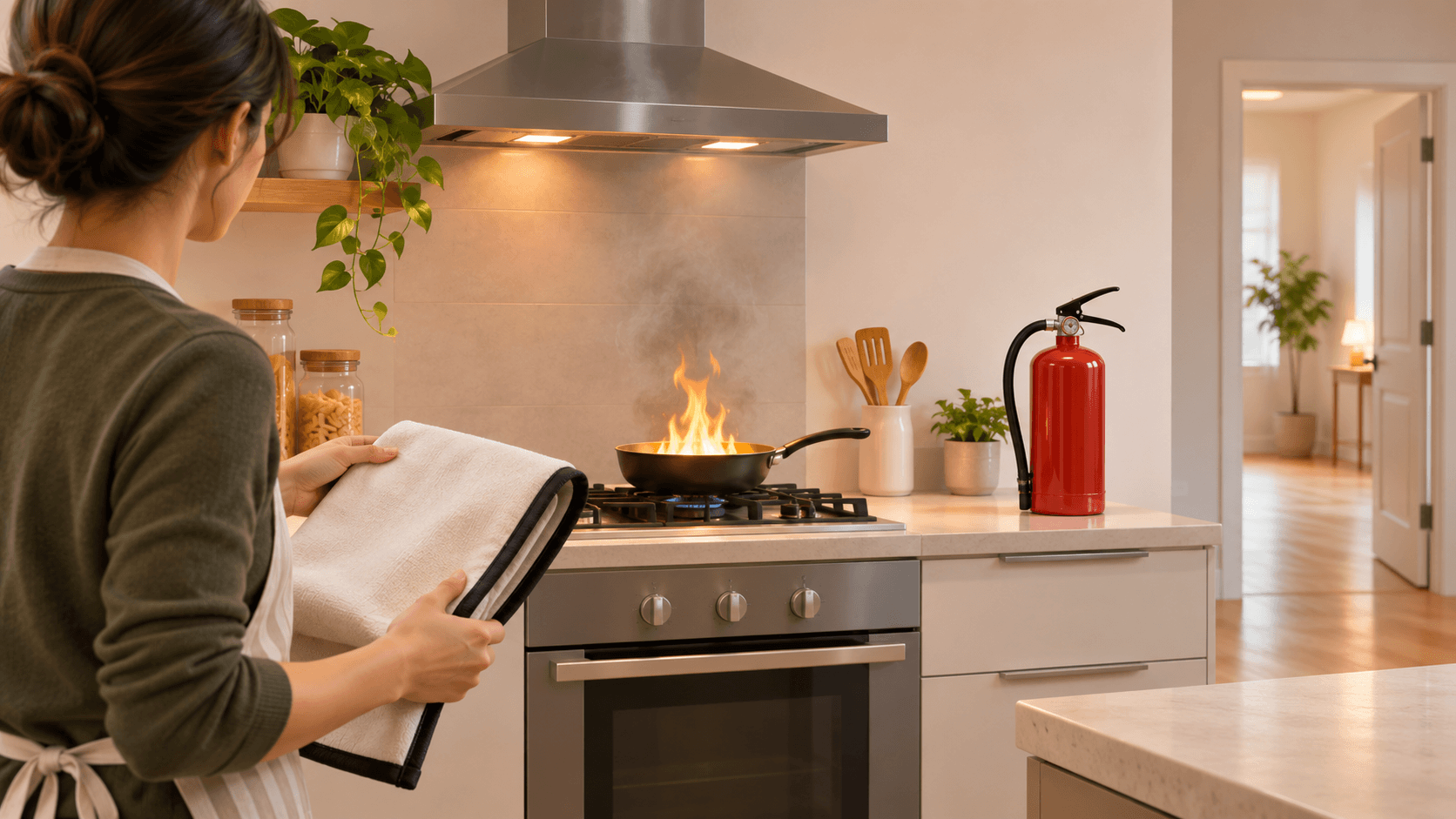
Home kitchens and small pan fires
For a small fire confined to a home cooking pan, U.S. Fire Administration guidance includes covering it with a nearby pan lid or baking sheet. [4] Consider this only if the lid or sheet is within reach and you can cover the pan safely with a clear way out. Otherwise, leave and call 911 from a safe location. [2] Never add water to burning cooking oil or carry a burning pan. [3]
For a blanket, establish in advance that the finished product’s instructions cover the intended small cooking fire. The user needs to understand those instructions, have safe access to the equipment and retain a clear way out. [1, 2] Fire and Rescue NSW, an Australian fire service, advises following the manufacturer’s instructions, leaving the blanket in place and turning off the heat only when safe. [1]
Local requirements and the selected product’s instructions govern equipment use.
Fire blanket and extinguisher differences
| Selection point | Kitchen fire blanket | Portable fire extinguisher |
|---|---|---|
| Function | Covers a small fire within the finished blanket’s stated application. | Discharges an extinguishing agent for the fire types on its label. |
| Basis for selection | A finished blanket documented for the intended small cooking-fire application. | A classification and extinguishing agent matched to the anticipated hazard. |
| Main application limit | The actual blanket must suit the fire and allow safe coverage. | The agent, rating and operating conditions must suit the fire. A household label alone gives no fire classification. |
| Commercial cooking equipment | Purchasing a blanket does not satisfy an applicable Class K or fixed-suppression requirement. | Assess Class K protection with the installed suppression system and staff procedures. |
During a fire, safe access, a clear escape route and the applicable evacuation procedure determine whether any initial response is possible. [1–3, 5]
Commercial kitchens, Class K and fixed suppression
Class K extinguishers address cooking oils and fats in the U.S. classification system. A multipurpose ABC label does not include a Class K rating. Select equipment for the actual cooking hazard and the applicable local requirements. [2]
OSHA’s restaurant guidance places extinguisher use within a trained, safe response that includes sounding the alarm, summoning the fire department and activating the fixed suppression system first. New York City’s FDNY restaurant guide likewise describes Class K use after activation of the built-in hood system. Staff need to know their installed system’s procedure and their assigned role before an incident. [3, 5]
For a restaurant, café or food truck, have the responsible safety personnel or local fire authority establish the required combination of fixed suppression, portable equipment and training. Purchasing a fire blanket does not satisfy a requirement for a Class K extinguisher or a fixed cooking-fire suppression system. Confirm the required equipment with the authority responsible for the site. [3, 5]
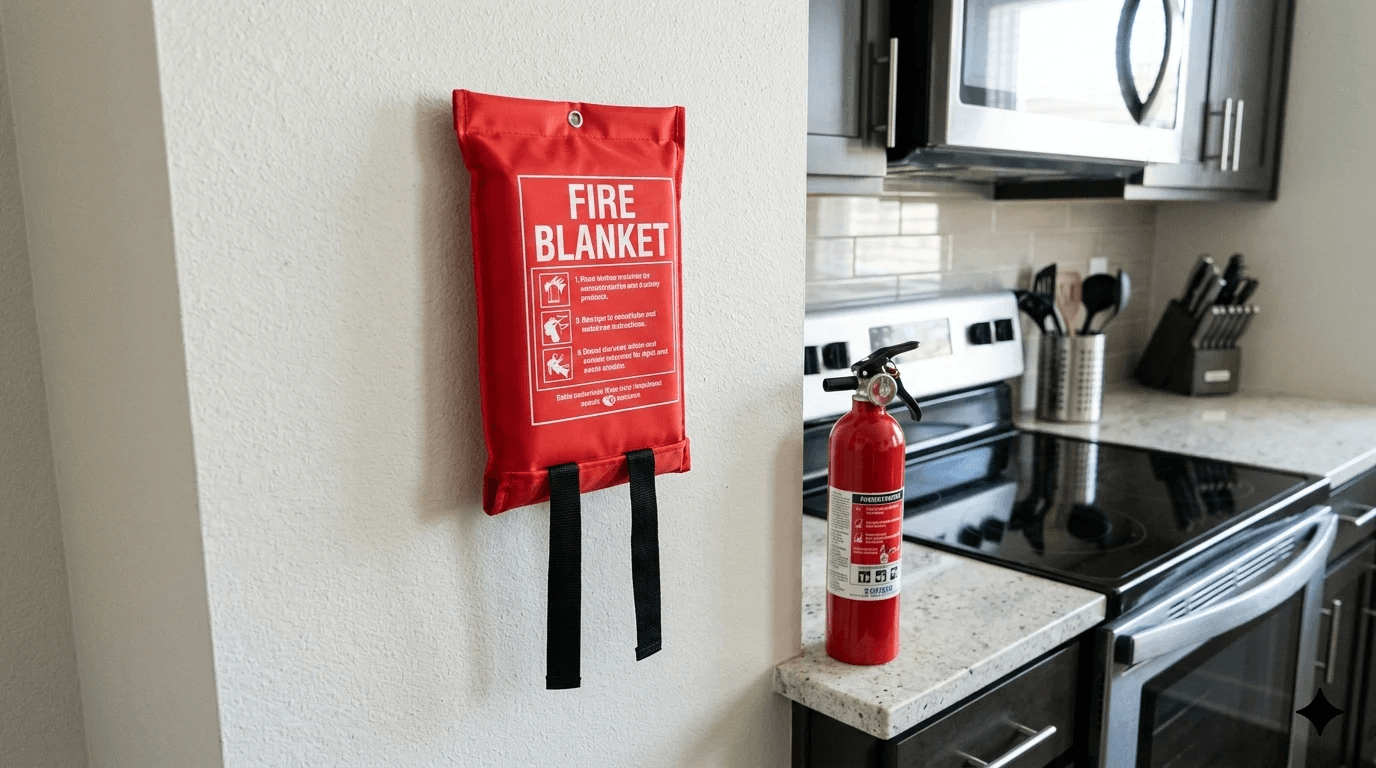
What to check before buying
“Fiberglass” identifies a material. A cooking-fire claim requires evidence about the finished blanket. ASTM F1989-05(2020) covers cooking fire suppression blankets, but a standard number on a listing requires supporting documentation for the offered model. [6]
- Kitchen and appliance. Identify the domestic pan or commercial cooking equipment and the intended application.
- Product and documents. Compare the model, construction and size with the supporting documentation. Check whether a report concerns a textile property or finished-blanket performance, and read its application limits.
- Site requirements. Record the existing suppression system and the party responsible for accepting the equipment.
- Ongoing care. Obtain the applicable instructions for inspection, servicing or replacement and assign responsibility for keeping equipment ready.
For a business inquiry, view our fiberglass fire blanket models. Send the intended application, quantity and documentation requirements so our team can discuss your request.
Sources
- Fire and Rescue NSW — Fire safety equipment, fire-blanket guidance
- U.S. Fire Administration — Choosing and Using Fire Extinguishers
- OSHA — Young Worker Safety in Restaurants, Cooking, Fire hazards
- U.S. Fire Administration — Cooking Fire Safety
- FDNY — Restaurant Fire Safety Guide, Portable Fire Extinguishers
- ASTM — F1989-05(2020), Standard Specification for Cooking Fire Suppression Blankets, published scope