
- November 19, 2025
- Posted by: wellcoindustries
- Categories: Burlap, Erosion Control
Introduction
For landscaping contractors and nursery managers, winter is a season of high stakes. A single severe frost event or a week of drying winds can decimate inventory, turning potential spring revenue into compost. The difference between a surviving crop and significant financial loss often comes down to the quality of protection used. While synthetic covers have their place, burlap for wrapping plants remains the industry standard for a reason: it offers the perfect balance of protection and breathability.
At Wellco Industries, we understand that agricultural textiles are not just commodities; they are insurance for your biological assets. As a global supplier of erosion control materials and agricultural inputs, we see firsthand how the right materials, applied correctly, can drastically reduce winter burn and transplant shock. This guide serves as a standard operating procedure (SOP) for professionals looking to maximize plant survival rates through effective burlap application.
Why Professional-Grade Burlap is Critical for Plant Health
When managing large-scale landscapes or nursery stock, the choice of material is the first step in risk management. You might ask why we don’t simply use plastic, which is cheaper and impermeable. The answer lies in plant physiology.
Breathability vs. Trapped Moisture
Plants continue to respire even during dormancy. Plastic covers trap moisture, creating a greenhouse effect that can lead to rapid temperature spikes during sunny winter days. This causes plants to break dormancy prematurely, only to freeze when temperatures drop at night. Worse, the trapped humidity is a breeding ground for fungal diseases and rot.
Natural jute burlap allows air to circulate freely. It breaks the wind, which is the primary cause of desiccation (drying out), while allowing excess heat and moisture to escape.
Thermal Insulation & Wind Protection
It isn’t just the cold that kills hardy shrubs; it is the wind. Desiccation occurs when the wind draws moisture from the needles of evergreens faster than the frozen root system can replenish it. Burlap acts as a windbreak, reducing wind velocity at the foliage surface.
Sustainability Note: Unlike synthetic fabrics that linger in landfills for centuries, natural jute burlap is 100% biodegradable. Untreated burlap typically degrades within 1-2 seasons when in contact with soil, making it an excellent choice for municipal contracts requiring eco-friendly inputs.
Choosing the Right Specifications for Your Project
Not all burlap is created equal. For purchasing managers and distributors, understanding the specifications is key to ordering the right inventory for the specific vegetation being protected.
Weight and Density Guide
Burlap is typically measured in ounces per square yard. Choosing the wrong weight can either lead to insufficient protection or crushed foliage.
| Target Plant Species | Recommended Weight | Rationale |
| Boxwoods & Yews | 7oz (Medium Weave) | These hardy shrubs need wind protection but maximum airflow to prevent fungal issues inside the canopy. |
| Arborvitae & Junipers | 10oz (Heavy Weave) | These tall, vertical growers are prone to windburn. The denser weave blocks more wind and resists tearing in storms. |
| Rhododendrons & Azaleas | 10oz + Frame | These broadleaf evergreens are highly sensitive. Heavy weight is needed for insulation, but must be supported by a frame. |
| Deciduous Tree Trunks | Wrap Tape / 7oz Strip | Used to prevent sunscald (frost cracking) on young bark, particularly Maples and Fruit trees. |
Treated vs. Untreated Burlap
Plain (Untreated): Ideal for food crops or short-term transplanting. It is safe for direct contact with edible plants.
Treated (Rot-Resistant): For winter protection, treated burlap (often copper-treated) is a better investment. It resists mold and rot caused by snow melt and can often be reused for a second season.
Safety Advisory: When handling treated burlap, crews should wear gloves. While the treatments are generally safe for plants, they can irritate skin during prolonged handling.
Form Factors: Rolls vs. Squares
Bulk Rolls: Best for wrapping rows of hedging or constructing wind barriers. It minimizes waste as crews can cut exactly what they need.
Pre-cut Squares: Essential for root balling operations (B&B) to maintain speed and consistency on the production line.
Step-by-Step: The Professional Wrapping Protocol
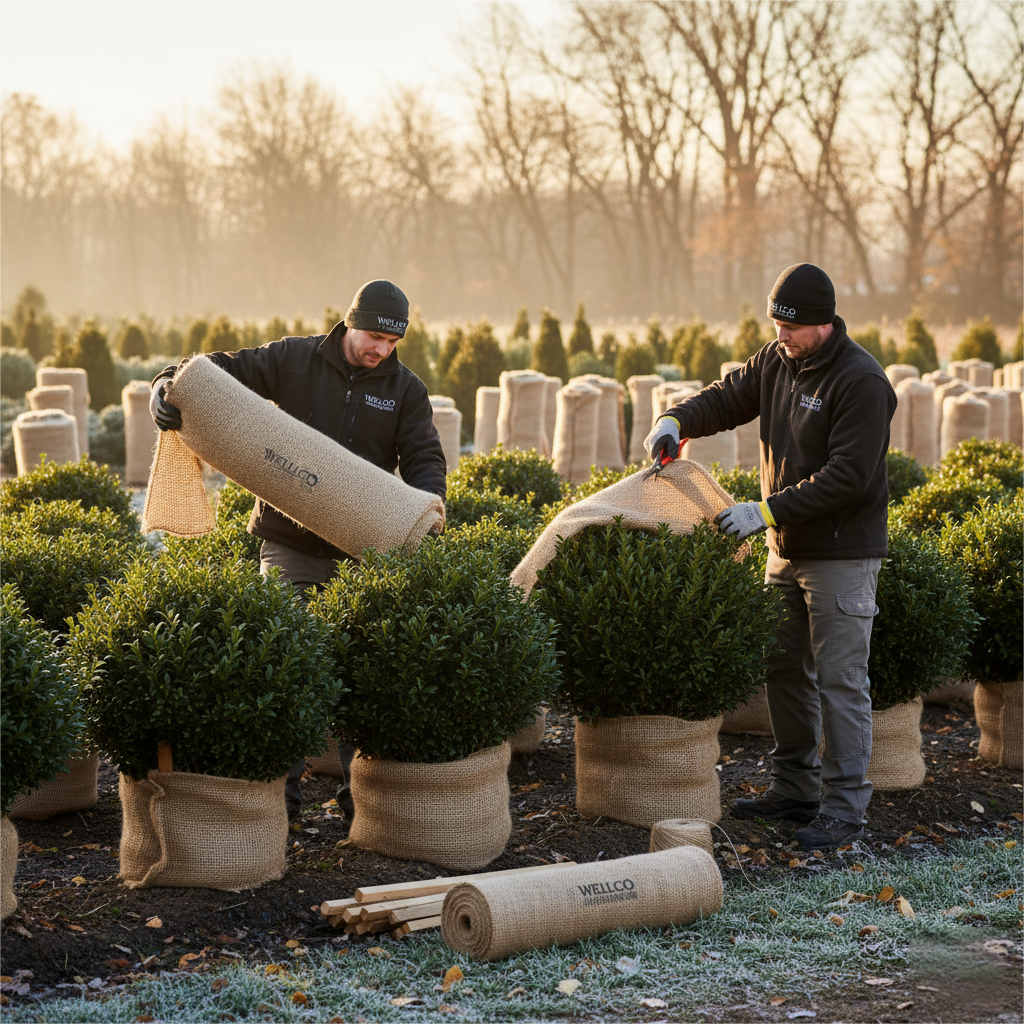
To get the full benefit of burlap for wrapping plants, application technique is just as important as material quality. Here is a field-tested protocol for your crews.
1. Structural Preparation
For hardy, rigid shrubs, you can often wrap directly against the foliage. However, for delicate ornamentals or areas with heavy snowfall, direct wrapping can result in crushed branches.
The Frame Method: Install three or four wooden stakes around the plant, driving them firmly into the ground before the frost sets in. The stakes should be slightly taller than the plant. This creates a frame to wrap the burlap around, preventing snow load from pressing on the branches.
2. Application Techniques
The goal is to shed water, not catch it.
The Bottom-Up Spiral: Start wrapping from the base of the plant (or stakes) and work your way up. Overlapping the layers like shingles ensures that rain and melting snow run off the outside of the fabric rather than channeling inside.
Tension Control: The wrap should be taut enough to resist flapping in the wind (abrasion damage), but not so tight that it compresses the foliage.
Field Note (Pro-Tip): Managing the Cut
Cutting burlap in the field can get messy. Standard utility knives often drag and fray the jute fibers, creating dust and loose ends that unravel. Equip your crews with micro-serrated shears or dedicated fabric scissors. This ensures a clean cut, reduces material waste, and keeps the roll tight for the next application.
3. Securing the Wrap
Avoid using wire or abrasive ties that can cut into the bark.
Fastening: Use natural jute twine or pinning nails.
The Top: Do not completely seal the top if possible; leave a small opening (“chimney”) for heat to escape. If utilizing the frame method, staple the burlap securely to the wooden stakes.
Common Application Mistakes
Even seasoned crews can make mistakes when rushed. Here are three common errors that lead to plant failure.
Wrapping Too Early: Applying protection before the plant has gone fully dormant (usually after the first hard frost) can trap ground heat and encourage mold growth. Wait until the plant has hardened off.
Soil Contact Wicking: If the burlap drapes onto the soil and stays wet, it can act like a wick, drawing moisture up the fabric and keeping the lower foliage constantly damp. This leads to rot. Keep the bottom edge slightly off the ground.
The “Lollipop” Effect: Tying burlap tightly only around the foliage while leaving the trunk exposed can be problematic for young trees with thin bark. Sunscald on the trunk is a real danger; ensure the trunk is wrapped or guarded as well.
Procurement & Logistics: Sourcing for Scale
For distributors and large-scale contractors, the supply chain is the backbone of operations. Relying on spot-market purchases often leads to inconsistent quality—burlap that is too loose, smells of chemicals, or tears easily.
Wellco Industries operates as a vertically integrated supplier. We don’t just move product; we manage the material lifecycle.
Supply Chain Reliability: We understand the pain of seasonal “stock-outs.” Our integrated approach allows us to forecast and hold inventory for our partners, ensuring you have the material when the frost hits, not two weeks later.
One-Stop Shopping: Our product lines range from erosion control materials to household and agricultural inputs. This allows distributors to consolidate shipments (e.g., mixing burlap rolls with fiberglass stakes), reducing freight costs and administrative overhead.
Quality Consistency: We ensure our bulk rolls meet strict weight and weave standards, so you don’t face rejections from your end-clients due to “see-through” fabric.
Conclusion
Using burlap for wrapping plants is a proven, professional method for mitigating winter risks. It requires the right material selection—balancing weight (7oz vs 10oz), treatment, and form factor—and a disciplined application process.
For the professional, this isn’t just about gardening; it is about asset protection. By following these protocols, you reduce replacement costs and maintain a reputation for quality. Whether you are a purchasing manager sourcing for a distribution network or a contractor preparing for the season, ensure your supply chain is as resilient as the plants you protect.
Ready to secure your winter inventory?
Contact Wellco Industries today to discuss bulk orders, custom specifications, and how our mixed-load capabilities can streamline your purchasing this season.
Frequently Asked Questions
Q: Can I reuse treated burlap for multiple seasons?
A: Yes, high-quality treated burlap is designed to resist rot and can often last 2–3 seasons if handled correctly. To maximize lifespan, dry the burlap completely after removing it in spring and store it in a dry, dark place away from rodents.
Q: Is 7oz or 10oz burlap better for general nursery stock?
A: It depends on your climate and plant variety. 7oz is generally sufficient for mild to moderate winter zones and allows better airflow. However, for zones with extreme wind chill or for protecting high-value conifers, the denser 10oz fabric is the safer investment.
Q: Does Wellco Industries offer custom roll sizes for private labeling?
A: Yes, as a vertically integrated supplier, we cater to OEM and private label needs. We can customize roll widths, lengths, and packaging to fit your brand’s specific retail or commercial requirements.