
- January 9, 2026
- Posted by: wellcoindustries
- Category: Fiberglass fire blanket
Introduction
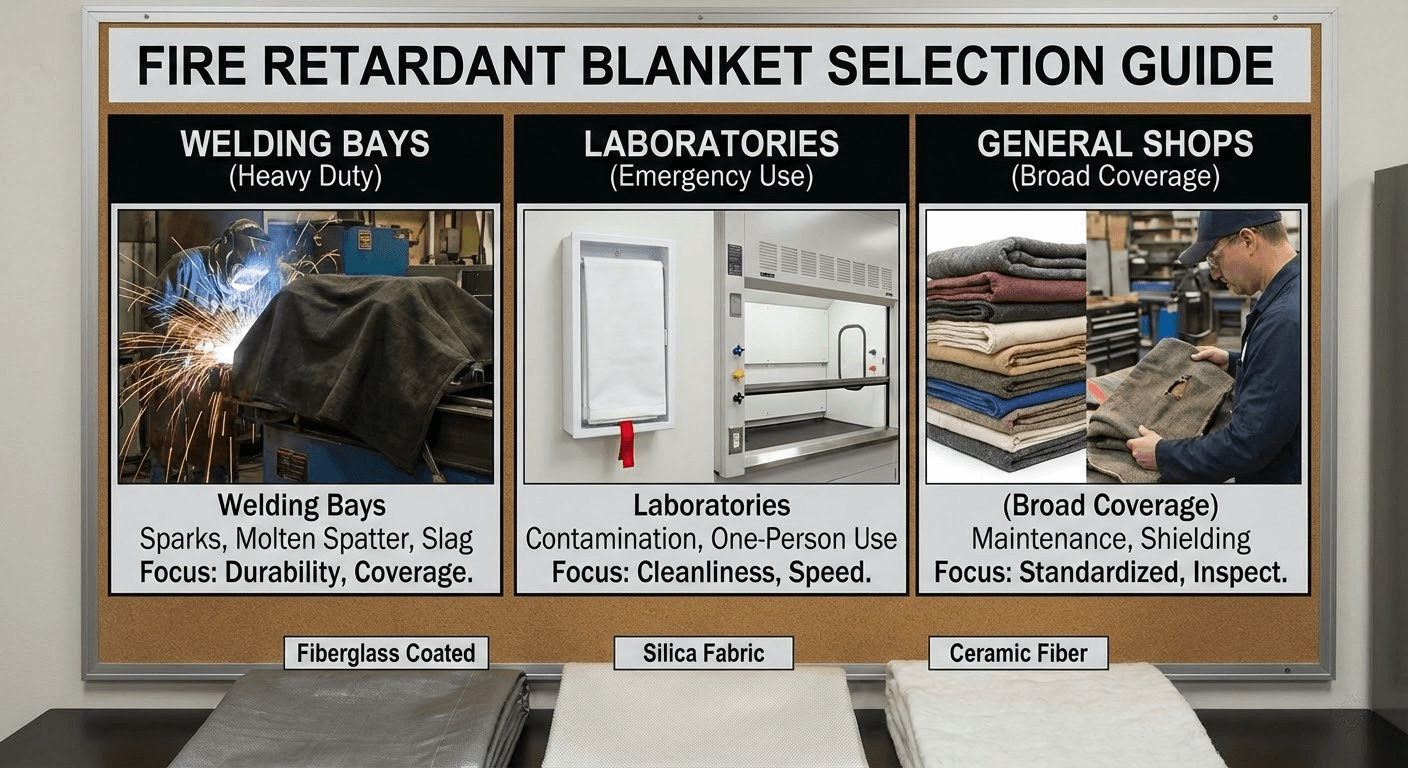
A fire retardant blanket can be a low-cost way to prevent sparks or small flare-ups from turning into a shutdown—but only if it matches the work. Welding throws molten spatter. Labs care about cleanliness and one-person emergency use. General shops want reliable coverage without paying “premium” everywhere.
One EHS manager put it bluntly: “A blanket is a barrier, not a safety plan.” (Anonymized quote)
This guide shows how to choose, place, and maintain the right blanket for welding bays, labs, and shops, plus what standards and documents purchasing teams should ask for. Wellco Industries supports professional buyers with a one-stop supply model that includes fiberglass composites and practical protection products—useful when you want consistent specs, labeling, and vendor accountability across sites.
Fire retardant blanket basics you can spec (not guess)
Buyers get misled by “temperature ratings.” A more reliable approach is to spec by exposure type:
- Sparks (brief, low mass)
- Molten spatter/slag (sticky, high damage potential)
- Radiant heat (sustained near a heat source)
- Contact heat (direct touch against hot parts)
Materials you’ll typically see:
- Fiberglass (often coated): common for sparks and moderate hot-work shielding.
- Silica fabrics: stronger for higher-heat exposure and heavier-duty hot work.
- Ceramic fiber fabrics: high thermal resistance, but handling/fiber sensitivity can matter in some environments.
Coatings change real-life performance. For hot work textiles, categories such as welding blankets (horizontal use) are often described as protecting machinery and preventing ignition of combustibles with light-to-moderate exposure to sparks, heat, and molten slag.
Quote: “The coating is what you wear out first—dragging, folding, and spatter impact.” (Anonymized maintenance supervisor)
Fire retardant blanket for welding: sparks, spatter, and molten metal
Welding is where “good enough” fails, because molten metal can stick and burn through weaker constructions.
Start with duty level
- Light duty: occasional tack welds, low spatter
- Medium duty: regular welding, frequent spatter
- Heavy duty: cutting + grinding combos, overhead work, large slag risk
Control the hot-work zone (the stat that matters)
OSHA’s welding/cutting requirements include housekeeping and combustible-control precautions within a 35 ft (10.7 m) radius in certain situations.
Placement that prevents incidents
- Cover the fall zone (floors) and the “bounce paths” (walls, behind equipment).
- Overlap edges and eliminate gaps where sparks can roll underneath.
- Anchor with clamps/hooks/grommets; treat overhead work as higher risk.
Mini case (anonymized): a crew used a light-duty blanket repeatedly for overhead welds. Thin spots formed at fold lines; one gap let spatter reach debris behind a machine. The fix was heavier-duty construction + better anchoring + a simple daily inspection, not a different brand.
Quote: “Most blanket ‘failures’ are really coverage failures.” (Anonymized contractor)
Fire retardant blanket for labs: contamination, cleanup, and the right category
Labs often need an emergency fire blanket that deploys fast and stores cleanly—not a hot-work barrier that lives on the floor.
Statistic: BS EN 1869:2019 covers fire blankets that are not reusable and intended for use by one person, including requirements for controlling small fires and limiting electric-shock risk in unintended use.
What to put in a lab spec:
- Smooth/cleanable surface and controlled storage (pouch/case)
- Clear “where it’s used” scope (bench incidents / clothing fires) and training cadence
- Traceability (batch/lot labeling) if QA requires it
- Keep it away from chemical contamination and oily residues
Quote: “If it sheds fibers or traps residue, it becomes a new hazard.” (Anonymized lab safety coordinator)
Fire retardant blanket for shops: broad coverage without overspending
Shops usually need repeatable protection for maintenance, occasional hot work, and shielding equipment or inventory.
A practical purchasing pattern:
- Standardize a mid-duty blanket per active bay or crew
- Keep a few oversized blankets for unusual jobs and mobile teams
- Define downgrade/retire rules so worn blankets don’t drift into high-risk use
Inspection triggers:
- Burn-through, pinholes, stiff/brittle areas
- Coating flaking, frayed edges, damaged grommets
- Oil/solvent contamination (treat as unsafe for hot work)
Quote: “I don’t need top spec everywhere—I need the right spec where it counts.” (Anonymized purchasing manager)
Standards, documentation, and “don’t get tricked by the spec sheet”
What standards apply to which use
For hot-work textiles (pads/blankets/curtains), ANSI/FM Approvals 4950 states approval requirements for welding pads, welding blankets, and welding curtains used in hot work operations.
Safety programs for hot work commonly reference NFPA 51B for provisions intended to prevent loss from fire/explosion related to hot work projects.
For one-person, non-reusable emergency fire blankets, EN 1869 is the relevant category.
Safety and limitations (put this in your SOP)
Do not rely on a blanket when:
- the fire is already developed (use proper response + extinguisher/system)
- the blanket is oil-soaked or contaminated with unknown chemicals
- you can’t prevent gaps, shifting, or tearing against sharp edges
OSHA’s fire-watch guidance flags added precautions when combustibles are within 35 ft and can’t be removed or properly shielded.
RFQ checklist (procurement-ready)
- Application: welding/cutting/grinding vs lab emergency vs general shielding
- Exposure: sparks vs molten spatter/slag vs radiant/contact heat
- Build: material, coating, edge binding, grommets/attachments, size + quantity
- Documentation: test reports/compliance statement, labeling, lot traceability, packaging, OEM/private label needs
Quote: “If a supplier can’t name the standard and show the report, you’re buying marketing.” (Anonymized buyer)
Conclusion
Choosing a fire retardant blanket gets simpler when you spec by exposure: spatter-focused durability for welding, clean emergency category for labs, and standardized kits + inspection discipline for shops.
A final reminder from a fire-watch trainer: “Prevention is mostly area control—blankets are just one tool.” (Anonymized quote)
CTA: Convert the RFQ checklist above into a one-page internal template. It speeds approvals, improves quote comparability, and cuts down on “wrong blanket” purchases.
Frequently Asked Questions
Not always. Welding blankets are hot-work barriers and often reference standards like ANSI/FM 4950, while many emergency fire blankets for one-person use fall under EN 1869 and are not reusable.
Construction and intended use matter more than a single number. Ask whether it’s designed for horizontal “blanket” use and what exposure it’s meant to handle (sparks vs molten slag).
Retire it if you see burn-through, pinholes, severe stiffening, delaminating coating in high-risk zones, or oil/solvent contamination. Many sites downgrade worn blankets to low-risk shielding or dispose per policy.
Yes—blankets help shield surfaces, but hot-work controls still emphasize removing or protecting combustibles within the work zone, including the widely referenced 35 ft concept in OSHA guidance.