
- May 29, 2026
- Posted by: wellcoindustries
- Categories: Burlap, Erosion Control
Introduction
Winter plant damage often starts before the coldest night of the season. In commercial landscapes, nurseries, and exposed residential projects, shrubs and young trees can decline because winter wind pulls moisture from foliage, freeze-thaw cycles stress roots, and poorly secured covers rub against branches for weeks.
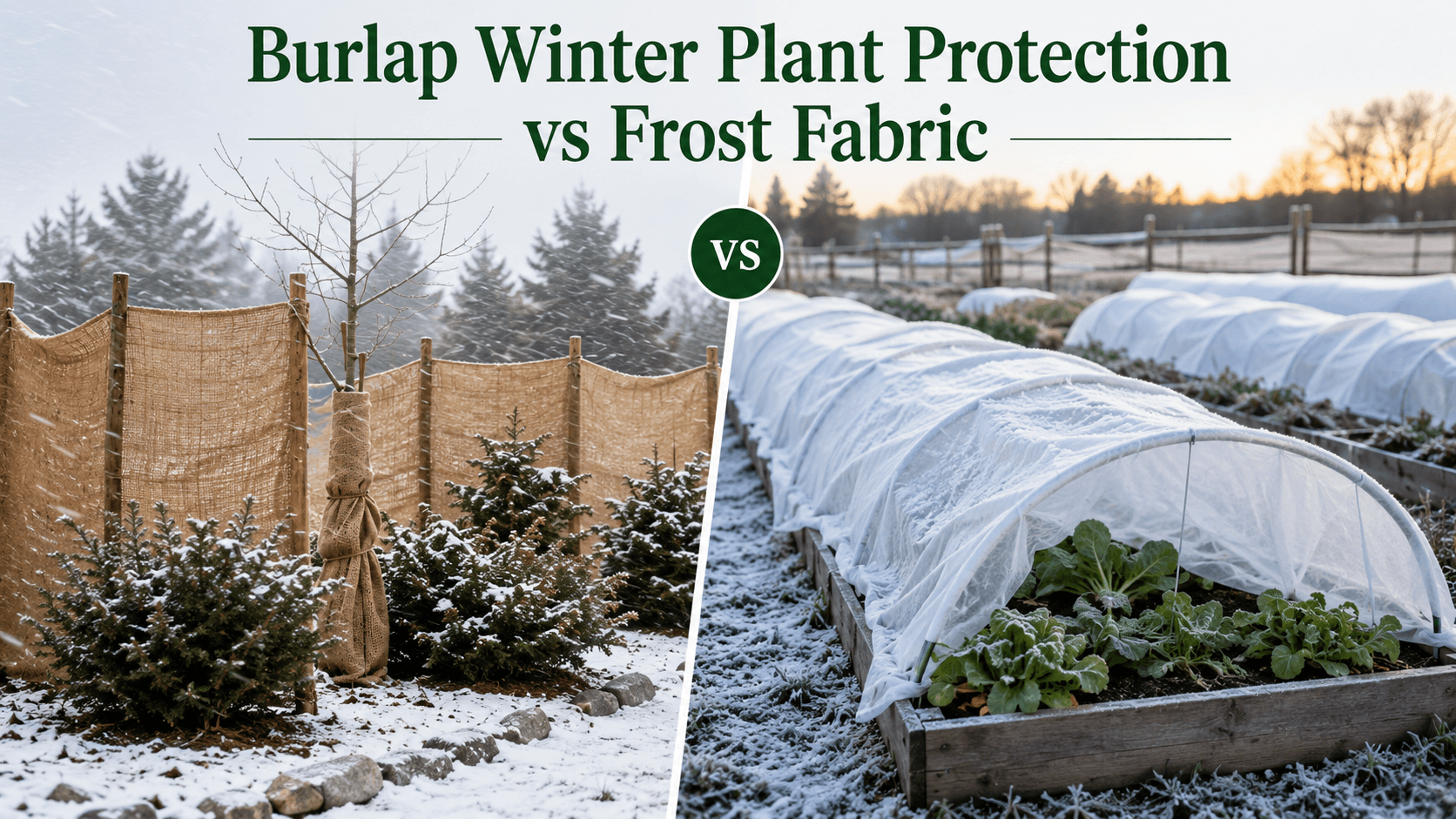
This article compares burlap winter plant protection vs frost fabric so you can choose the right material by plant type, winter risk, installation method, and buying requirements. Burlap is a breathable woven jute material used for windbreaks, shrub screens, root ball protection, erosion control, and seasonal plant shielding. Frost fabric is usually a lightweight synthetic or nonwoven cover designed to reduce frost contact and hold a small layer of warmer air around plants.
For buyers managing repeat orders, the real question is practical: which product reduces plant loss, crew callbacks, and wasted material? Wellco Industries supports agriculture, garden, burlap, jute netting, plant cover, and related landscape protection categories, making this comparison useful for contractors and procurement teams sourcing across multiple winter applications.
Burlap Winter Plant Protection vs Frost Fabric: Core Differences
Before comparing price, start with function. Burlap and frost fabric solve different winter problems, and using the wrong one can create extra labor, weak coverage, and avoidable plant stress.
What each material is designed to do
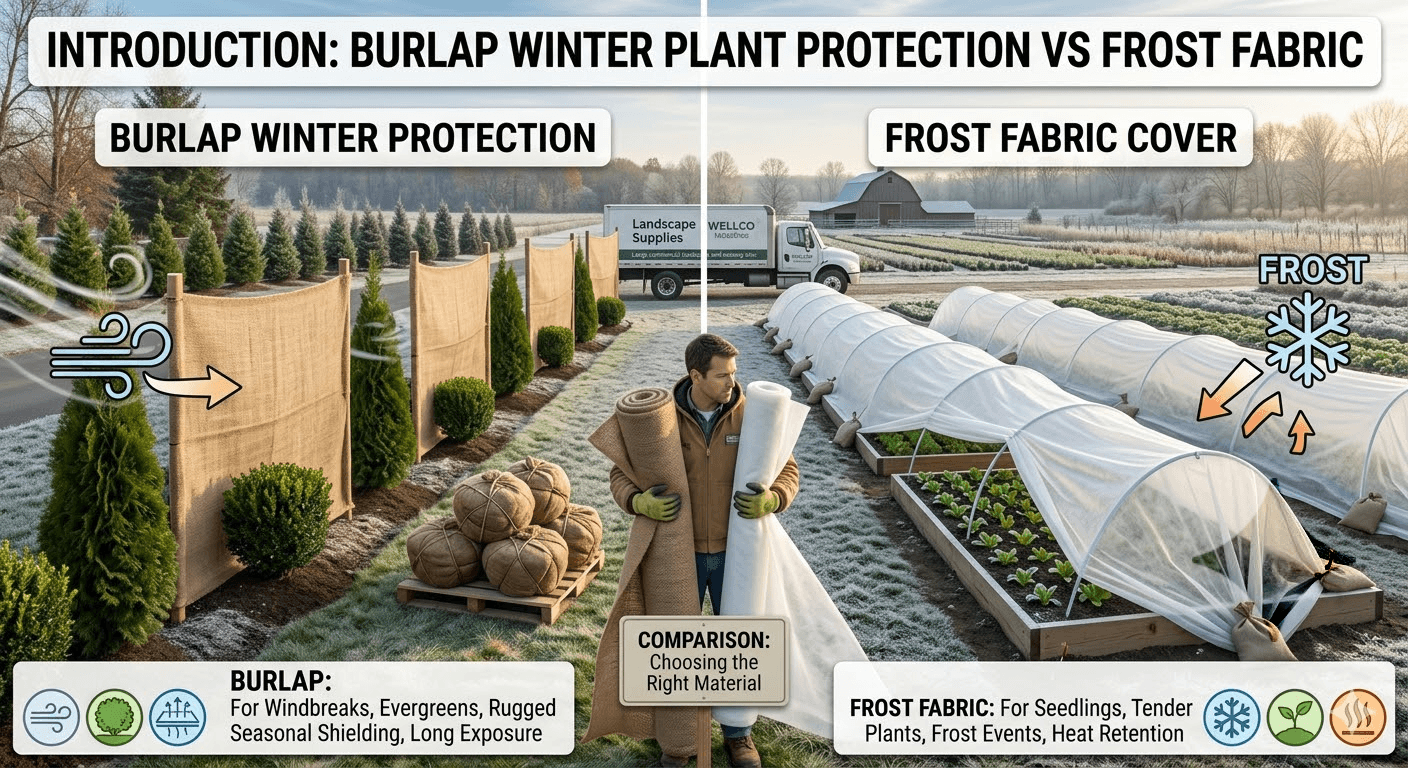
Burlap is best when the main threat is drying wind, road salt exposure, abrasion, or physical stress around shrubs and young trees. It blocks direct wind while still allowing airflow, which helps reduce moisture buildup around foliage during long winter exposure.
Frost fabric is best when the main threat is a short frost event on tender plants, seedlings, vegetable beds, nursery trays, or low-growing crops. It works by trapping ground heat and reducing direct frost settlement on leaves.
The table below compares the performance characteristics buyers should review before ordering:
| Factor | Burlap | Frost Fabric | Buyer Takeaway |
|---|---|---|---|
| Material composition | Natural woven jute | Synthetic or nonwoven fabric | Burlap fits rugged seasonal shielding; frost fabric fits lightweight crop coverage |
| Breathability | High | Moderate to high, depending on weight | Burlap is safer for longer exposure around woody plants |
| Wind protection | Strong when installed on stakes or frames | Limited unless tightly anchored | Burlap suits exposed landscapes and roadside plantings |
| Frost insulation | Low to moderate | Moderate, depending on fabric weight | Frost fabric is stronger for overnight frost events |
| Best use cases | Shrubs, evergreens, root balls, wind screens | Seedlings, beds, tender plants, row crops | Match the product to the actual winter risk |
| Reusability | Seasonal reuse possible if kept dry | Reuse possible if kept clean and undamaged | Storage discipline affects repeat purchase cost |
| Installation accessories | Stakes, twine, staples, clips | Hoops, pins, sandbags, clips | Accessories belong in the project budget |
For bulk buyers, this comparison matters because installed cost includes labor, waste, overlaps, storage, and replacement rate. A low-cost roll that tears in wind or traps moisture against plants can cost more after crew rework.
When Should You Choose Burlap for Winter Plant Protection?
Once you know the risk is wind, exposure, or physical shielding, burlap becomes the stronger option. It performs especially well around plants that need airflow through winter.
Best applications for burlap in winter landscapes
Use burlap around evergreens, boxwood, arborvitae, young trees, transplanted nursery stock, and root balls. In exposed sites, crews often install burlap as a screen around the plant rather than wrapping it tightly against the foliage.
That small installation choice matters. A framed burlap barrier can reduce direct wind contact while leaving several inches of air space around the plant, which lowers the risk of trapped moisture and leaf abrasion.
On exposed commercial sites near parking lots or road edges, crews often build three-sided burlap screens around boxwood or arborvitae to reduce windburn while keeping airflow open. Roll widths in the 3-foot to 6-foot range usually give crews enough flexibility for shrub screens, tree protection, and temporary barriers.
What plants benefit most from burlap winter plant protection?
Burlap works best for shrubs, evergreens, young trees, transplanted nursery stock, and plants exposed to drying winter winds. It helps reduce moisture loss and physical stress while allowing airflow, making it useful for landscapes where windburn and desiccation are bigger risks than short overnight frost.
Broadleaf evergreens are especially vulnerable because they keep foliage during winter and continue losing moisture through leaves. If frozen soil limits water uptake, winter wind can dry leaves faster than the roots can replace moisture.
Burlap also works well for root balls during transport and staging. Nursery operators and landscape crews use it because it holds soil together, handles rough movement better than many lightweight covers, and stays breathable during short-term handling.
Key burlap specifications buyers should review
For procurement, review roll width, roll length, weave density, fabric weight, packaging, and whether the burlap is treated or untreated. Heavier burlap provides better shielding, while a looser weave improves airflow.
Untreated burlap is commonly preferred for plant and soil contact because it fits biodegradable use cases. Treated burlap may suit some industrial, storage, or specialty applications, so buyers should confirm suitability before placing it against living plants.
A practical buying rule: allow 6 to 12 inches of overlap at seams and order extra material for cuts, staking, and field waste. On larger winterization jobs, 5 to 10% extra material can prevent delays when crews encounter irregular shrub shapes or wider-than-expected planting beds.
When Should You Choose Frost Fabric Instead?
Durable winter screening matters, yet some jobs need temperature buffering more than wind control. That is where frost fabric usually performs better.
Best applications for frost fabric
Choose frost fabric for low crops, seedlings, raised beds, nursery trays, annuals, and tender plants during short frost windows. Growers often spread it across hoops, rows, or plant supports before cold nights, then remove or vent it when temperatures rise.
Frost fabric comes in different weights, and heavier covers generally provide more insulation while allowing less light transmission. Lightweight covers may work for mild frost, while heavier products may fit repeated cold nights, depending on the crop and site conditions.
A common field approach is to install frost fabric before sunset so the ground can release stored heat under the cover. Edges should be sealed with soil, staples, clips, sandbags, or boards because loose edges allow warm air to escape.
Is frost fabric better than burlap for freezing nights?
Frost fabric is usually better for short-term frost events because it traps a layer of warmer air around plants and reduces frost contact on leaves. Burlap is better for wind and winter exposure, while frost fabric works better when overnight temperature drops are the main threat.
Performance depends on fabric weight, plant sensitivity, soil warmth, wind, and installation quality. A cover with open edges, poor anchoring, or direct pressure on tender foliage may deliver weak protection even when the fabric itself is suitable.
For commercial growers, frost fabric performs best when supported by hoops or low frames. This creates an air gap, reduces leaf contact, and helps protect delicate stems from pressure during cold, damp nights.
Frost fabric limitations buyers should consider
Frost fabric can tear when dragged across rough ground, snagged on branches, or pulled too tightly over frames. Lightweight material also needs reliable anchoring in wind.
Long exposure creates another issue. If frost fabric stays on during warm sunny periods, heat and humidity can build under the cover, increasing disease risk and plant stress.
For repeat buyers, specify the expected use pattern before purchasing. A one-night frost cover for vegetable beds has different durability requirements than a reusable nursery cover handled by crews throughout the season.
Application Suitability by Use Case
Material choice becomes easier when you start with the jobsite problem. Wind, frost, root stress, snow load, and exposed soil all require different protection strategies.
Matching material to winter risk
A contractor protecting boxwood along a windy commercial entrance needs a different product than a grower covering seedlings for two cold nights. Standardizing this decision helps purchasing teams reduce mixed inventory and crew confusion.
The table below matches common winter applications with the material that usually fits best:
| Use Case | Recommended Material | Key Reason | Installation Note |
|---|---|---|---|
| Evergreen shrub wind protection | Burlap | Reduces drying wind while allowing airflow | Install on stakes as a screen, with air space around foliage |
| Raised vegetable bed frost protection | Frost fabric | Holds warmer air near plants during frost events | Anchor edges fully before sunset |
| Young tree root ball shielding | Burlap | Breathable and rugged for handling soil balls | Keep root ball moist and avoid long dry exposure |
| Nursery stock overwintering | Burlap or frost fabric | Depends on wind exposure vs temperature risk | Use burlap for windbreaks and frost fabric for cold snaps |
| Temporary frost event | Frost fabric | Better short-term temperature buffering | Remove or vent after temperatures rise |
| Erosion-prone winter soil cover | Burlap | Natural fiber helps shield exposed soil | Secure with staples or pins on slopes |
This table helps buyers train crews and standardize purchasing across job sites. It also reduces the common mistake of using frost fabric as a long-term wind barrier or using burlap as the only protection for tender crops during a hard frost.
Procurement takeaway for contractors and growers
For large projects, calculate more than square footage. Include overlap allowance, anchoring accessories, cutting waste, storage needs, and the number of crews installing at the same time.
If a project covers uneven shrubs, steep slopes, or mixed nursery stock, extra material matters. Ordering only the exact measured area often leads to patchwork installation and weak coverage at edges.
Installation Details That Affect Performance
Even the right material can fail when installed poorly. Winter protection depends as much on airflow, anchoring, and timing as it does on the fabric itself.
How to install burlap correctly
For shrubs and evergreens, drive stakes around the plant and attach burlap to create a wind screen. Leave several inches of air space between the burlap and foliage so branches do not rub against the fabric during storms.
Avoid tight wrapping for long periods. Tight wraps can trap moisture, bend branches, and create abrasion when wind moves the cover.
Allow 6 to 12 inches of overlap at seams, especially on exposed corners. Secure lower edges well enough to prevent wind lift, while keeping enough airflow around the plant to avoid a damp, sealed pocket.
How to install frost fabric correctly
Install frost fabric before temperatures drop sharply. For rows, beds, and nursery trays, drape the cover over hoops or supports when possible, then anchor all edges.
A grower preparing for two consecutive light frost nights may cover beds before sunset, inspect anchors after the first night, vent during warm daytime hours, and re-secure before the second night. This workflow protects plants while reducing overheating risk.
Do not pull frost fabric so tightly that it crushes tender plants. A small air space improves performance and reduces physical damage.
What installation mistakes cause winter protection failure?
The most common failures come from wrapping plants too tightly, leaving covers loose in high wind, using the wrong material for the risk, and leaving wet covers on plants too long. Good winter protection needs airflow, secure anchoring, and a material matched to frost, wind, or exposure.
Loose covers flap and abrade leaves. Wet covers can increase fungal pressure. Tight wraps may break branches or hold moisture against foliage.
Crews should inspect covers after high wind, wet snow, and freeze-thaw cycles. A five-minute correction can prevent plant loss and save a return visit.
Cost, Durability, and Bulk Purchasing Considerations
After material and installation come the purchasing details. For B2B buyers, the cheapest roll rarely tells the full cost story.
Cost factors beyond price per roll
Compare installed cost, labor time, expected reuse, storage space, anchoring accessories, replacement rate, and freight. A material that installs faster or survives repeated handling may reduce total seasonal cost.
Burlap can fray if cut roughly or stored wet, though it handles shrub screening and root ball applications well. Frost fabric can be efficient for wide coverage, though punctures, dragging, and wind damage can shorten its life.
For planning, buyers should separate one-season protection from reusable inventory. That distinction affects roll weight, packaging, handling procedures, and storage expectations.
Bulk buying checklist for B2B buyers
Before placing a bulk order, confirm roll width, roll length, fabric weight, weave or density, packaging format, pallet quantity, lead time, and shipping location. For multi-site buyers, confirm whether the same product can support repeat seasonal orders.
Wellco Industries fits buyers who need compatible winter protection materials across agriculture, garden, burlap, jute netting, plant cover, and related landscape categories. Its wholesale support and U.S. warehouse capacity help contractors, nurseries, and municipal buyers plan seasonal supply across multiple crews or job sites.
Buyers should also confirm whether they need OEM packaging, mixed product orders, or accessories such as stakes, clips, staples, pins, or twine. These details can reduce purchasing friction when crews work under tight weather windows.
Storage and reuse expectations
Store burlap dry and off the ground. Moisture can cause mildew, odor, and fiber breakdown, especially if rolls are packed away immediately after wet use.
Store frost fabric clean, folded or rolled, and away from sharp tools. Avoid leaving synthetic covers in direct sun during storage because unnecessary UV exposure can weaken the material over time.
Good storage reduces repeat purchase pressure and helps crews start the next winter season with usable inventory.
Conclusion
Use burlap for long exposure, winter wind control, shrub shielding, root ball handling, and exposed soil protection. Use frost fabric for short cold events, tender crops, seedlings, nursery trays, and raised beds.
For mixed winter work, stock both materials and assign them by risk type. Burlap handles breathable physical shielding. Frost fabric handles temporary temperature buffering.
Before buying in bulk, review roll dimensions, fabric weight, weave, accessories, overlap allowance, lead time, storage expectations, and jobsite handling. The best procurement decision is the one crews can install correctly under real winter conditions.