
- March 11, 2026
- Posted by: wellcoindustries
- Category: Burlap
Introduction
Winter weather does not have to be extreme to damage valuable plantings. On exposed sites, the bigger threat is often moisture loss caused by wind, bright winter sun, frozen soil, and salt spray. That is why burlap plant protection remains a practical choice for growers, landscapers, contractors, and purchasing teams that want to reduce plant loss without adding a complicated maintenance step.
Used correctly, burlap helps protect shrubs, young trees, and newly transplanted stock by buffering harsh conditions while still allowing airflow. For commercial buyers, the benefit is straightforward: healthier plants, fewer replacements, and better control over seasonal maintenance costs. That practical focus matters to professionals in agriculture, construction, and soil and water conservation, where materials must perform reliably in the field. Wellco Industries serves those sectors with a broad range of FRP, agricultural, and household products, which aligns with the needs of buyers looking for dependable sourcing across related product categories.
What Is Burlap Plant Protection and When Is It Used?
How burlap protects vulnerable plants
Burlap is best understood as a breathable shield, not a heat source. It does not “warm” plants in the way insulation does. Instead, it reduces exposure to drying winds, winter sun, and airborne salt while letting air move around the plant. That makes it especially useful when plants are losing moisture faster than roots can replace it.
In professional use, burlap plant protection is commonly applied in these situations:
- Newly planted shrubs and trees entering their first winter
- Evergreen plants in open, windy locations
- Ornamentals near roads, parking lots, or sidewalks
- Nursery stock that has been transplanted late in the season
- Landscaped beds with repeated cold-weather exposure
For buyers managing multiple properties or installations, burlap is most useful where plant survival depends on reducing environmental stress rather than adding heavy insulation.
Which plants benefit most from burlap plant protection
Not every plant needs wrapping, but some are much more likely to benefit from it. Evergreen shrubs, broadleaf evergreens, young conifers, and recently installed nursery stock are usually the first candidates. Plants such as arborvitae, boxwood, holly, rhododendron, hydrangea, and roses often show visible damage when winter wind and sun hit them at the wrong time.
In field practice, the plants most worth protecting are usually the ones that are expensive to replace, slow to recover, or highly visible on the property. For procurement teams, that often means focusing on:
- Entrance plantings and high-visibility beds
- New commercial landscape installations
- Nursery inventory awaiting spring sale
- Municipal or roadside plantings with salt exposure
Why Burlap Plant Protection Works in Real-World Conditions
Breathability, shading, and moisture balance
One reason burlap remains popular is that it strikes a useful balance. It offers shade and wind reduction without fully sealing the plant off from air. That matters because winter injury is often a moisture-management problem. If a wrap traps too much moisture or heat, it can create a different kind of stress. Burlap helps avoid that by staying relatively breathable.
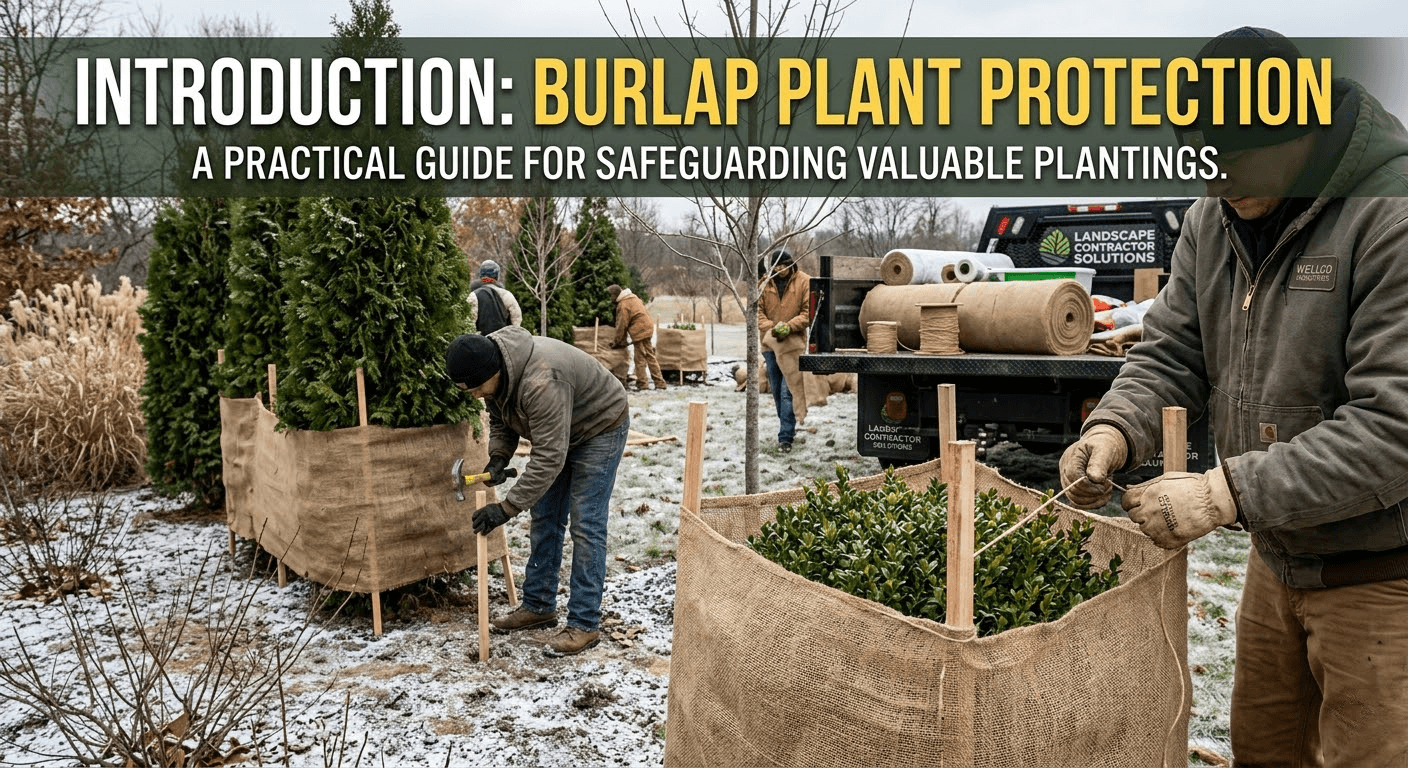
From a practical standpoint, crews often get better results with burlap screens around a plant than with a tight wrap pressed directly against the foliage. On windy commercial sites, that extra space can make a real difference. A screen reduces drying exposure while also preventing branch rub and leaf abrasion. It is a simple adjustment, but it is often the difference between protection and preventable damage.
Protection from wind, salt, and mechanical stress
Burlap also helps with threats that are easy to underestimate during project planning. Road salt, blowing snow, hard gusts, and plow-driven debris can all increase plant stress over the winter. This is especially common on commercial properties, streetscapes, and public-facing landscapes where hardscape and traffic exposure are high.
Anonymized contractor experience often tells the same story: shrubs placed near pavement edges or open corners usually show the worst browning by spring unless they are screened early. In one typical scenario, a crew installed burlap barriers around a row of newly planted evergreens near a parking lot while leaving a matching row unprotected in a similarly exposed area. By spring, the screened plants showed less browning and fewer damaged tips. The lesson was not that burlap solves everything, but that selective protection pays off where exposure is predictable.
How to Use Burlap Plant Protection Correctly
Best practices for wrapping shrubs and small trees
Installation quality matters as much as the material itself. The goal is to reduce exposure, not trap moisture or crush the plant. A reliable process usually includes these steps:
- Wait until plants are dormant or cold weather is consistent. Installing too early can create unnecessary heat buildup.
- Water plants well before the ground freezes. Plants that go into winter dry are more likely to suffer desiccation.
- Use stakes or a simple frame when possible. This keeps burlap from sitting directly on foliage.
- Wrap loosely if direct wrapping is necessary. The material should shield the plant, not compress it.
- Fasten securely without strangling branches or stems. Crews should allow for airflow and natural movement.
- Remove burlap at the right time. Leaving it on too long can interfere with spring growth and appearance.
One field lesson worth emphasizing is that “more coverage” does not always mean “better protection.” Crews that overwrap plants often regret it in spring when branches are misshapen or foliage shows rubbing damage.
Common installation mistakes to avoid
Most burlap-related problems come from poor timing or overuse. Common mistakes include:
- Wrapping too tightly around evergreen foliage
- Applying burlap before plants are fully dormant
- Using burlap as a blanket for every plant on site
- Leaving material on too long into the growing season
- Ignoring fall watering before freeze-up
- Failing to account for wind direction or salt exposure
A short checklist can help reduce waste and improve results:
- Is the plant newly installed or highly exposed?
- Would a barrier screen work better than a direct wrap?
- Is the material durable enough for the full season?
- Does the crew have a clear installation and removal schedule?
- Has the site been reviewed for salt, wind, and reflective heat exposure?
Choosing the Right Burlap for Commercial or Field Use
What buyers should look for in material quality
For purchasing managers and distributors, burlap selection should go beyond price per roll. Material quality affects installation speed, field durability, and overall project consistency. A weak or uneven weave may tear too easily, fray during fastening, or create inconsistent coverage across a large installation.
Buyers should evaluate:
- Weave consistency: more uniform coverage and cleaner handling
- Tear resistance: better performance during tying, staking, and windy conditions
- Roll dimensions: easier planning for common shrub and tree sizes
- Handling characteristics: less waste and faster installation in the field
- Intended use: suitable for barrier screens, loose wrapping, or seasonal project reuse
This is particularly important for contractors and OEM or private label customers who need predictable supply and repeatable performance across many jobs.
Why supplier capability matters for larger projects
On larger commercial or agricultural projects, burlap is rarely the only product being sourced. Buyers may also need erosion control materials, agricultural inputs, site protection products, or related field-use items. That is why supplier capability matters. A reliable supplier helps reduce procurement friction, improve planning, and support recurring seasonal demand.
Wellco Industries fits naturally into this type of buying environment because it serves agriculture, construction, and soil and water conservation markets with a broad portfolio of products. For buyers, that matters less as a branding point and more as an operational advantage. A supplier with wider category experience is often better positioned to support long-term purchasing needs, consistent order fulfillment, and integrated sourcing across related materials.
Burlap Plant Protection in Agriculture, Landscaping, and Conservation Projects
Applications in professional landscaping and nursery operations
In landscaping and nursery work, burlap protection is most effective when it is part of a broader winter care strategy. It works best alongside good planting practices, proper watering, realistic plant selection, and site-specific exposure planning. Used that way, it can help preserve appearance, improve survival rates, and reduce spring replacement work.
For nurseries, that can mean protecting vulnerable inventory through a high-risk weather window. For landscape contractors, it often means protecting newly installed plantings during the first winter, when root systems are still adjusting. In both settings, the return on burlap is often seen in fewer callbacks and better spring recovery.
Relevance for soil, water, and site management professionals
For conservation and site-management professionals, plant protection is tied to establishment success and site resilience. A young planting on a windy slope, a restoration area near roadways, or a managed site with runoff and hardscape exposure can all benefit from selective seasonal shielding. Burlap is not the answer everywhere, but it can be a smart tool when the exposure risk is clear.
This is also why burlap should be used selectively. It is not a universal fix for every climate, every plant, or every winter condition. The best decisions come from matching the protection method to the plant type, site exposure, and local growing conditions. Buyers and specifiers who take that approach are more likely to protect the right plants instead of overspending on unnecessary coverage.
Conclusion
Burlap plant protection works best when it is used for the right reason: reducing environmental stress on vulnerable plants. It helps buffer wind, winter sun, and salt exposure while allowing plants to breathe, which makes it especially valuable for evergreens, newly installed shrubs, and high-exposure commercial landscapes.
For buyers, the smartest approach is targeted and practical. Protect the plants that face the highest risk, choose burlap that can handle field conditions, and install it in a way that reduces stress instead of creating it. When seasonal planning, material consistency, and supply reliability all matter, working with an experienced supplier can make the process smoother and more predictable. Review your exposure risks early, confirm the right specifications, and build plant protection into your winter preparation plan before the worst weather arrives.
Frequently Asked Questions
In most outdoor landscape applications, burlap is the better choice because it is breathable. Plastic can trap moisture and heat, which may create additional plant stress if it stays in place too long.
Newly planted shrubs, evergreens, broadleaf evergreens, and plants near roads or windy corners are often the best candidates. The highest priority is usually given to plants that are exposed, expensive, or slow to recover from winter damage.
Not always. For many shrubs, a burlap screen on stakes works better than a tight wrap because it reduces wind exposure without rubbing against foliage. Direct wrapping can still work, but it should be loose and carefully installed.
It should stay on during the period of highest winter exposure and be removed when conditions moderate and spring growth begins. Leaving it on too long can interfere with airflow, appearance, and new growth.
They should focus on weave consistency, tear resistance, roll size, ease of handling, and supply reliability. For larger projects, it also helps to work with a supplier that can support related material needs across multiple seasons.