
- September 29, 2026
- Posted by: wellcoindustries
- Category: Fiberglass fire blanket
Fiberglass fire blankets can be useful for fire situations their finished product is designed and labeled to address, when evidence supports the claimed performance. Fiberglass alone does not make every blanket safe for every fire. Before selecting one, check the intended use, the instructions on the actual model, and whether the reported results cover its construction and size. Keep a safe escape route; a blanket is never a reason to stay near a spreading fire. [1][2][6]
This review considers two questions: whether the finished blanket is suitable for the intended fire, and what handling or fiber-exposure concerns need to be addressed. The seven claims below are a selection guide, not instructions for deploying a particular blanket.
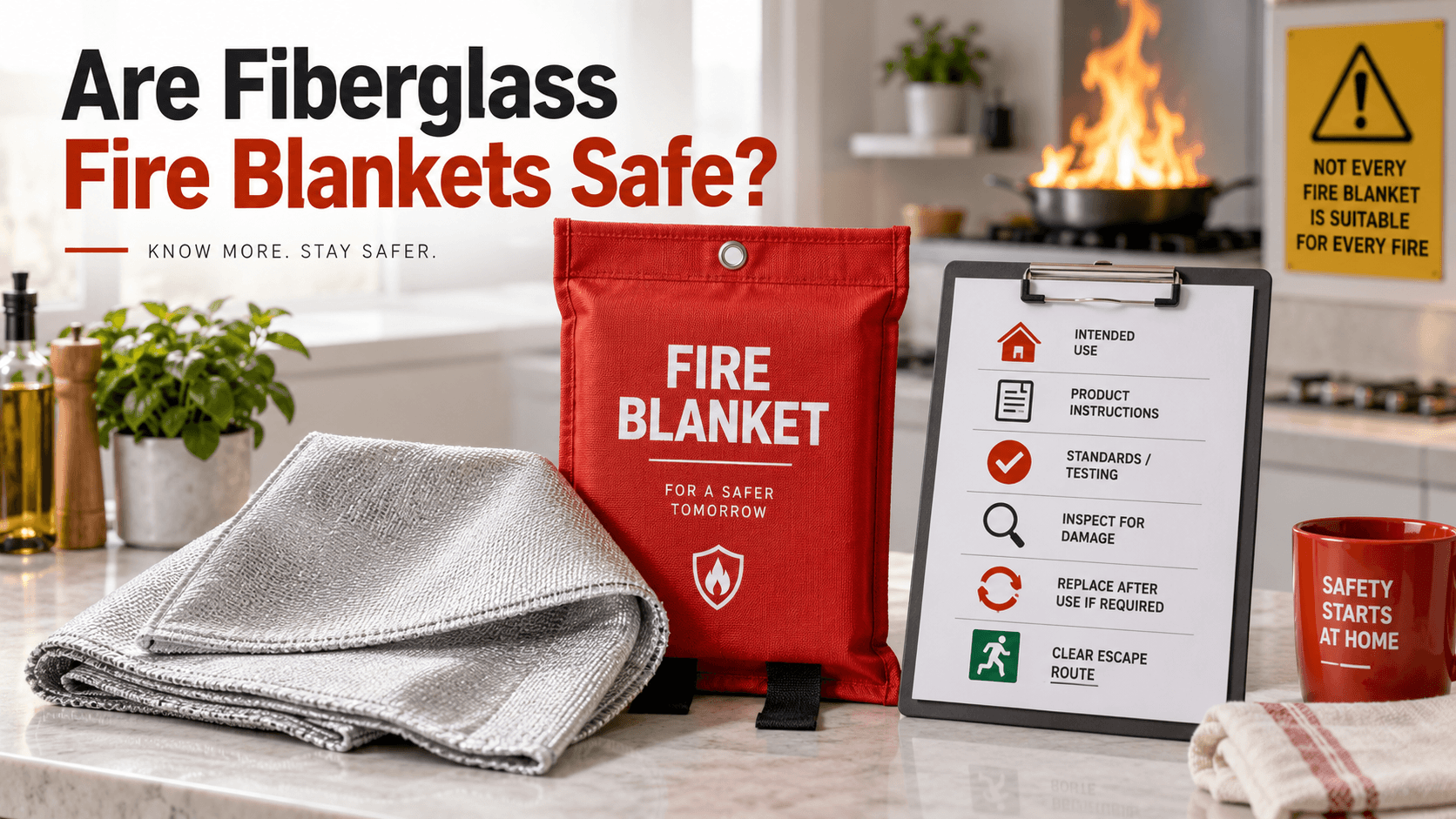
1. “If it is fiberglass, it can put out any fire”
No. A fabric’s response to heat is only one part of a finished blanket’s performance. Cooking-fire blanket specifications address the completed product, including construction and fire-suppression performance; a fabric test alone cannot establish that a blanket will control a particular fire. [1][2][3]
Start with the hazard: a small cooking fire, a hot-work exposure, an industrial process or another scenario. Then ask whether the specific blanket is labeled and documented for that scenario. Do not treat an emergency fire blanket, a welding shield and a vehicle-fire containment blanket as interchangeable products.
2. “A high temperature number proves that the blanket is safe”
No single temperature figure answers the safety question. A temperature statement needs a test method, exposure time, sample construction and failure criterion. ASTM D6413/D6413M-22 measures a textile’s response to a specified vertical-flame exposure, including afterflame, afterglow and char length. Those results alone do not establish finished-blanket cooking-fire suppression performance. [2][3]
For procurement, compare evidence for the actual blanket and its intended use instead of ranking products by an isolated peak-temperature claim.
3. “All fire-blanket standards mean the same thing”
They do not. BS EN 1869:2019 addresses fire blankets intended for control of certain small fires. ASTM F1989-05(2020) concerns cooking-fire suppression blankets. Their published scopes are more relevant to those finished-product questions than an unrelated textile or quality-management standard. Neither standard’s existence proves that an individual model complies with it. [1][2]
When a standard matters, request the exact designation and edition, the model identification, and evidence that covers the relevant material and size. A logo or a generic certificate without a matching product scope is not enough.
4. “Fiberglass contact is always harmless—or always dangerous”
Neither absolute claim is sound. NIOSH identifies eye, skin and respiratory irritation as possible concerns with fibrous glass dust exposure. That occupational information does not measure fiber release from every finished fire blanket, and it cannot establish that a particular blanket is either risk-free or hazardous in normal use. [4]
Follow the handling directions supplied with the selected product. During selection or routine inspection, set aside a blanket that is visibly damaged or shedding material until the required product-specific inspection or replacement action is clear. This is a precautionary selection step, not a response to take during a fire.
5. “A blanket replaces an exit plan or other fire protection”
No blanket replaces fire prevention, an escape plan or emergency services. [5][7] Do not approach a fire unless you can maintain a clear escape route. If the fire spreads or smoke or heat makes conditions unsafe, stop trying to control it, alert others and evacuate by a safe route. In the United States, call 911 once outside. USFA lists a contained fire, smoke exposure and a clear exit among its general decision checks for using an extinguisher; those are safety screening principles here, not instructions for operating a fire blanket. [6]
The right response depends on the hazard, the equipment available, training and local fire-safety procedures. A blanket should be considered within that broader plan, not as a universal substitute for it.
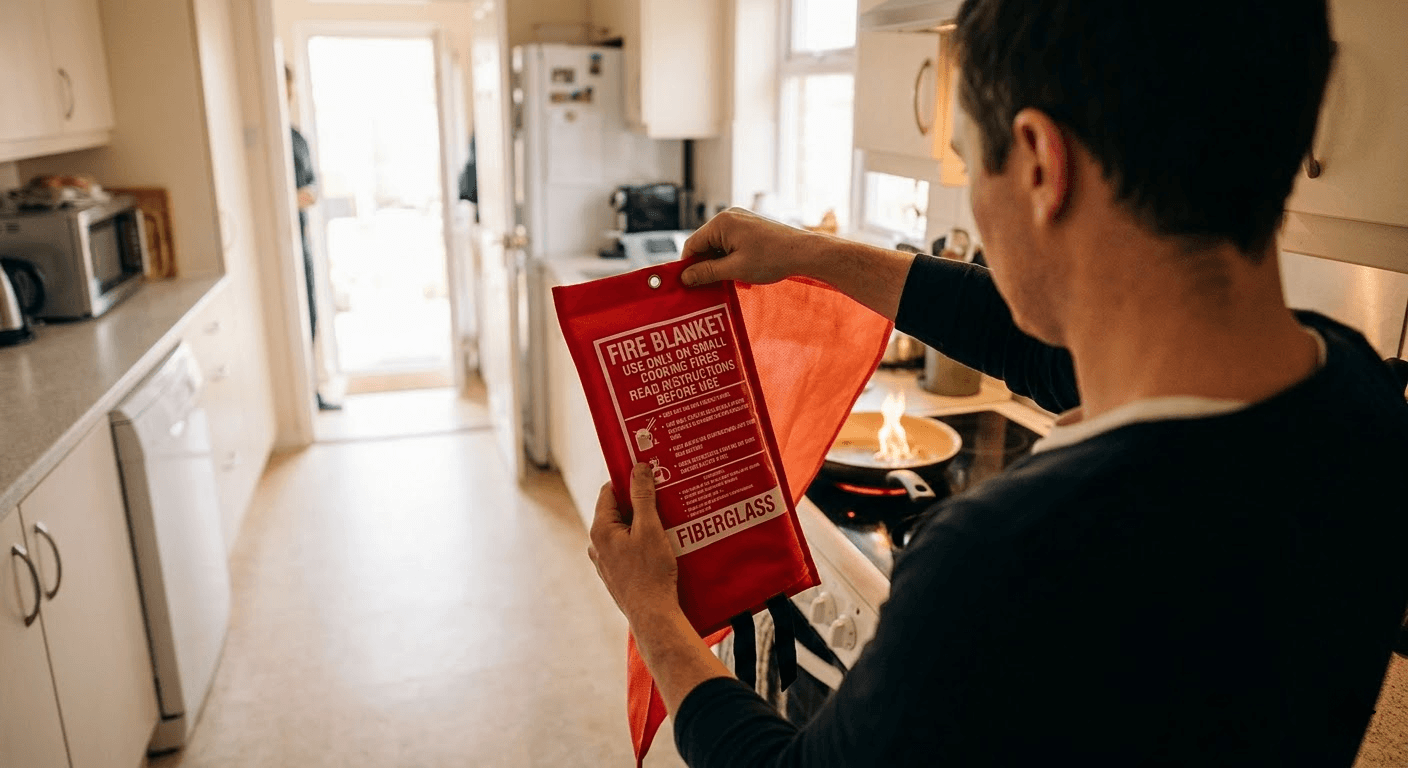
6. “After one use, every blanket can simply be folded and stored again”
Do not assume reuse. BS EN 1869:2019 covers non-reusable fire blankets in its stated scope. If a blanket is labeled single-use, replace it after use even when no damage is visible. Follow the selected product’s instructions for any other inspection or replacement decision. [1][8]
Inspection and replacement are separate decisions. Neither an undamaged appearance nor a material description overrides the directions for the blanket in hand.
7. “A model name or product photo is enough to approve a purchase”
Not for a safety-sensitive purchase. Ask the supplier to identify the intended use, complete model and size, instructions and warnings, and any applicable standard or test report. Check the reported results, not just the document title: do they satisfy the applicable requirements, and do they cover the ordered construction and relevant size or documented size range? Note any limits. A reference to testing alone does not establish that the requirements were met. [1][2]
If the information is incomplete, do not infer performance from fiberglass content, appearance, a pouch color or another model’s report. Resolve the mismatch before specifying the blanket for a fire risk.
A practical safety decision
A fiberglass fire blanket is a reasonable option to evaluate when its labeled use matches the hazard, the reported results support the claimed performance for the actual product, users have the relevant instructions, and the site has a clear emergency response plan. If any of those conditions is missing, the answer is not “safe by default.” Seek the missing information or choose equipment whose suitability can be established. [1][2][6]
For a model-specific inquiry, view our fiberglass fire blanket product information and send us the intended application, destination market, required size and documentation request. We can discuss the relevant configuration without assuming that one material or model fits every hazard.
Sources
- BSI, BS EN 1869:2019 — Fire blankets. Published scope and product-standard context.
- ASTM International, ASTM F1989-05(2020) — Standard Specification for Cooking Fire Suppression Blankets. Published scope of the finished-product specification.
- ASTM International, ASTM D6413/D6413M-22 — Standard Test Method for Flame Resistance of Textiles (Vertical Test). Afterflame, afterglow and char-length measurements under specified conditions; not a finished-blanket fire-suppression claim.
- NIOSH Pocket Guide, Fibrous glass dust. Occupational exposure routes and irritation information; not a measurement of any Wellco blanket.
- U.S. Fire Administration, Cooking Fire Safety. General cooking-fire prevention and pan-fire messages.
- U.S. Fire Administration, Choosing and Using Fire Extinguishers. General initial-fire safety screening and exit conditions; extinguisher operation does not transfer to blankets.
- U.S. Fire Administration, Home Fire Escape Plans. Planning and keeping escape routes clear.
- Fire and Rescue NSW, Fire Safety Equipment. One-use fire-blanket guidance and manufacturer-instruction priority; Australian public guidance, not a Wellco model instruction.