
- July 17, 2026
- Posted by: wellcoindustries
- Categories: Burlap, Erosion Control
Introduction
Burlap looks simple, yet fiber, weave, treatment, storage, and installation determine field performance. Cheap fabric becomes costly when it tears, arrives damp, or fails early.
This guide explains five benefits of burlap for garden use, its limits, and the specifications behind a dependable bulk order.
Benefit 1: Burlap Protects Plants During Transplanting and Cold Weather
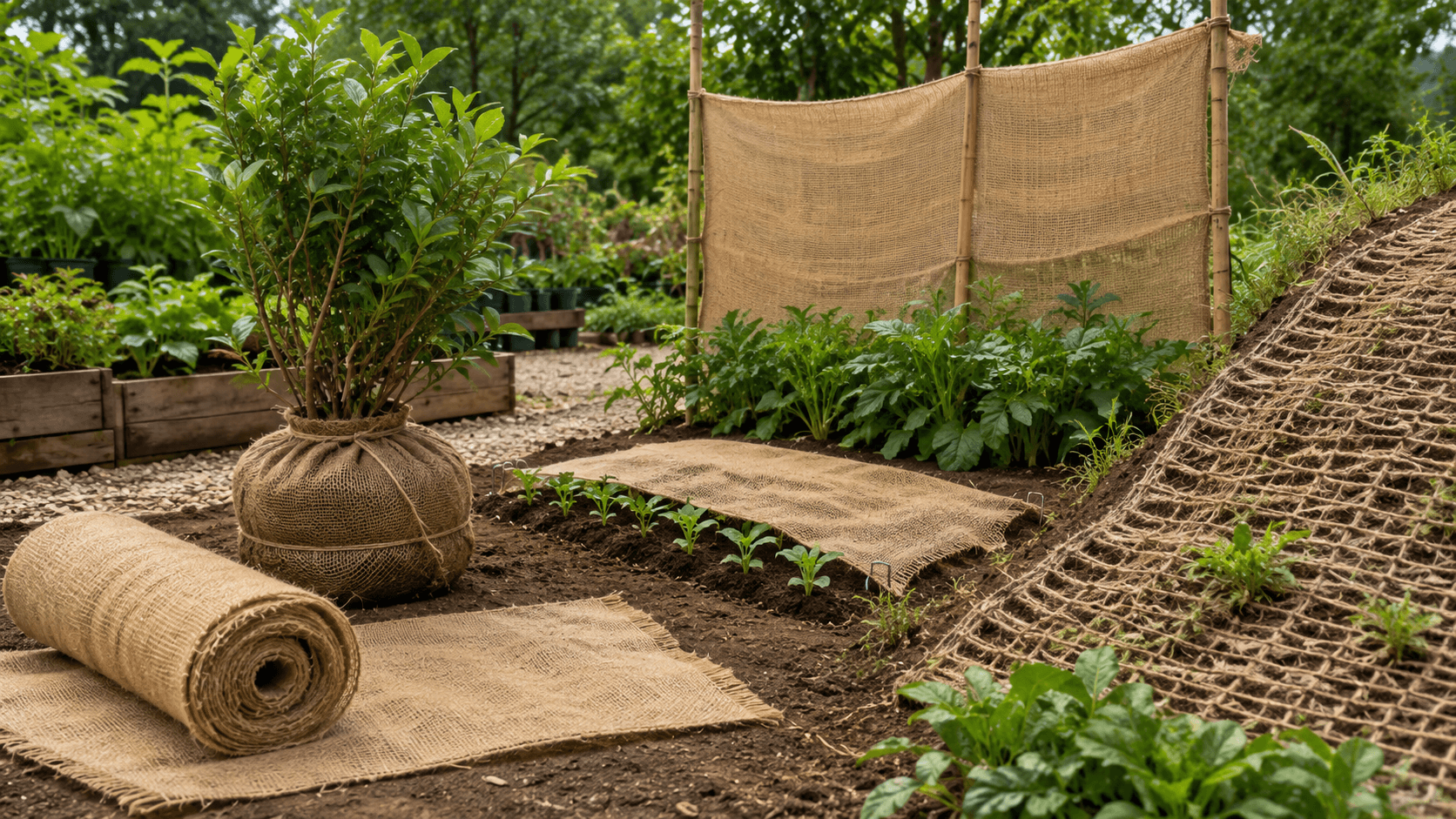
Burlap conforms around irregular root balls, holds soil during transport, and creates breathable screens around exposed shrubs.
How Burlap Reduces Root Ball Damage
For balled and burlapped stock, specify fiber type, treatment, dimensions, weight, weave, and tear performance.
At planting, locate the root flare, remove trunk twine, and pull wrapping away from the upper root ball. University of Minnesota Extension advises keeping any remaining burlap below the soil surface so it cannot wick moisture away.
Can Burlap Stay Around a Root Ball After Planting?
Untreated natural burlap may remain beneath a stable root ball when removal would collapse the soil mass. Remove all accessible material from the top and sides, cut every tie around the trunk, and expose the root flare. Remove synthetic or unidentified fabric because you cannot assume that it will decompose.
University of Minnesota guidance warns that burlap can decay slowly and recommends removing accessible material after positioning.
How Burlap Provides Temporary Frost and Wind Protection
Fasten burlap to a stake frame. Leave an air gap, secure the lower edge, inspect after storms, and remove the screen when the hazard passes.
The screen reduces drying wind and salt spray. Root protection still depends on moisture and mulch. Moist soil retains more heat than dry soil, while mulch moderates root zone temperatures.
Takeaway: Separate root ball handling, wind screening, and root insulation into distinct tasks.
Benefit 2: Burlap Supports Moisture Management and Soil Protection
Burlap can shade exposed soil and reduce wind driven drying while allowing rainfall and irrigation to pass through.
How Burlap Helps Reduce Surface Drying
Lay lightweight burlap over seedbeds or disturbed soil for short term protection. Keep it in contact with the ground and inspect frequently so emerging seedlings do not become trapped.
Burlap does not replace irrigation or long term mulch. Water demand still depends on soil texture, drainage, rainfall, temperature, and plant type.
Where Burlap Works Best as a Temporary Soil Cover
Useful applications include nursery holding areas, seedbeds, stockpiles, planting zones awaiting mulch, and small restoration areas. Natural fibers suit projects where gradual breakdown is desirable.
On a municipal shrub project, crews can cover exposed root zones during staging, check moisture daily, then remove the fabric before applying final mulch.
Moisture and Soil Protection Applications
Use this table as a starting point:
| Application | Suggested Format | Installation | Main Benefit | Limitation |
|---|---|---|---|---|
| Root balls | Natural squares | Wrap and tie | Holds the soil mass | Remove accessible material at planting |
| Seedbeds | Lightweight roll | Lay flat and pin | Reduces surface drying | Requires germination checks |
| Soil cover | Consistent roll | Overlap and anchor | Limits splash and minor movement | Unsuitable for concentrated runoff |
| Winter screen | Medium or heavy roll | Attach to stakes | Reduces wind exposure | Tight wrapping traps moisture |
Takeaway: Temporary coverage works best when inspection and removal responsibilities are defined.
Benefit 3: Burlap Helps Control Erosion on Slopes and Disturbed Soil
Open weave jute mesh can protect seeded soil while vegetation establishes.
How Burlap Slows Runoff and Holds Surface Soil
Jute mesh reduces raindrop impact, retains mulch and seed, and improves surface contact. Caltrans identifies it as a biodegradable textile for cut and fill slopes from 4:1 to 2:1 horizontal to vertical, with about 12 months of functional longevity for its referenced treatment.
Treat that value as an application reference because rainfall, drainage, anchoring, and soil contact affect performance.
How Long Does Burlap Last Outdoors?
Outdoor service life varies with fiber quality, weight, sunlight, rainfall, humidity, soil contact, and tension. Light garden fabric may lose useful strength within a season, while specified jute mesh may target a longer functional period. Request product data and define the required protection window before ordering.
Caltrans notes that rocks and debris can lift mesh and allow erosion underneath, showing why ground contact matters as much as fabric strength.
Field Application Example: Establishing Vegetation on a Moderate Slope
On an anonymized 3:1 roadside slope, a crew grades rills, applies seed and mulch, trenches the upper edge, overlaps rolls, and installs staples according to the approved plan.
After heavy rain, inspectors find runoff lifting one edge. The crew resets the mesh, adds staples, and redirects concentrated flow. USDA Forest Service research likewise reports rill erosion beneath netting where installers failed to achieve good ground contact.
Jute mesh addresses surface erosion. Deep soil movement and channels require engineered controls.
Takeaway: Use jute mesh within a prepared, seeded, anchored, and inspected system.
Benefit 4: Burlap Offers Biodegradable Support for Nursery and Landscape Work
Natural jute can weaken and decompose after completing a temporary role.
Why Natural Fiber Matters in Temporary Applications
Biodegradability may reduce retrieval labor and avoids leaving permanent plastic. Wet storage, mold, sunlight, and rough handling can also reduce strength before installation.
At receiving, check dimensions, moisture, mildew odor, edge damage, weave, and handling strength. In a generic nursery example, staff reject damp outer rolls with weakened edges while retaining protected inner rolls. The record supports a supplier claim and improved packaging.
Burlap Compared With Common Garden Fabrics
The table below shows where each material usually fits:
| Material | Biodegradable | Outdoor Duration | Typical Role | Key Buying Question |
|---|---|---|---|---|
| Natural burlap | Yes | Short, climate dependent | Root balls and covers | Is it untreated and suitable for plant contact? |
| Synthetic burlap | No | Multi season potential | Reusable handling | Who will remove it? |
| Landscape fabric | Usually no | Multi year when covered | Weed suppression | What permeability is specified? |
| Jute netting | Yes | Temporary, project specific | Surface erosion control | What slope and anchoring plan apply? |
| Frost cloth | Usually no | Seasonal | Direct crop protection | What protection rating is documented? |
When You Should Choose Another Material
Choose frost cloth for direct crop coverage, landscape fabric for longer weed suppression, coir for slower degradation, and engineered blankets for demanding slopes or channels.
Permanent separation, high loads, prolonged UV exposure, and concentrated flow require purpose designed materials.
Takeaway: Biodegradability adds value when its degradation rate matches the schedule.
Benefit 5: Burlap Is Flexible for Bulk Procurement and Custom Applications
Burlap comes as rolls, sheets, bags, root ball squares, wraps, and erosion mesh.
Product Formats You Can Specify
State the intended use, fiber composition, treatment, dimensions, unit weight, weave, edge finish, packaging, pallet quantity, labeling, and tolerances.
Retain an approved sample and document how you will inspect dimensions, weight, weave, odor, cleanliness, and packaging on repeat orders.
What Should You Check Before Ordering Burlap in Bulk?
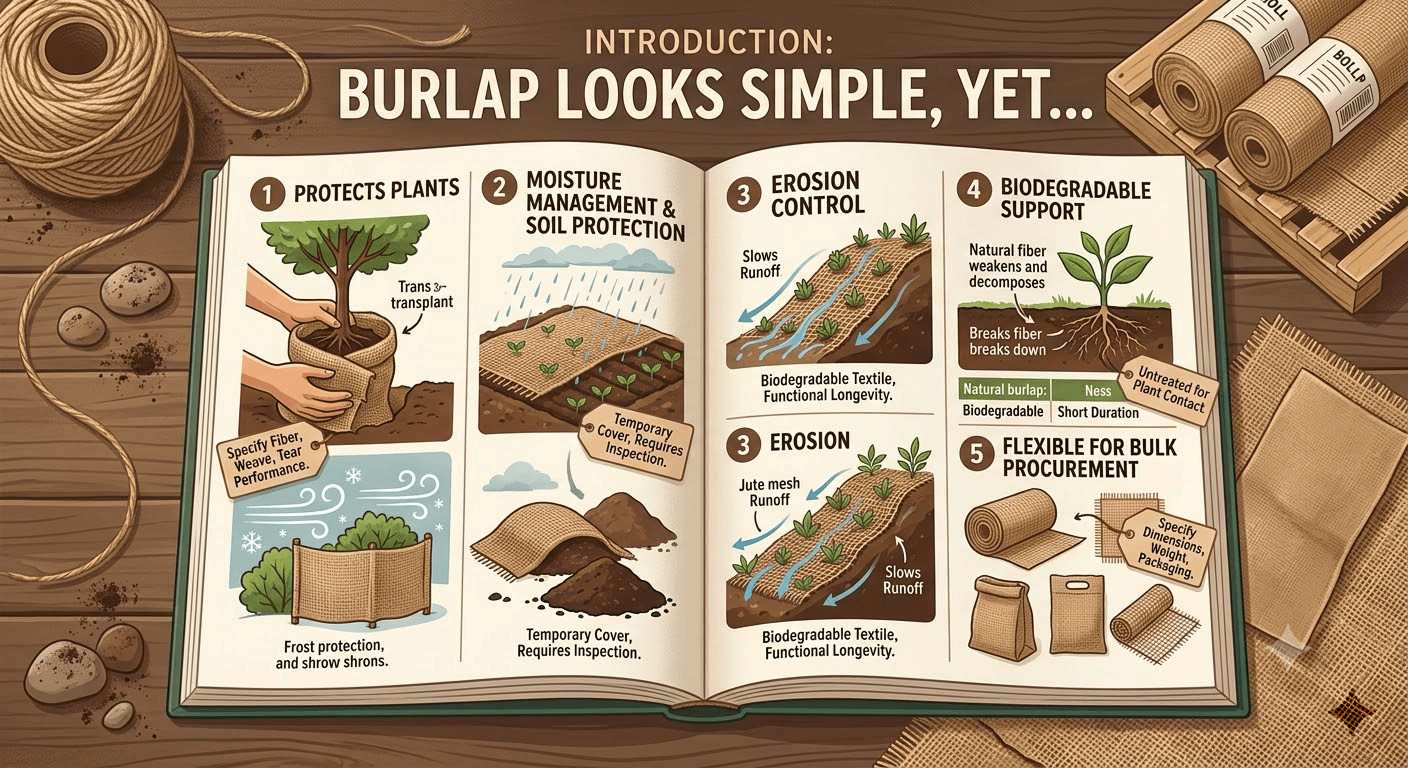
Confirm the application, service period, fiber, treatment, dimensions, weight, weave, packaging, storage, lead time, and documents. Approve a sample, define tolerances, and state whether the fabric must biodegrade, contact plants, remain reusable, or withstand a defined exposure period.
Also compare moisture protection, roll consistency, pallet configuration, batch identification, and replacement procedures before approval.
Supplier Capacity and Related Product Support
Wellco Industries is a California based supplier of agricultural, gardening, erosion control, FRP, and outdoor products. Its offering includes burlap, jute products, plant protection materials, flexible order options, North American warehousing, and custom packaging or OEM support. Confirm current stock and delivery terms.
Takeaway: A clear specification and approved sample protect your budget better than unit price alone.
Common Installation Mistakes That Reduce Burlap Performance
Installing Burlap Too Tightly Around Plants
Tight wrapping can trap moisture, rub bark, compress foliage, and restrict airflow. Use a supported screen where possible and inspect ties during exposure.
Using Temporary Fabric in Permanent Applications
Natural burlap should not carry permanent tensile loads or replace a specified geotextile. Request fiber composition, treatment information, physical properties, and intended use documentation.
Ignoring Storage and Handling Conditions
Store rolls dry, elevated, covered, and ventilated. Inspect outer and inner packages for dampness, mildew, contamination, torn edges, and strength loss.
How to Select the Right Burlap for a Commercial Project
Match the Product to the Required Service Period
Define whether you need nursery handling, seasonal screening, seedbed coverage, or erosion control. Match the service period to fiber, weight, weave, treatment, and removal plans.
Review Samples, Specifications, and Packaging
Check dimensions, unit weight, weave consistency, treatment, odor, cleanliness, edge finish, and moisture protection. Record an acceptable range and verification method for every critical property.
Confirm Lead Time and Repeat Order Consistency
Confirm inventory, production time, pallet counts, batch identification, labeling, and replacement procedures before seasonal demand peaks.
Conclusion
Burlap can protect root balls, reduce surface drying, support light erosion control, and provide biodegradable temporary coverage. Its value depends on correct fiber selection, realistic service life, dry storage, secure installation, and inspection.
Use a four step buying process: define the application, establish the service period, approve a sample, and confirm delivery consistency.
[Request burlap specifications and a bulk quote from Wellco Industries →]