
- August 26, 2026
- Posted by: wellcoindustries
- Category: Burlap
Yes. Burlap can be used as a temporary weed barrier in suitable garden beds, around selected plantings, or as part of a sheet-mulching approach. It works by reducing light at the soil surface, but it is not a permanent weed-control guarantee. Results depend on the fabric construction, existing weeds, moisture, surface preparation, overlap, anchoring and follow-up maintenance.
Before laying a roll, confirm that the material is suitable for the intended garden use. Burlap composition, weave, fabric weight, treatment and roll size can vary by product. A material that looks like burlap is not automatically the same as a natural, untreated garden fabric.
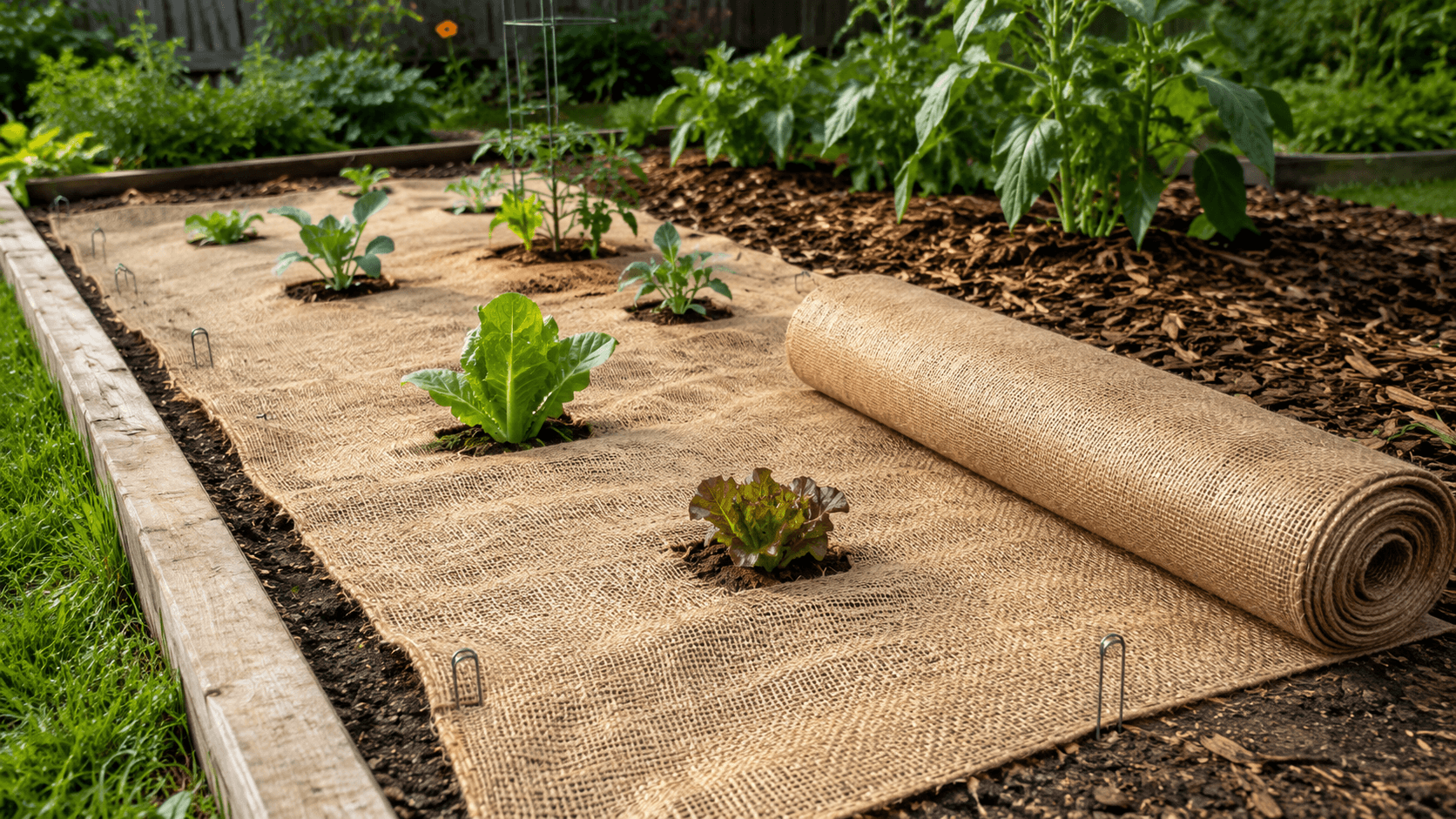
How Burlap Works as a Weed Barrier
Burlap is a coarse woven fabric commonly made from jute. When it is laid closely over prepared soil, the fabric can reduce light reaching weed seedlings and help separate the soil surface from a mulch layer. Water and air movement depend on the weave, thickness and treatment, so do not assume every burlap roll has the same permeability.
Burlap can be useful when the goal is temporary weed suppression or a natural-fiber cover layer in a garden project. University of Maryland Extension describes natural burlap as one option for weed prevention in flower and vegetable gardens, while University of Florida Extension includes burlap as a cover layer in no-dig garden beds.[1][2]
The practical answer is therefore conditional: burlap may help suppress weeds, but it does not remove weed roots, prevent every new seed from germinating, or replace maintenance.
When Burlap May Be a Good Fit
Burlap may be considered for:
- temporary weed suppression in prepared garden beds;
- sheet mulching or no-dig bed preparation;
- covering soil between plants when the material can be cut and secured without restricting plant growth;
- borders or other low-disturbance garden areas where a temporary natural-fiber cover is acceptable;
- garden, nursery or landscaping projects that can be inspected and maintained as the material changes condition.
The best fit is usually a defined, maintainable area rather than an installation that will be left uninspected for an indefinite period. If the project requires a long service period, high resistance to tearing, or a specific landscape-fabric specification, compare the required product category with the actual burlap construction before purchasing.
How to Lay Burlap Over Garden Soil
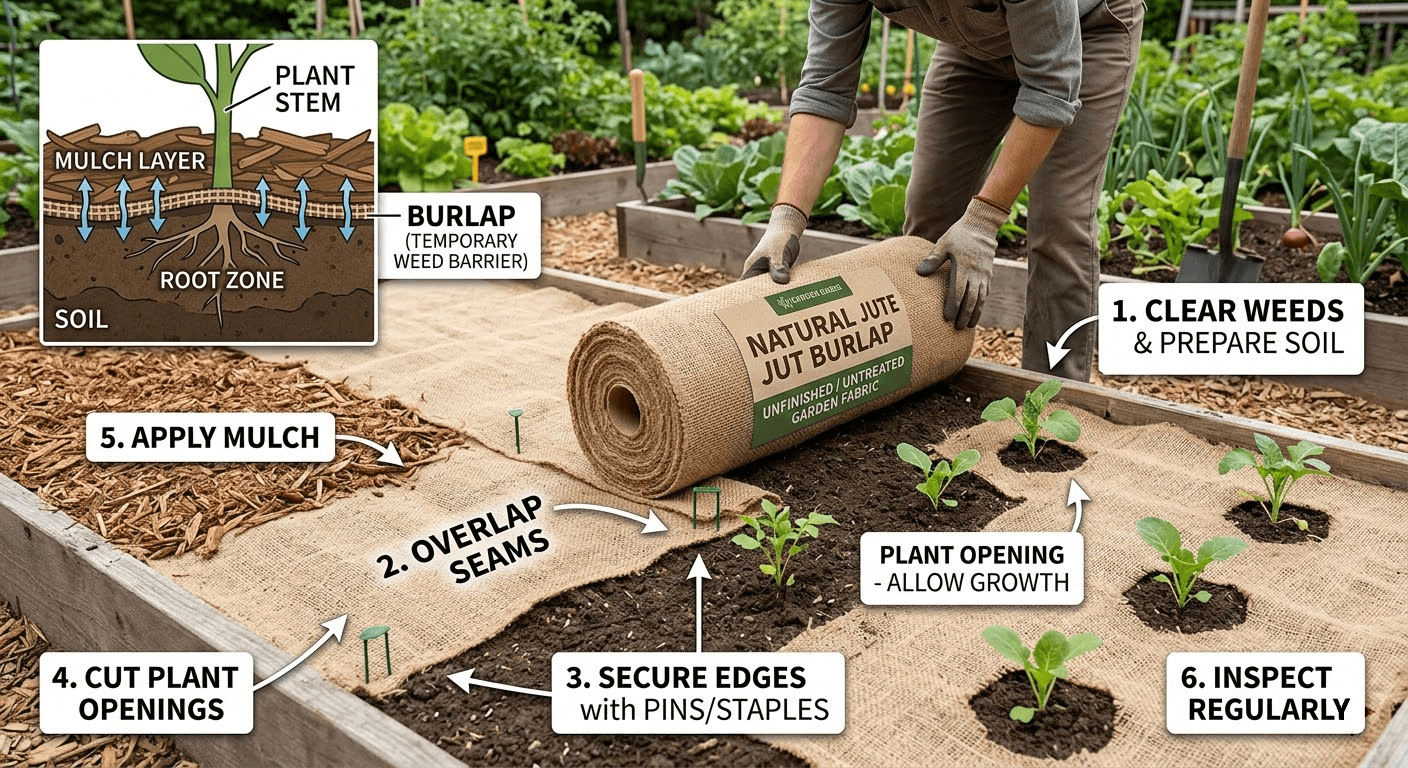
1. Remove Existing Weeds and Debris
Manage existing weeds according to the chosen bed-preparation method. For a conventional barrier installation, remove established weeds; for sheet mulching or a no-dig bed, follow that method’s preparation steps. Address aggressive perennial weeds, deep roots or spreading rhizomes before relying on the cover layer. Burlap laid over mature weeds may slow growth temporarily, but it does not guarantee that the weeds will be eliminated.
Make the soil reasonably level. Large gaps under the fabric create places where weeds can emerge, while sharp stones and branches can tear the material.
2. Measure the Area and Plan the Layout
Measure the bed before cutting the roll. Plan the pieces so that seams do not leave open gaps and so the material can extend far enough around the planting area to be secured.
For a larger bed, use overlapping pieces rather than placing edges exactly side by side. The overlap should close the seam under the expected site conditions. Avoid relying on a fixed overlap number for every bed because wind, slope, mulch depth and the fabric construction change the amount of movement and exposure.
3. Lay the Fabric Flat
Place the burlap directly over the prepared soil and smooth out folds. Keep the fabric in contact with the surface where weed suppression is needed. Around existing plants, leave enough room for the stem or crown to move and grow without being tightly wrapped.
If the bed includes rows or groups of plants, mark the planting positions before cutting. Small, controlled openings are generally easier to maintain than large exposed areas around each plant.
4. Secure the Edges and Seams
Use garden staples, pins, landscape weights or another method appropriate for the site to prevent wind from lifting the material. Secure exposed edges, seams and corners first, then add intermediate anchors where movement is likely.
Do not place an anchor where it can damage a plant crown, irrigation line or buried service. On sloped ground, follow the site drainage and erosion-control requirements rather than treating a garden burlap roll as an approved erosion-control system.
5. Cut Openings for Plants
If planting through the burlap, cut an opening only where it is needed. Keep the opening large enough for planting and future stem growth, but avoid leaving a broad ring of exposed soil that gives weeds a place to emerge.
Do not pull the fabric tightly against stems. In wet climates or areas with frequent irrigation, leave enough clearance for airflow and inspection around the plant base.
6. Add Mulch Only When It Supports the Plan
A layer of mulch can hold the burlap in place, reduce its exposure and improve the appearance of a garden bed. University of California Integrated Pest Management guidance notes that burlap sacks can be layered and covered with mulch as part of weed-management practices.[3]
Use suitable mulch and avoid material containing obvious weed seeds or unwanted plant material. Mulch does not make the barrier permanent. Weed seeds can germinate in organic material that accumulates above the fabric, so the surface still needs to be checked.
7. Water and Inspect the Bed
Water according to the needs of the plants and the actual material construction. A porous weave may allow water to pass through, but a tight weave, treatment, soil contact or a heavy mulch layer can change how moisture moves.
Inspect the bed after heavy rain, strong wind, irrigation changes and periods of rapid plant growth. Look for lifted edges, open seams, tears, exposed soil, standing moisture and weeds growing through or around the fabric.
Limitations of Burlap Weed Barriers
Burlap Does Not Stop Every Weed
Weeds may emerge through openings, seams, tears and gaps at the edges. New seeds can also germinate in mulch or soil that accumulates above the material. Weed suppression is a maintenance process, not a one-time guarantee.
Decomposition Is Product- and Site-Specific
Natural-fiber burlap may change condition over time, but the timing depends on fiber composition, weave, weight, treatment, moisture, sunlight, soil contact and site activity. Do not use a fixed lifespan or an unqualified “biodegradable” claim for an unspecified roll. Confirm the material and treatment for the product being purchased.
Wet Conditions Require More Inspection
Repeated wetting, poor drainage, soil contact and covered organic material can affect the fabric and the plants beneath it. If a bed stays saturated, check drainage and the condition of the material instead of adding more layers. Remove or replace damaged fabric when it begins to obstruct planting, hold excessive moisture or create gaps.
Burlap Is Not the Same as Landscape Fabric
Landscape fabric commonly refers to synthetic weed-barrier materials; some products use a woven construction. Utah State University Extension describes one woven synthetic landscape-fabric approach and recommends covering it with mulch.[4] Burlap is a different material category, and its durability and construction must be checked separately.
For a long-duration installation, a high-traffic area or a project with written fabric specifications, compare the required performance and maintenance plan with the product documentation. Do not choose only by appearance or the word “natural.”
Burlap Weed Barrier Checklist
| Check | What to confirm |
|---|---|
| Intended use | Temporary garden weed suppression, sheet mulching, planting area, path or another defined use |
| Existing weeds | Established weeds removed; perennial roots and rhizomes addressed |
| Material | Fiber composition, blend, treatment, coating and any product documentation |
| Construction | Woven surface, fabric weight, weave density and roll dimensions |
| Layout | Edges, seams, planting openings and areas requiring overlap |
| Anchoring | Staples, pins, weights, wind exposure and protection of plants or buried lines |
| Moisture | Drainage, irrigation pattern, water movement and areas that may stay wet |
| Cover layer | Mulch type, depth, cleanliness and the ability to inspect the bed |
| Maintenance | Inspection points, replacement triggers and access for weeding |
| Quantity | Coverage area, waste allowance, roll count, packaging and delivery location |
Frequently Asked Questions
Is burlap a good weed barrier?
Burlap can be a useful temporary weed barrier when it is laid over prepared soil, secured properly and inspected. It is less suitable when the project requires a fixed long-term service period, a specific landscape-fabric standard or no maintenance access.
Can you put burlap directly over weeds?
You can cover a cleared area with burlap, but simply placing it over established weeds does not guarantee control. Remove mature weeds first and pay special attention to perennial roots, spreading plants, edges and gaps.
Should burlap be covered with mulch?
Mulch can help hold the fabric down and improve the appearance of the bed. Use a suitable, clean mulch and continue inspecting the surface because weed seeds can germinate in material that accumulates above the burlap.
Does water pass through burlap?
Water movement depends on the fabric weave, weight, treatment, soil contact and any mulch above it. Confirm the specific product construction instead of assuming that every roll has the same permeability.
How long does burlap last as a weed barrier?
There is no reliable universal time period for an unspecified burlap roll. Condition changes with material, treatment, moisture, sunlight, soil contact, traffic and maintenance. Inspect the fabric and replace it when it no longer provides continuous coverage or begins to interfere with the planting area.
Is burlap biodegradable?
Some natural-fiber burlap products may break down under suitable conditions, but composition, blends, treatments and coatings matter. Confirm the specific product before making a biodegradability or compostability claim. The Federal Trade Commission requires environmental claims to be properly substantiated.[5]
Request Burlap Roll Details
We offer burlap fabric rolls for gardening, plant protection, landscaping and other suitable applications. Send us the intended use, required coverage or roll dimensions, quantity, material or treatment requirements, packaging needs and delivery location so our team can confirm the current product options for your request.
View our burlap fabric roll information or contact our team at [email protected]. Product construction and suitability should be confirmed for the specific use.
References
- University of Maryland Extension: The Vine, Winter 2023
- University of Florida IFAS Extension: No-Dig Garden Beds
- University of California IPM: Mulching / WeedCUT
- Utah State University Extension: Using Mulches in Utah Landscapes and Gardens
- Federal Trade Commission: Environmental Claims – Summary of the Green Guides