
- January 6, 2026
- Posted by: wellcoindustries
- Categories: Burlap, Erosion Control
Looking for burlap sacks/bags?
This page is a guide to erosion control cloth/blankets (burlap/jute vs synthetic).
If you want burlap sacks or burlap bags, go here:
Burlap Sacks /
Burlap Bags.
Quick note: “burlap sack/bag” searches are different from “erosion control cloth” searches. This guide focuses on slope stabilization, seeding, construction, and landscape erosion control.
Erosion control is about keeping soil in place long enough for vegetation or permanent stabilization measures to take over. Two common material routes are
burlap (jute) erosion control cloth and synthetic erosion control fabrics.
This guide compares both options with a practical, buyer-friendly lens: site conditions, lifespan, install considerations, environmental impact, and cost trade-offs.
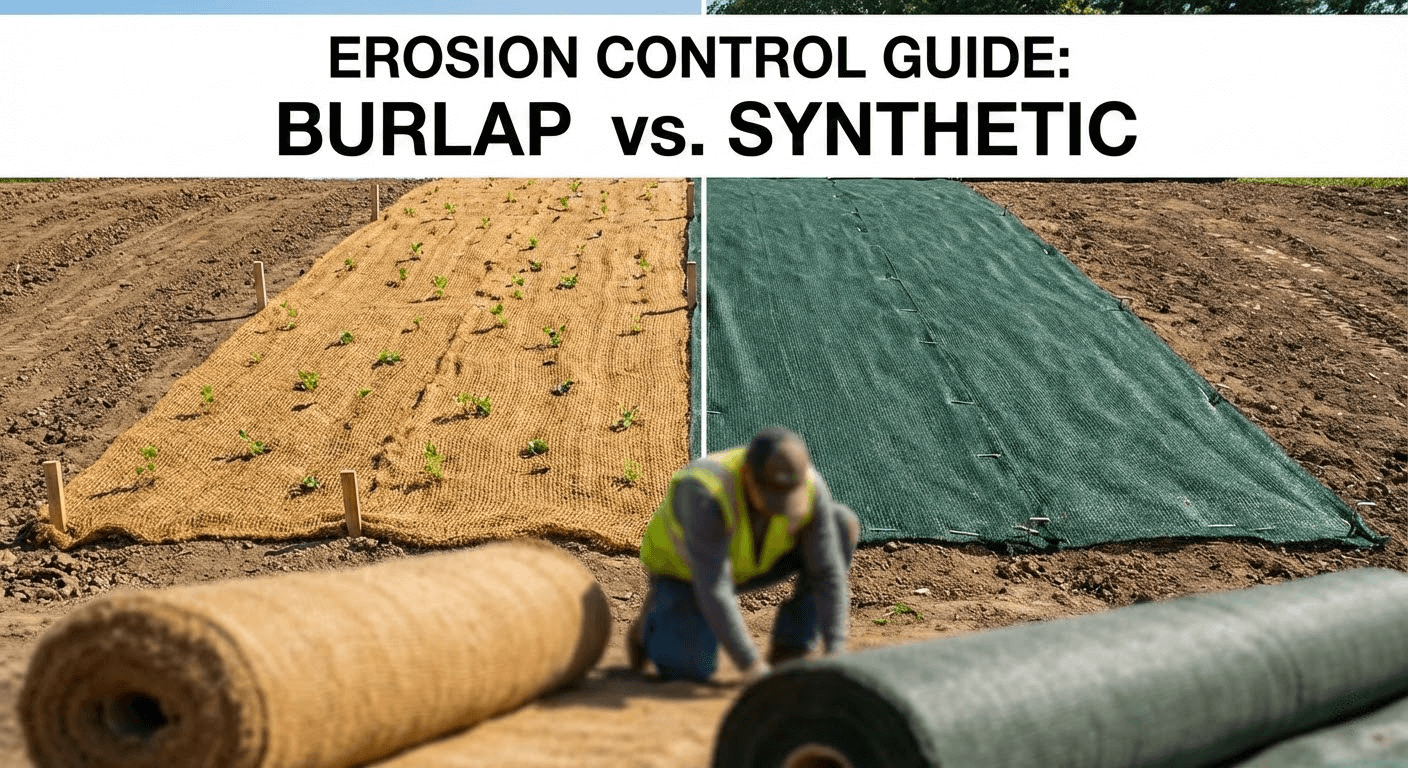
TL;DR — Choose the right erosion control cloth:
- Choose burlap (jute) when you want temporary erosion protection plus strong environmental performance (biodegradable, soil-friendly).
- Choose synthetic fabric when you need longer service life or higher durability in harsher runoff/shear conditions.
- The core trade-off is biodegradability vs. lifespan.
- If your goal is seeding/vegetation establishment, burlap is often a good fit; if your site needs multi-season structural stabilization, synthetic may be better.
What “Erosion Control Cloth” Means (So We Compare the Right Thing)
“Erosion control cloth” can refer to several products: blankets/rolls used on slopes, mats for seeding, or reinforcement fabrics in drainage zones.
In this article, we’re comparing erosion control cloth/blankets made from:
burlap (jute) versus synthetic polymers (commonly polypropylene or polyester).
Burlap (Jute): The Natural Erosion Control Choice
Key Properties
- Natural fiber (jute/burlap) with a rough texture that helps hold soil and seed in place.
- Permeable — lets water and air pass through to support soil health and germination.
- Biodegradable — breaks down over time and can reduce cleanup needs on temporary projects.
Where Burlap Works Best
- Temporary erosion control during landscaping, seeding, or early-stage slope stabilization.
- Projects where environmental impact and biodegradability are high priorities.
- Sites where you expect vegetation to establish and “take over” the stabilization job.
Limitations to Know
- Not a long-term fabric — burlap is designed to degrade, so it’s not ideal when multi-season durability is required.
- Wet conditions can accelerate breakdown; in persistently wet zones you may need closer inspection/maintenance.
- Depending on site load and flow, you may need stronger anchoring and overlap to prevent shifting.
If you’re sourcing products, start here:
burlap erosion control cloth options.
Synthetic Erosion Control Fabrics
What They Are
Synthetic erosion control fabrics are made from engineered polymers designed for durability and long service life.
They are commonly selected where stability needs extend longer, or where the site sees higher mechanical stress.
Strengths
- Longer lifespan compared with natural jute fabrics.
- Often better suited for high-stress conditions (depending on product type and installation).
- More options for spec-driven projects where performance requirements are defined and repeatable.
Trade-offs
- Not biodegradable — removal/management may be needed depending on project requirements.
- Potential environmental concerns if damaged material is not properly controlled or if the site is sensitive.
Burlap vs. Synthetic: Side-by-Side Comparison
| Criteria | Burlap (Jute) Erosion Control Cloth | Synthetic Erosion Control Fabric |
|---|---|---|
| Typical lifespan | Short-term / temporary (designed to biodegrade) | Longer-term (durability-focused) |
| Environmental impact | Biodegradable, soil-friendly | Non-biodegradable; may require removal/management |
| Water/air permeability | Good permeability (supports soil conditions) | Varies by product; often engineered for specific performance |
| Best use cases | Seeding, landscaping, temporary stabilization | Longer-duration stabilization, harsher conditions |
| Maintenance | Inspect more often in very wet conditions | Inspect for damage/UV wear depending on exposure |
| Cost profile | Often lower upfront; replacement may be needed | Higher upfront; potentially lower long-term replacement |
Which Should You Choose? (Practical Scenarios)
1) Seeding / Vegetation Establishment on Slopes
If the primary goal is to protect soil while seeds germinate and roots establish, burlap (jute) is often a strong fit.
It helps reduce surface disturbance while staying breathable and soil-friendly.
2) Construction Sites Needing Temporary Protection
For short project windows, burlap can provide effective protection and then biodegrade—reducing cleanup and disposal concerns.
Choose overlap and anchoring carefully so the cloth stays tight during weather events.
3) Longer-Duration Stabilization (Multi-Season Exposure)
If the site needs longer service life before permanent stabilization is achieved, a synthetic erosion control fabric may be more appropriate.
This is common on challenging slopes, areas with recurring runoff, or projects with long timelines.
4) Drainage Channels / Higher Flow Areas
In zones with concentrated flow, durability requirements increase. Consider synthetic options designed for those stresses, or ensure your system design
(anchoring, overlap direction, and site prep) matches the exposure.
Installation Checklist (Works for Both Burlap & Synthetic)
- Prepare the surface: remove debris and level major bumps so the cloth sits flush against soil.
- Roll direction: install so overlaps face downslope in a way that resists water lifting edges.
- Overlap generously: increase overlap on steeper slopes or where runoff is expected.
- Anchor securely: use closer anchoring spacing in high-wind or high-flow areas.
- Inspect after storms: re-secure edges and repair any lifted areas quickly.
Cost & Environmental Considerations
Cost is rarely just the roll price. Consider: expected service duration, replacement frequency,
labor/installation complexity, and cleanup/disposal.
Burlap can be cost-effective for temporary stabilization; synthetic can be cost-effective when longer duration avoids rework or repeated replacement.
FAQs: Burlap vs Synthetic Erosion Control Cloth
Is burlap good for erosion control?
Yes—burlap (jute) is commonly used for temporary erosion protection and vegetation establishment because it is breathable, permeable, and biodegradable.
How long does burlap last outdoors?
Burlap is designed to biodegrade over time. Actual lifespan depends on moisture, temperature, UV exposure, and site conditions. In persistently wet environments,
breakdown can occur faster, so regular inspection is recommended.
When should I choose synthetic erosion control fabric instead?
Choose synthetic fabrics when you need a longer service life, when site exposure is harsher, or when stabilization needs extend across multiple seasons.
Does burlap work in wet conditions?
Burlap can work, but wet conditions may accelerate degradation. If your site stays saturated or experiences frequent heavy runoff, synthetic options may be more reliable.
What’s the best option for seeding on slopes?
For seeding/establishment, burlap is often a strong candidate because it supports soil conditions and biodegrades as plants take over.
On difficult slopes or long timelines, consider synthetic fabrics or a system approach.
Where can I source burlap erosion control cloth?
You can review burlap options here:
burlap erosion control cloth.
Related: If you’re looking for packaging materials instead of erosion control fabrics, visit:
burlap sacks and
burlap bags.