
- June 3, 2026
- Posted by: wellcoindustries
- Category: Fiberglass Stakes
Introduction
A low-cost plant support can become expensive after one wet season, one windy week, or one crew day spent replacing failed stakes. For purchasing managers, contractors, growers, and nursery operators, the better question is not only “Which stake is cheaper?” The real decision is which support delivers the right mix of durability, handling speed, appearance, and reorder reliability.
This article compares a fiberglass garden pole with a bamboo stake across field performance, cost, installation, sustainability, and bulk purchasing. The goal is simple: help you choose the right support before plant damage, labor waste, or replacement orders cut into your margin.
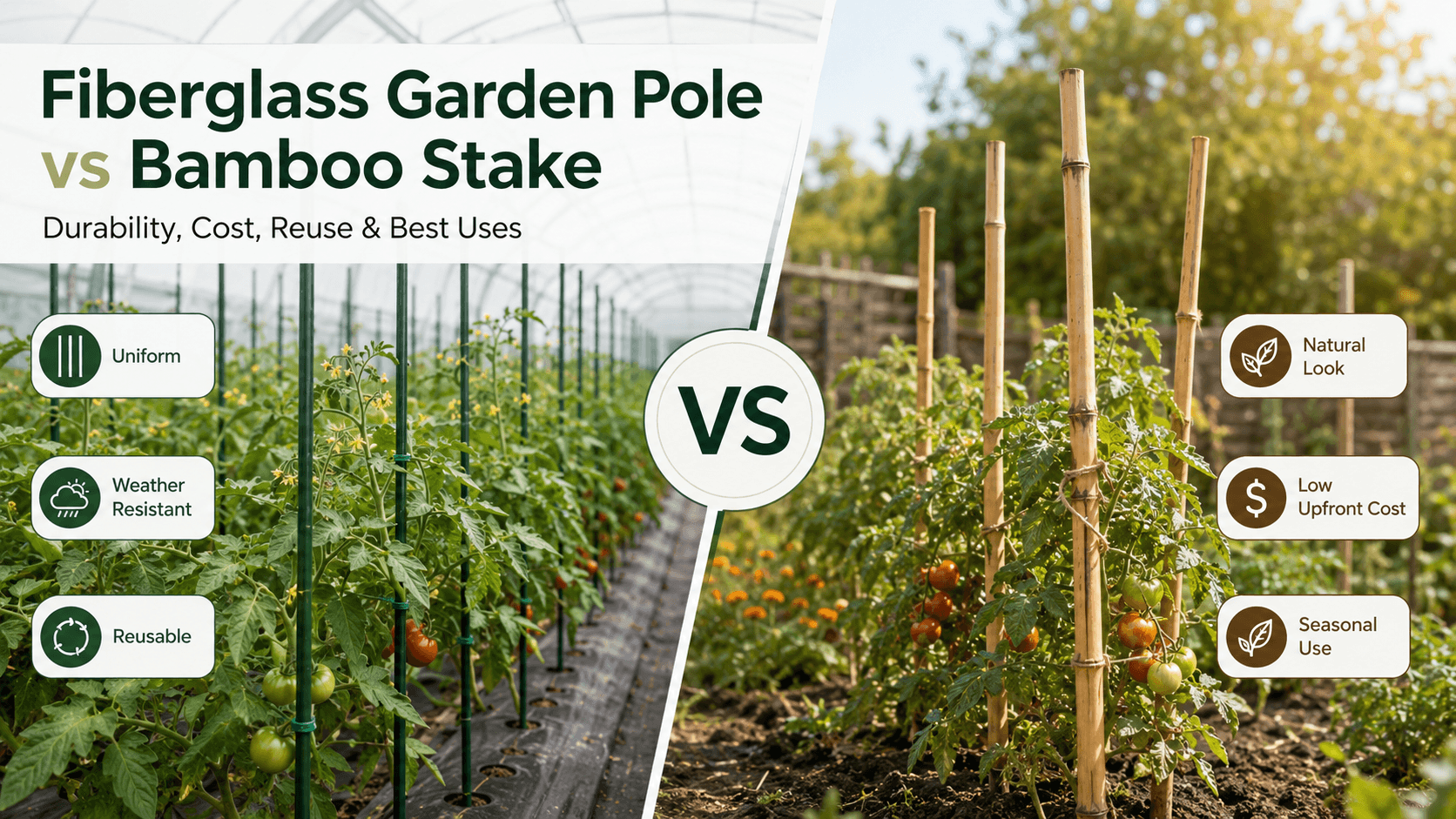
Fiberglass Garden Pole vs Bamboo Stake: Core Material Differences
Before price comparisons, start with material behavior. A support that looks acceptable in storage may perform very differently after soil contact, UV exposure, irrigation, and repeated tying.
What is a fiberglass garden pole?
A fiberglass garden pole is a plant support made from glass fiber reinforcement held in a resin matrix. Buyers use it for vegetables, vines, nursery trees, shrubs, greenhouse crops, and commercial plant support systems.
Typical buying checks include length, diameter, surface finish, color, UV exposure, bending resistance, and whether the pole will be reused across multiple seasons. Actual service life depends on product grade, climate, installation method, and storage condition.
What is a bamboo stake?
A bamboo stake is a natural plant support made from cured bamboo cane. Buyers often choose bamboo because it is lightweight, affordable, easy to push into many soils, and visually suitable for natural garden displays.
Its main variable is consistency. Bamboo can differ in wall thickness, diameter, straightness, moisture content, cracks, and tip strength from bundle to bundle.
Material comparison table
The table below compares the practical differences buyers usually notice during sourcing and installation:
| Factor | Fiberglass garden pole | Bamboo stake |
|---|---|---|
| Material | Glass fiber reinforced resin | Natural bamboo cane |
| Moisture exposure | Resists rot and water absorption | May mold, decay, or split |
| Straightness | More uniform | Varies by cane quality |
| Reuse potential | Better for repeated use | Better for seasonal use |
| Visual style | Clean and consistent | Natural and rustic |
| Bulk order fit | Strong for standard specs | Good for low-cost temporary support |
Material behavior sets the baseline. Weather performance shows where those differences become more visible.
Durability and Weather Performance in Real Growing Conditions
Once supports go into the field, moisture, wind, heat, UV exposure, and soil contact begin testing the material.
How do fiberglass garden poles handle moisture, UV, and wind?
A fiberglass garden pole usually performs well in wet, sunny, humid, and windy conditions because it does not rot, rust, or absorb water like natural cane. When correctly sized and installed, it can provide consistent support through repeated outdoor use, though service life still depends on resin quality, climate, and load.
Field failures often appear at the soil line, tie point, or upper bending section. In an anonymized nursery scenario, a grower using bamboo for container trees saw frequent cracking after wet storage and repeated irrigation exposure. After moving higher-value rows to uniform fiberglass supports, the crew reduced sorting time and kept tie heights more consistent across the block.
Where do bamboo stakes perform well?
Bamboo works well for short-term crop support, decorative plantings, retail garden displays, and small-scale seasonal use. It also makes sense when a natural look matters more than long-term reuse.
Buyers should inspect bamboo before installation. Cracks, mold, thin walls, severe bends, and weak tips can increase field loss.
Durability shapes replacement planning, which leads directly into real procurement cost.
Cost, Reuse, and Long-Term Procurement Value
The lowest unit price may still create higher total cost if the product breaks, varies too much, or needs frequent replacement.
Which option has the better long-term cost?
Bamboo usually has the lower initial unit cost. Fiberglass can offer better long-term value when buyers reuse supports over several seasons, reduce breakage, and standardize ordering.
A simple procurement method is to compare cost per use. For example, a support reused across four growing cycles can justify a higher purchase price if it reduces replacement stock, labor, and emergency reorders.
Procurement comparison table
The table below helps compare real cost drivers beyond the first invoice:
| Cost factor | Fiberglass garden pole | Bamboo stake | Buyer check |
|---|---|---|---|
| Initial price | Higher | Lower | Compare against expected use cycles |
| Reuse | Stronger | Limited | Track replacement rate by season |
| Breakage risk | Lower when correctly sized | Higher with inconsistent bundles | Keep spare stock for peak season |
| Storage loss | Low with basic dry storage | Higher if stored damp | Inspect before deployment |
| Batch consistency | Strong | Medium | Critical for large crews |
When is bamboo still the smarter purchase?
Bamboo remains practical when you need a natural look, lower upfront cost, or temporary support for one planting cycle. It can be a smart choice for decorative garden beds, low-value seasonal crops, or retail displays where appearance drives the decision.
Cost only tells part of the story. Installation speed often decides whether a support performs well at scale.
Installation, Handling, and Field Efficiency
A support must work for the crew as well as the plant. Sorting, carrying, driving, tying, and replacing stakes all affect labor cost.
Are fiberglass garden poles easier to install than bamboo stakes?
Fiberglass garden poles can improve installation consistency because they are straight, uniform, lightweight, and less likely to split during normal handling. Bamboo often pushes easily into soil, yet diameter, straightness, and strength may vary across bundles, which can slow crews during row-based or nursery-scale installations.
For large installations, uniform length and diameter reduce decision-making in the field. Crews can set repeatable tie heights, spacing, and insertion depth. In harder soils, pre-punching holes or softening soil can protect both materials and reduce bending stress.
How should buyers match pole size to application?
Match the support to plant height, crop weight, wind exposure, soil depth, and tying method. As a practical rule, many buyers plan for enough below-ground depth to anchor the support securely, then leave enough above-ground height for the mature plant and tie points.
The table below gives a practical sizing framework buyers can adapt to supplier specs and local field conditions:
| Application | Support characteristics | Buyer check |
|---|---|---|
| Light vegetables | Shorter, lighter pole or stake | Match to crop height and row spacing |
| Tomatoes and vines | Medium height with stronger bending resistance | Confirm tie points and fruit load |
| Nursery trees | Taller, stiffer support | Account for wind and trunk height |
| Greenhouse crops | Uniform length and clean finish | Standardize rows and tie height |
Installation efficiency reduces hidden cost. The next decision layer is how the material looks and how long it stays in service.
Sustainability, Appearance, and Brand Fit
Support choice also affects the visual quality of a growing area, nursery block, public landscape, or retail display.
Which material looks better in garden and landscape settings?
Bamboo offers a warm, natural look that fits home gardens, organic-style displays, and rustic landscape projects. Fiberglass creates a cleaner and more uniform appearance, which can suit commercial nurseries, branded growing areas, public landscapes, and professional installations.
A retail nursery may prefer consistent supports because uneven stakes make inventory look messy. A garden display may prefer bamboo because the material blends visually with plants and soil.
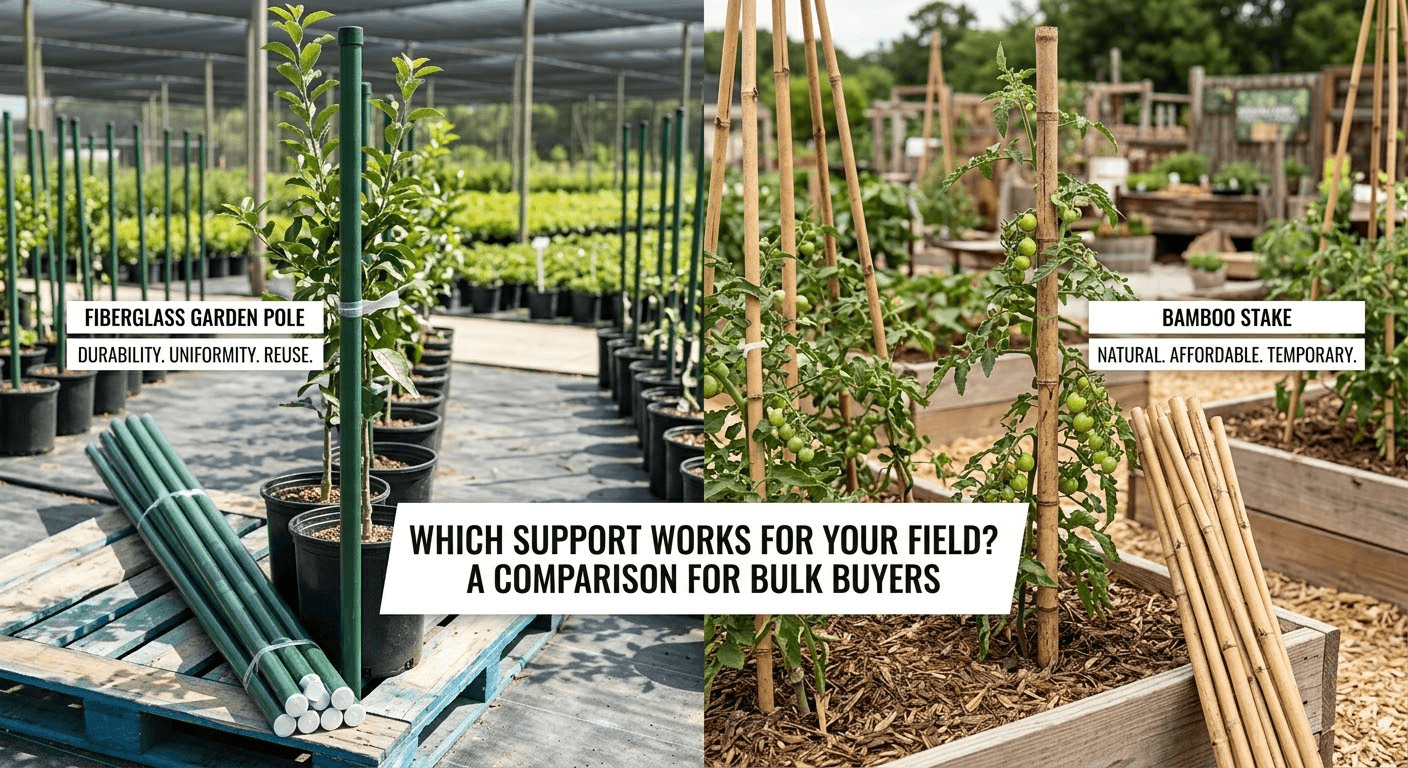
Which option supports lower replacement waste?
Replacement waste depends on use cycles, failure rate, shipping volume, disposal route, and project requirements. Fiberglass may reduce replacement volume when reused across several seasons. Bamboo may fit buyers who prioritize natural appearance and short-term use.
The most trustworthy sustainability comparison looks at total use, not material image alone.
Application Guide: When to Choose Each Support
A clear application map prevents overbuying, under-specifying, and mismatching support to exposure.
Best uses for fiberglass garden poles
Choose fiberglass for commercial growing, greenhouse rows, nursery stock, young tree support, wet climates, windy sites, and repeat seasonal programs. It also suits buyers who need predictable packaging, consistent dimensions, and reorder stability.
Wellco Industries serves agriculture, gardening, erosion control, industrial FRP, and home/outdoor product categories, including EcoStake fiberglass plant supports, plant protection fabrics, weed barrier, trellis products, jute netting, burlap, FRP rebar, and FRP grating. Its wholesale model includes flexible MOQ, OEM/ODM options, and North American warehouse support, which can help buyers planning repeat or bulk orders.
Best uses for bamboo stakes
Choose bamboo for temporary support, decorative plantings, lower-budget seasonal crops, small gardens, and projects where natural appearance carries real value. Before installation, inspect bundles for cracks, mold, weak tips, severe bends, and inconsistent diameter.
Application suitability table
The table below gives a starting point for common buying scenarios:
| Use case | Better fit | Key reason | Buyer note |
|---|---|---|---|
| Tomato rows | Fiberglass or bamboo | Depends on reuse target | Choose stronger specs for repeat cycles |
| Nursery trees | Fiberglass | Consistency and weather resistance | Size for wind and trunk height |
| Greenhouse crops | Fiberglass | Uniform rows and handling | Standardize tie height |
| Retail garden display | Bamboo | Natural appearance | Inspect visual quality |
| Municipal landscape | Fiberglass | Durable exposed support | Confirm packing and lead time |
Once the application is clear, procurement details decide whether the order runs smoothly.
Buying Checklist for Bulk and Repeat Orders
Bulk buyers need specifications, delivery planning, and supplier consistency. A vague order creates field problems later.
What should buyers confirm before ordering fiberglass garden poles or bamboo stakes?
Before ordering, confirm length, diameter, quantity, application, expected reuse, UV exposure, soil conditions, packing method, lead time, and batch consistency. These details help buyers avoid wrong sizing, weak support, delivery delays, and extra replacement cost during planting, installation, or seasonal maintenance.
Keep a written specification for repeat orders. Include product size, color, packaging, label needs, reorder quantity, and acceptable tolerance range.
Supplier questions to ask before placing a bulk order
Ask about MOQ, sample availability, lead time, packaging, freight, diameter tolerance, length tolerance, color options, OEM labeling, and return policy. For large buyers, packaging affects unloading, storage, crew distribution, and damage prevention.
Also ask whether the supplier can support repeat seasonal demand. A low price loses value if the same size becomes unavailable during the next planting cycle.
Good procurement turns a simple plant support into a reliable field system.
Conclusion
A fiberglass garden pole is usually the better fit for repeat use, exposed locations, commercial growing, nurseries, and standardized bulk purchasing. Bamboo stakes remain useful when natural appearance, low upfront cost, and temporary use matter most.
Key takeaways:
- Fiberglass supports stronger consistency and reuse planning.
- Bamboo offers a natural look and lower initial cost.
- Weather exposure, breakage, and labor can change the real cost.
- Bulk buyers should compare cost per use across several seasons.
- The best choice depends on plant load, visual needs, soil conditions, and reorder strategy.