
- November 5, 2026
- Posted by: wellcoindustries
- Category: Fiberglass fire blanket
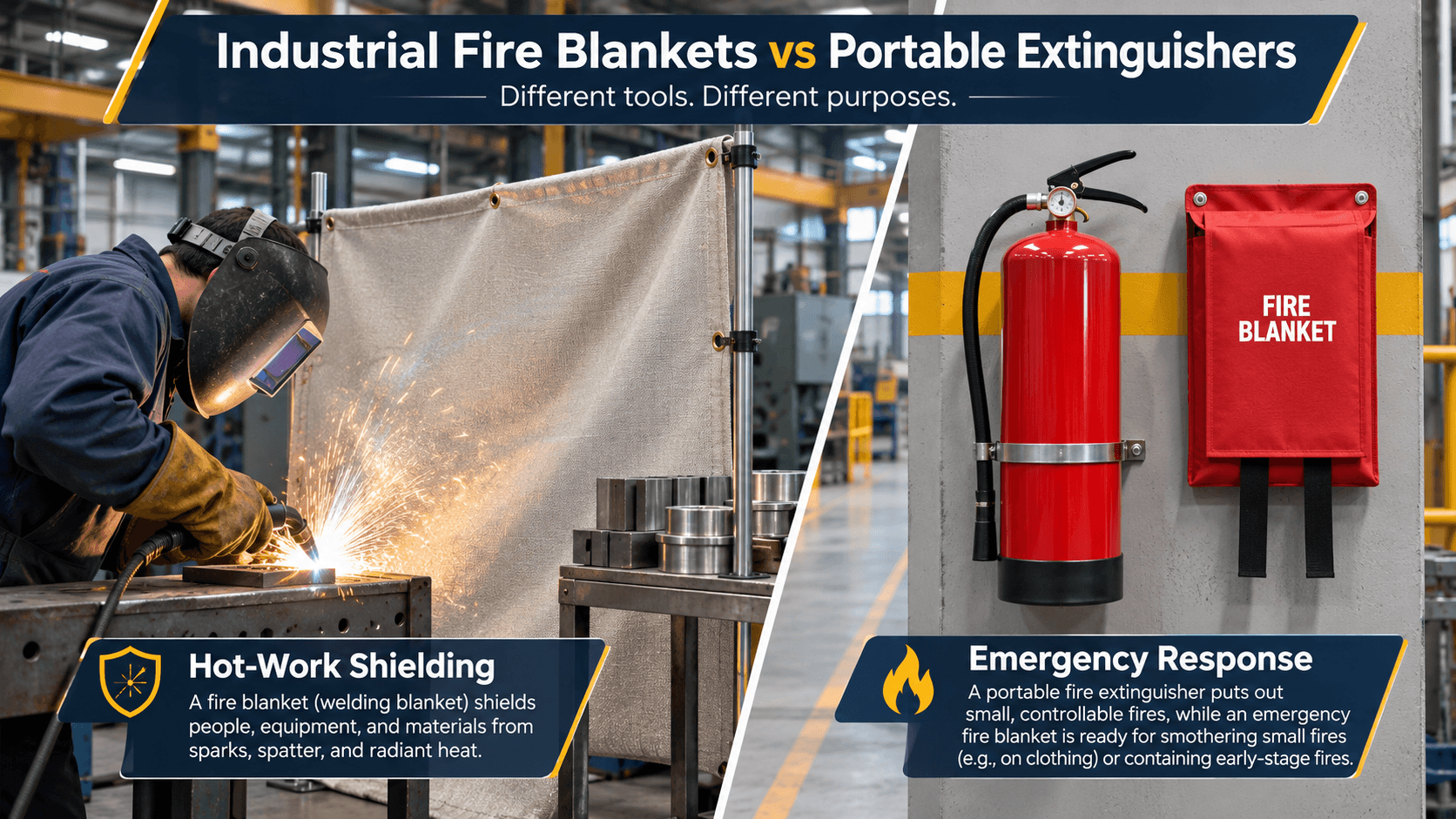
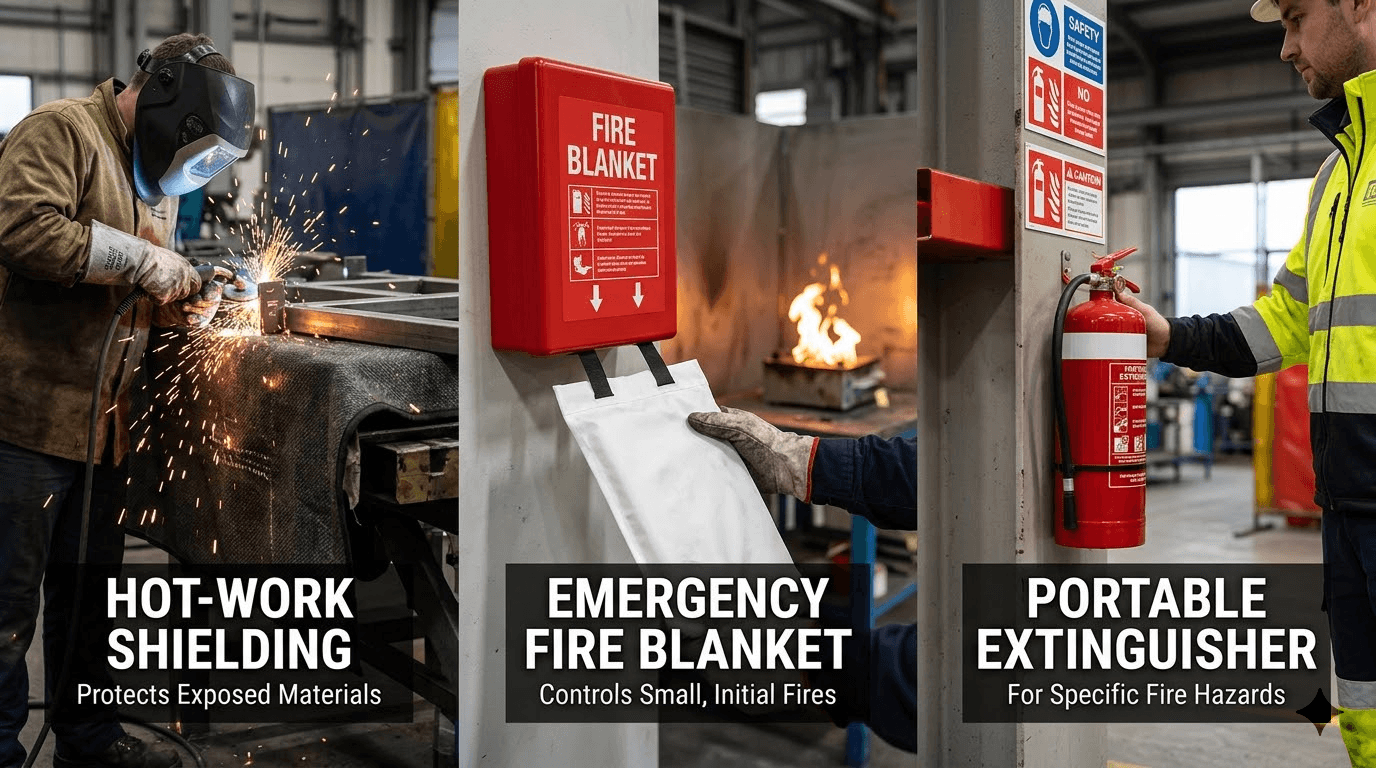
Industrial fire blankets and portable extinguishers serve different roles. A hot-work shielding blanket protects exposed materials during the specified work process. A finished emergency fire blanket is selected for the small-fire application stated in its instructions. [2–4] A portable extinguisher releases an agent selected for the anticipated fire class and hazard. Buying a blanket does not justify removing extinguishers required for a workplace. [1]
First identify the equipment’s task: hot-work shielding or a defined initial fire-control role. Separately, establish who is authorized to respond and which employees must evacuate under the facility’s policy.
The workplace requirements discussed here concern U.S. general industry. EN 1869 is used to explain a finished fire-blanket standard’s scope, not as a substitute for workplace requirements or proof that a particular product complies.
What does “industrial fire blanket” mean?
The label “industrial fire blanket” does not identify a single product type. Check whether the product is intended for hot-work shielding or a defined emergency fire-control application.
A welding blanket, curtain or pad may serve as protection around a process that generates heat or sparks. NIST’s internal hot-work procedure uses definitions extracted from the NFPA Glossary of Terms: blankets for horizontal light-to-moderate exposure, curtains for vertical light-to-moderate exposure, and pads for severe horizontal exposure directly beneath hot work. These definitions help identify the protective task; they do not rate every product sold under those names. [3]
An emergency fire blanket is a separate selection. For example, EN 1869:2019 addresses non-reusable, single-person fire blankets for controlling small fires. Its scope does not establish suitability for every industrial hazard or prove that a particular blanket has passed testing. [4]
Neither a fiberglass material description nor a headline temperature figure establishes that one product can perform both jobs. Ask for the exact finished-product identification, intended use and supporting documentation.
Compare the task before comparing products
| Comparison | Hot-work shielding blanket | Emergency fire blanket | Portable extinguisher |
|---|---|---|---|
| Primary role | Protect exposed materials during the specified hot-work task. | Control a small fire within the finished product’s stated scope. | Discharge an extinguishing agent suited to the assessed fire hazard. |
| Selection evidence | Intended orientation, exposure and installation instructions. | Exact model, instructions and relevant finished-product test documentation. | Classification, approval and instructions matched to the hazard. |
| Key limit | Do not assume it is a fire-suppression product. | Do not infer industrial suitability from the blanket name or material. | Availability does not authorize employee use. |
Apply the comparison within the facility’s hazard assessment and employee-response policy. [1–4]
Can a blanket replace required extinguishers?
Do not treat a blanket as a substitute for extinguishers that applicable workplace requirements call for. Under OSHA’s general-industry extinguisher rule, equipment selection and employee-use arrangements depend on the hazard and employer policy. The rule also contains specific evacuation-policy exemptions; it does not impose one identical arrangement on every workplace. Adding a blanket creates no automatic exemption. [1]
Hot-work protection makes the distinction especially clear. OSHA addresses guards for heat, sparks and slag separately from ready-to-use extinguishing equipment and applicable fire-watch duties. A shield helps prevent ignition; it does not remove the need for the other required precautions. If the basic fire-prevention conditions cannot be met, welding or cutting must not proceed. [2]
A facility may therefore need different equipment for different roles. The responsible safety personnel must determine that arrangement from the process hazards, applicable requirements and emergency plan, rather than from a general product comparison.
When the decision is to evacuate
A spreading fire, hazardous smoke or heat, an uncertain fuel source, or a threatened escape route is not a reason to switch from a blanket to an extinguisher and continue approaching. Raise the alarm, leave the danger area and follow the site’s emergency notification and evacuation procedure. Do not delay evacuation to retrieve equipment. [5, 6]
Even an initial response to a small fire depends on permission, training, suitable equipment and a safe exit. An evacuation-only policy takes priority.
Electrical, combustible-metal, battery and other specialized hazards need their own assessment. A blanket’s size, coating or heat-resistance claim is not evidence that it can control those hazards. Do not extrapolate ordinary small-fire guidance into a special-hazard procedure.
What to settle before purchasing
Use a short equipment brief to connect purchasing with the facility’s safety decisions:
- Define the job. State whether the requirement is hot-work shielding or a finished fire-control product. Identify the process, exposed materials and installation conditions.
- Identify the exact product. Obtain its instructions, warnings and relevant documents. Compare the model, construction and size covered by a report with the proposed product. Check whether it addresses a textile property or finished-blanket performance, then read its stated application and limitations.
- Assign the approval. Have the responsible safety personnel check the proposed equipment against the hazard assessment, employee-response policy and applicable requirements.
- Plan its continued readiness. Establish who handles access, training, inspection and replacement or servicing. Use the requirements for that equipment; do not transfer an extinguisher schedule to a blanket.
This brief helps prevent a purchasing error: ordering a protective textile when the requirement is a documented fire-control product, or treating either purchase as a complete fire-safety plan.
For a business inquiry about finished fiberglass fire blankets, view our fiberglass fire blanket models. Send the intended application and required documentation so our team can discuss your request.
Sources
- OSHA: 29 CFR 1910.157 — Portable fire extinguishers, particularly scope, exemptions, selection and employee education/training
- OSHA: 29 CFR 1910.252 — Welding and cutting fire prevention and protection
- NIST: Fire Prevention During Welding, Cutting, and Other Hot Work, Version 3, document dated April 25, 2025
- EVS: EN 1869:2019 — Fire blankets, published scope
- OSHA: Emergency Action Plan — Fight or Flee?
- U.S. Fire Administration: Choosing and Using Fire Extinguishers