
- May 20, 2026
- Posted by: wellcoindustries
- Category: Fiberglass Stakes
Introduction
A nursery stake looks like a small supply item until it fails across thousands of plants. Bent supports, split poles, inconsistent lengths, and early replacement can create extra labor, reduce plant presentation quality, and increase crop handling costs for commercial growers, landscape contractors, and procurement teams.
This guide compares fiberglass nursery stakes vs bamboo stakes from a field and buying perspective. You will see how each material performs in durability, strength, installation, cost, sustainability, and bulk purchasing, so you can choose the right plant support system for nursery crops, young trees, shrubs, vines, and landscape projects.
In one anonymized container tree nursery, crews used mixed organic stakes across irrigation heavy production rows. After one long growing cycle, workers had to sort out cracked, softened, and uneven stakes before shipping. When the nursery tested uniform reusable fiberglass stakes for selected tree liners, the biggest operational gain came from fewer rejected pieces and faster restaking before loading.
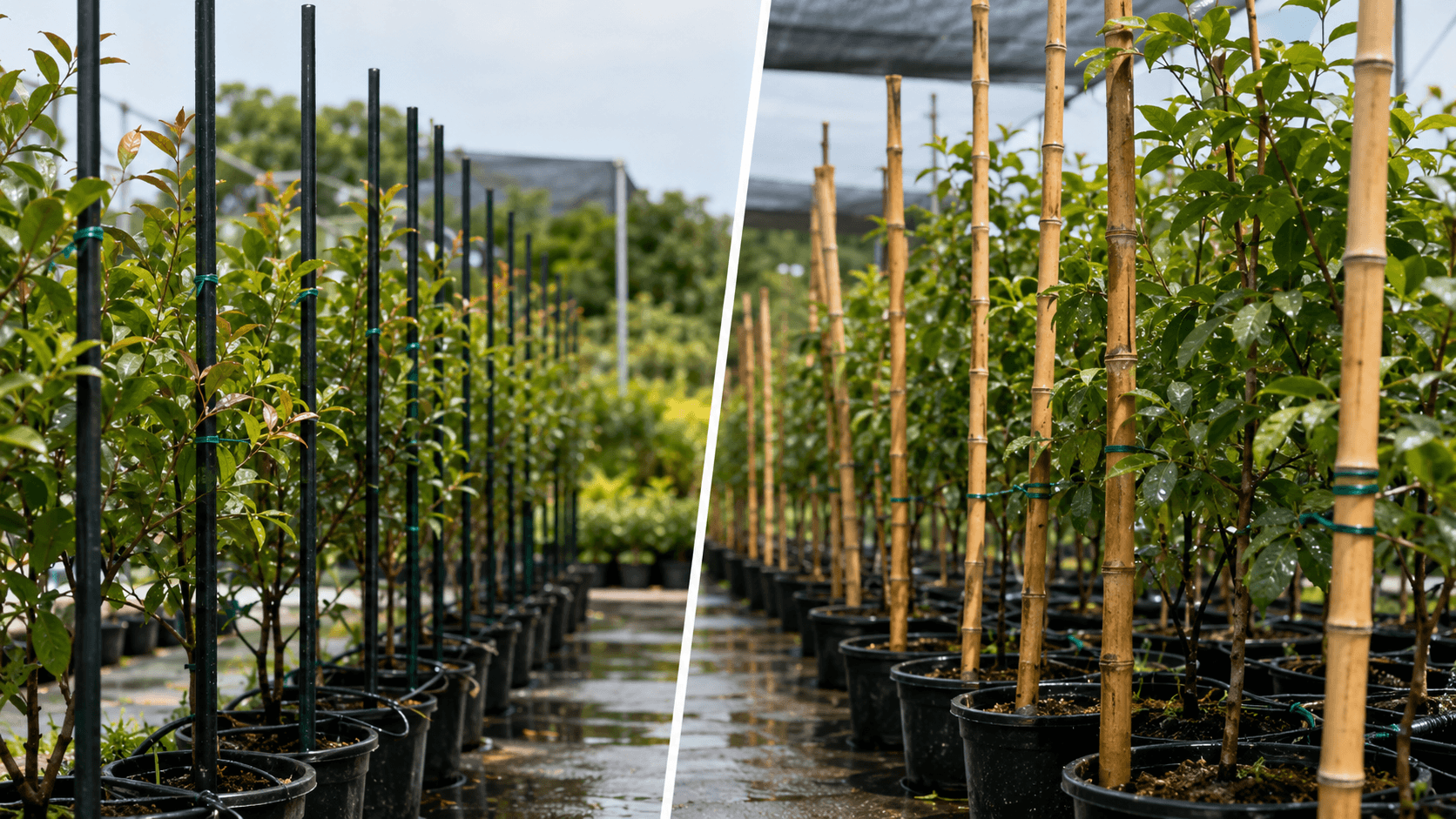
Fiberglass Nursery Stakes vs Bamboo Stakes: Core Material Differences
Before comparing cost or appearance, buyers need to understand how each material behaves. Fiberglass nursery stakes are manufactured from reinforced composite material, while bamboo stakes come from a natural plant material with natural variation in diameter, wall thickness, straightness, and surface texture.
Both materials can support plants. The difference appears when stakes face irrigation, sun exposure, repeated handling, freight movement, and bulk installation.
Use the table below during procurement review to compare how material traits affect field performance and operating cost:
| Property | Fiberglass Nursery Stakes | Bamboo Stakes | Procurement Impact |
|---|---|---|---|
| Moisture resistance | Resists rot and moisture absorption when properly specified | Can absorb moisture and weaken over time | Fiberglass fits wet nursery rows and repeated irrigation |
| Straightness consistency | Manufactured for more uniform size and shape | Natural variation is common | Uniform stakes reduce sorting time |
| Reuse potential | Can support multiple crop cycles when handled and stored correctly | Often better for short term or seasonal use | Reuse can lower cost per usable cycle |
| Surface character | Smooth, consistent, and often available in standard colors | Natural texture with visible nodes | Bamboo suits rustic retail displays |
| Typical fit | Commercial nurseries, contractor planting, repeat use programs | Seasonal crops, garden centers, light support | Choice depends on crop cycle and presentation goal |
A typical nursery or landscape stake may range from about 2 to 8 feet in length, depending on plant height, container size, and installation depth. Diameter selection should match crop load. Small container plants may only need light support, while young trees and wind exposed rows need thicker, stiffer stakes.
The main point for buyers is straightforward. Material behavior affects labor, replacement frequency, and presentation quality as much as it affects plant support.
Durability and Weather Performance in Nursery Conditions
Once the material difference is clear, buyers need to ask how each stake holds up outdoors. Nursery stakes face irrigation cycles, rainfall, humidity, fertilizer exposure, soil contact, UV radiation, and repeated movement by crews.
Organic stakes can work well, especially in short cycle applications. Long exposure to moisture, however, can increase the risk of splitting, softening, pest damage, and breakage. Fiberglass stakes resist moisture absorption and rot, which makes them useful where support must stay reliable through long production periods.
How Long Do Fiberglass Nursery Stakes Last in Field Use?
Fiberglass nursery stakes can usually support more repeated use than bamboo stakes because they resist rot, splitting, and moisture absorption. Actual service life depends on UV exposure, stake diameter, resin quality, handling, soil moisture, storage conditions, and whether crews avoid unnecessary bending or impact damage.
In a wholesale nursery with frequent irrigation, that difference matters. If a crop takes 12 to 24 months before sale, the stake must survive more than one season of weather, tie adjustment, pruning, spacing, and shipping preparation.
A practical field scenario shows the issue. A container tree nursery using organic stakes in wet production blocks found that workers spent extra time before shipping removing softened or cracked pieces. During a fiberglass stake trial on selected young trees, crews reported more consistent length, less sorting, and cleaner presentation across repeated handling stages.
Bamboo still performs well in many applications. It fits short cycle crops, seasonal garden displays, temporary support, small container plants, and projects where a natural look matters more than long reuse.
Buyers should evaluate durability by season length, irrigation frequency, handling intensity, UV exposure, and replacement risk.
Strength, Flexibility, and Plant Support Performance
Durability in weather helps, yet strength under actual plant load matters just as much. A stake must support the crop without damaging the stem, leaning excessively, or failing when wind pushes against foliage.
Young trees, shrubs, vines, and container plants create different loads. A thin stake may suit a small perennial, while a taller ornamental tree may need a thicker stake with better stiffness. Buyers should match stake height and diameter to plant height, root ball size, container size, tie method, and local wind exposure.
The table below helps buyers narrow stake selection by application before requesting samples or quotes:
| Use Case | Recommended Stake Type | Key Reason | Buyer Note |
|---|---|---|---|
| Young container trees | Fiberglass nursery stakes | Better uniformity and reuse potential | Match stake height to trunk and canopy size |
| Seasonal garden displays | Bamboo stakes | Natural appearance and lower upfront cost | Best for short term support |
| Wind exposed nursery rows | Fiberglass nursery stakes | Consistent stiffness and moisture resistance | Test diameter before bulk purchase |
| Light climbing plants | Bamboo or fiberglass | Depends on cycle length and appearance | Use soft ties to prevent stem damage |
| Contractor tree planting | Fiberglass nursery stakes | Repeatable installation and clean presentation | Standardize stake sizes across crews |
When Does Bamboo Bend or Split?
Bamboo can bend or split when it faces long moisture exposure, heavy plant loads, rough handling, or inconsistent wall thickness. Natural cracks, pest damage, and irregular diameter can also reduce reliability, especially in bulk projects where crews need every stake to perform consistently.
Bamboo remains a practical material when the job matches its strengths. It can work well for light duty support, biodegradable plant support, garden center presentation, and one season applications where replacement risk stays low.
Fiberglass makes more sense when you need uniform dimensions, predictable stiffness, and repeated use. Landscape contractors working with young trees often prefer consistent stake length because it keeps tie height, row alignment, and visual presentation more controlled.
A useful specification rule is to choose a stake that reaches roughly one half to two thirds of the plant height above the soil line, then adjust for canopy weight and wind. Ties should stabilize the stem while allowing natural movement. Overly rigid tying can restrict healthy trunk development.
For support performance, the right answer depends on crop load, exposure, tie placement, and whether the stake must survive repeated handling.
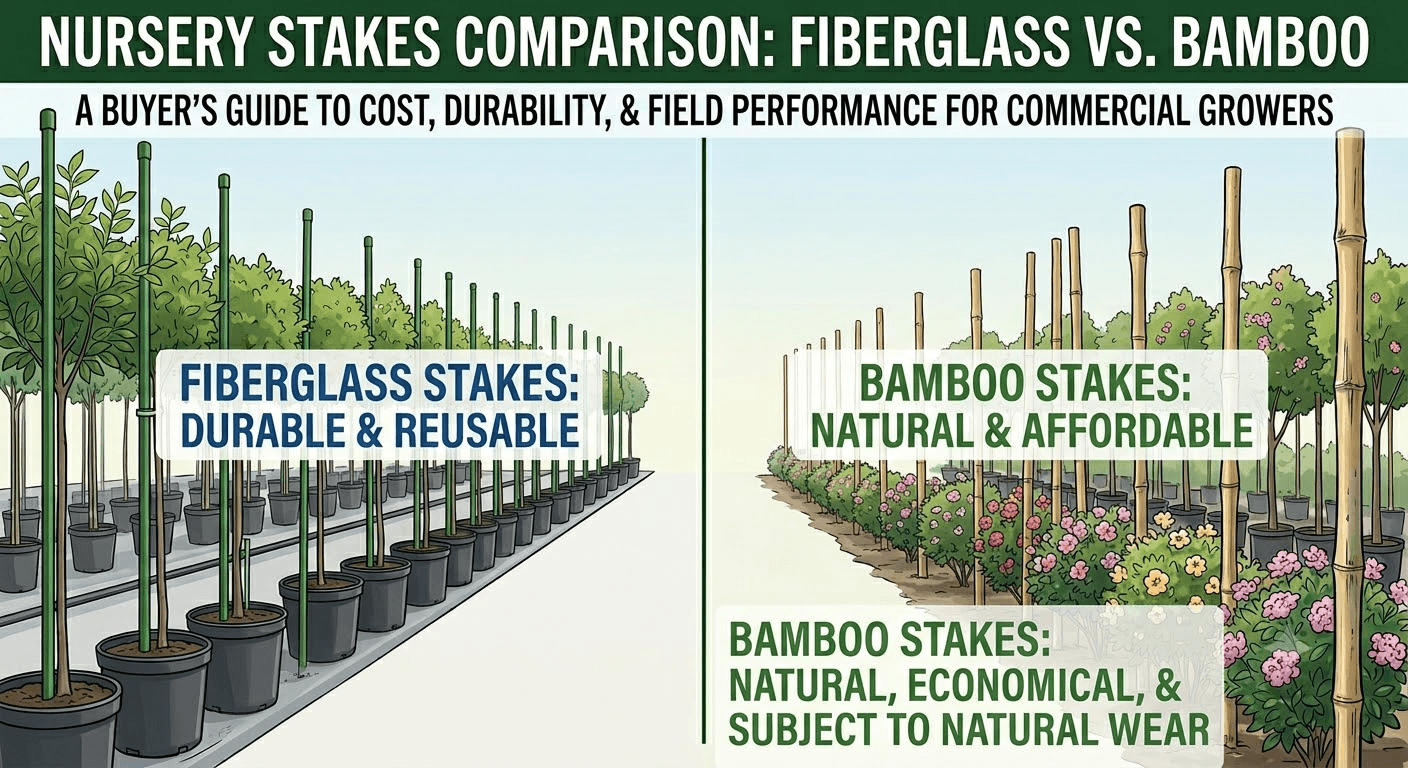
Installation, Handling, and Labor Efficiency
After strength, labor becomes the hidden cost that many buyers underestimate. A low unit price can lose its advantage if crews spend extra time sorting, trimming, replacing, or removing broken stakes.
Fiberglass stakes are typically more uniform, which helps crews work faster during large installations. Bamboo can install quickly in soft soil, although irregular shape, natural taper, and occasional splitting may slow high volume jobs.
Are Fiberglass Nursery Stakes Easier to Install Than Bamboo Stakes?
Fiberglass nursery stakes are often easier for crews when uniform diameter, smooth handling, and consistent length matter. Bamboo may install quickly in soft soil, though irregular shape, splitting, and batch variation can slow work in large volume nursery rows or landscape projects.
Installation also depends on soil condition. In compacted ground, crews may need pilot holes or driving tools regardless of stake material. In loose container media, both materials can be inserted by hand, though thicker stakes require careful placement to avoid root damage.
Tie compatibility matters as well. Fiberglass and bamboo stakes can work with soft plant ties, nursery tape, rubber ties, and tree straps. Crews should avoid tight ties because trunks and stems need room to expand. A good support system stabilizes the plant while allowing controlled movement.
In a landscape contractor scenario involving several hundred young trees, standardized stake length and tie placement reduced crew errors. Uniform fiberglass stakes helped supervisors train new workers faster because every row followed the same installation pattern.
Labor efficiency should be measured through crew speed, rejected pieces, safety during handling, and replacement time after weather events.
Cost, Reuse Value, and Bulk Purchasing Decisions
Once buyers understand field performance, the next step is financial. Unit price matters, but it rarely tells the full procurement story.
Bamboo stakes often cost less upfront, which works well for seasonal crops or one time use. Fiberglass nursery stakes may cost more per piece, yet repeated use can lower cost per crop cycle. The better value depends on delivered cost, replacement rate, labor, storage, and expected reuse.
How Should Buyers Calculate Stake Cost Per Use?
Buyers should calculate cost per use with this formula: delivered stake cost divided by expected usable cycles, then add replacement and handling labor. This gives a more realistic cost per crop cycle than unit price alone and helps compare bamboo with reusable fiberglass nursery stakes.
For example, a stake used once carries its full delivered cost in one crop cycle. A stake reused across four crop cycles spreads the purchase cost across four uses, though buyers should still budget for damaged pieces, cleaning, storage, sorting, and loss.
Bulk buyers should also review MOQ, freight cost, packaging, lead time, custom color, private label options, and diameter consistency. A low piece price can become expensive if shipping is inefficient, bundle quality varies, or defect rates force replacement orders during peak season.
Wellco Industries serves agriculture and gardening buyers with plant support products, wholesale purchasing options, OEM or ODM flexibility, and U.S. warehouse capacity for North American customers. For procurement teams, that type of supply structure can help reduce delays and simplify repeat purchasing.
Use this checklist to compare suppliers beyond unit price:
| Procurement Factor | What to Check | Why It Matters |
|---|---|---|
| Delivered cost | Product cost plus freight | Shows true landed price |
| Usable quantity | Damaged or rejected pieces per bundle | Affects real cost per stake |
| Lead time | Normal and peak season availability | Prevents planting delays |
| Specification consistency | Length, diameter, color, finish | Improves crew efficiency |
| Reorder planning | Stock level and repeat supply | Supports multi site operations |
For high volume buyers, predictable cost per usable season often matters more than the lowest quoted piece price.
Sustainability, Appearance, and End Use Fit
Cost matters, and many buyers also need to satisfy environmental goals, brand presentation, and customer expectations. Bamboo and fiberglass each offer a different sustainability story.
Bamboo has a natural advantage because it is renewable, plant based, biodegradable, and visually familiar in garden settings. Retail garden centers often like its organic appearance because it blends into plant displays and keeps attention on the plant.
Fiberglass supports sustainability through reuse and durability. It is a synthetic composite and should not be described as biodegradable. When properly specified, handled, and stored, longer service life can reduce replacement frequency, breakage, and repeated purchasing across multiple crop cycles.
Which Stake Looks Better in Retail Nursery Displays?
Bamboo often provides a more natural display look, while fiberglass gives a cleaner and more uniform commercial appearance. The better choice depends on whether the buyer values rustic aesthetics, long term reuse, branding consistency, or neat retail presentation across many plants.
This is where buyers should define the end use clearly. Bamboo may look better in an eco themed garden center display or a retail section focused on natural materials. Fiberglass may look better where color coding, straight lines, and repeatable presentation matter.
A balanced sustainability claim should include both material origin and working life. Bamboo is renewable and biodegradable, yet may require more frequent replacement in wet or long cycle commercial settings. Fiberglass is durable and reusable, although buyers should plan responsible storage, reuse, and disposal practices.
The strongest sustainability decision comes from matching the material to the real use cycle.
Buyer Decision Framework: Which Stake Should You Choose?
After comparing performance, labor, cost, and sustainability, the final decision comes down to fit. A good buyer framework starts with the crop and ends with total operating impact.
Choose fiberglass nursery stakes if you manage commercial nursery rows, young trees, municipal planting programs, contractor installations, or repeated use crop cycles. They make sense when you need uniform sizing, moisture resistance, clean presentation, and long service potential.
Choose bamboo stakes if you need a natural look, lower upfront cost, biodegradable support, short term plant support, or seasonal retail display value. They can be a smart choice when replacement risk is low and appearance matters.
Before placing a bulk order, review these specification points:
| Specification Question | Why It Matters |
|---|---|
| What crop or plant type will the stake support? | Load and height requirements vary |
| What is the plant height and container size? | Stake length and diameter must match the crop |
| How windy is the site? | Wind exposure increases bending and failure risk |
| How often will irrigation contact the stake? | Moisture exposure affects bamboo lifespan |
| Will the stake be reused? | Reuse changes lifecycle cost |
| How will stakes be stored? | Storage affects damage, cleanliness, and reorder timing |
| Does the buyer need custom color or branding? | Fiberglass may offer more uniform presentation options |
For larger orders, test samples before committing. Place sample stakes in the actual nursery row or jobsite, expose them to normal irrigation, tie methods, wind, and crew handling, then review performance after several weeks.
Wellco Industries can support buyers comparing fiberglass plant support products with traditional alternatives by helping clarify stake length, diameter, packaging, reorder planning, and bulk purchasing needs.
A safer buying decision comes from matching stake material to crop cycle, site exposure, labor model, and long term procurement goals.
Conclusion
Fiberglass nursery stakes and bamboo stakes both have a place in professional growing and landscape work. Fiberglass is the stronger fit for buyers who need durability, uniformity, moisture resistance, and repeated use. Bamboo works well when natural appearance, biodegradability, and lower upfront cost matter more.
The main buying lesson is to compare cost per usable season, not only unit price. Labor, breakage, replacement frequency, freight, storage, and field reliability all change the final value.
For commercial growers, contractors, and procurement teams, the smartest path is to match the stake to the crop cycle, test samples in real conditions, and choose a supplier that can support consistent bulk purchasing.