
- March 6, 2026
- Posted by: wellcoindustries
- Category: Fiberglass fire blanket
Introduction
A fire smothering blanket is a simple tool with a very specific job: stop a small fire from growing by cutting off its oxygen. For buyers in agriculture, construction, workshops, and facility operations, that matters because small fires rarely stay small for long. The difference between a close call and a costly incident often comes down to whether the right tool was within reach and whether people knew how to use it.
This is especially relevant in environments where hot work, cooking equipment, electrical devices, and combustible materials all exist side by side. The U.S. Fire Administration estimates that fire departments responded to about 170,000 home cooking fires in 2021, causing 135 deaths, 3,000 injuries, and more than $494 million in property loss. NFPA also reports that cooking equipment is involved in a large share of home structure fires each year. Those numbers highlight a broader truth for commercial and industrial buyers: early-stage fire control tools deserve more attention than they often get.
For purchasing managers, contractors, distributors, and OEM buyers, the question is not just whether to stock a fire smothering blanket. It is when it should be used, what limitations it has, and how to buy one that fits the real risks on site. Suppliers with broad operational experience can help here. Wellco Industries, for example, serves professional buyers across fiberglass composites, agricultural inputs, and household product categories, which is useful for teams that prefer consistent sourcing across multiple product lines instead of managing isolated vendors.
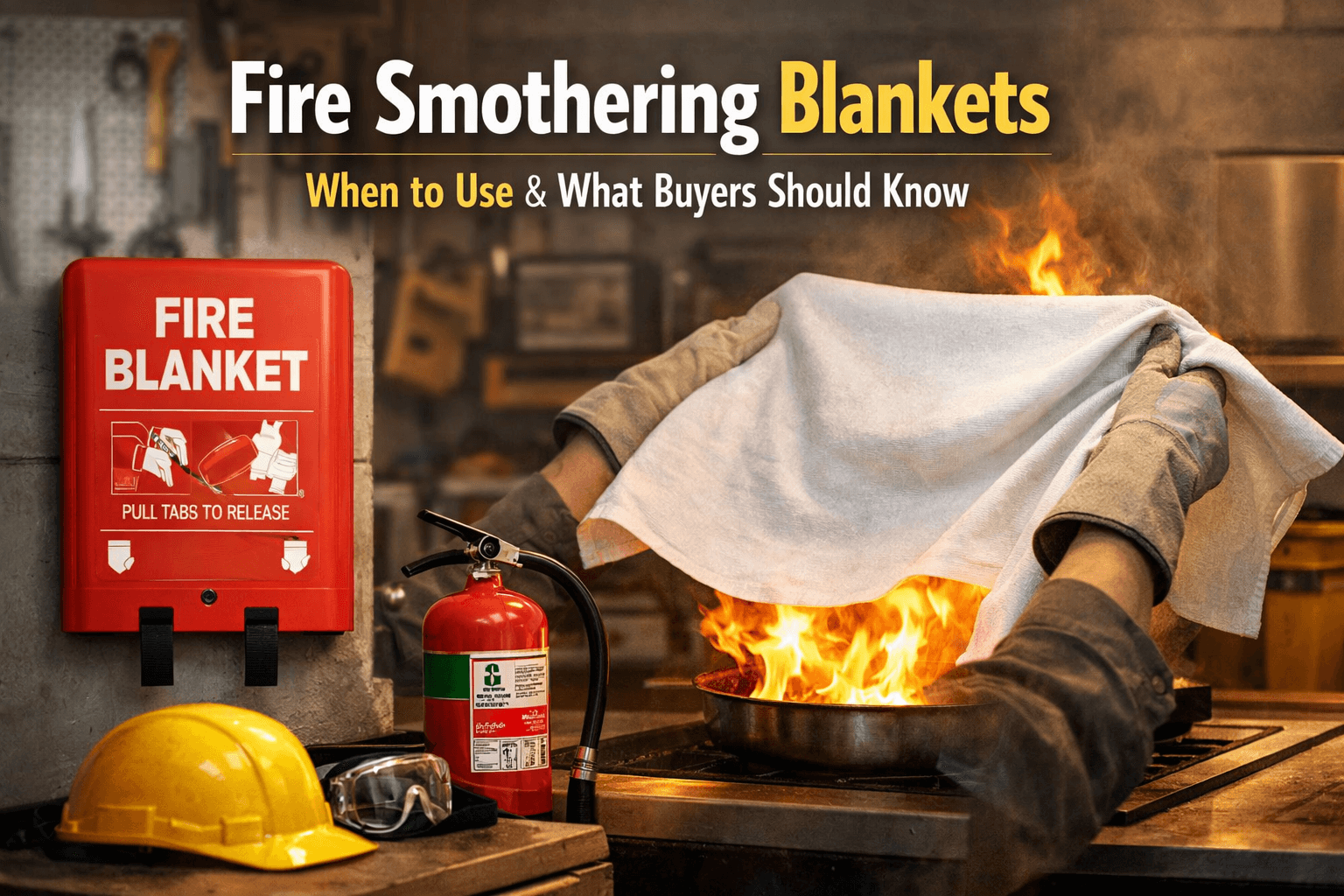
What Is a Fire Smothering Blanket and How Does It Work?
How a fire smothering blanket stops a fire
A fire smothering blanket works by covering a fire and reducing the oxygen available to it. In a small, contained incident, that can interrupt combustion fast enough to prevent spread. The concept is simple, but the success of the response depends on timing, access, and judgment.
A practical safety manager would usually describe it this way: the blanket is for the first seconds of a small fire, not for a fire that is already taking over the room. That aligns with OSHA guidance on incipient-stage firefighting, which makes clear that manual firefighting is meant only for very early-stage fires and that evacuation takes priority once the fire grows or escape routes are threatened.
From a buyer’s point of view, this is why design details matter. A fire smothering blanket that is hard to remove from its pouch or mounted too close to the hazard can fail in practice even if it looks fine on paper.
Where fire smothering blankets are commonly used
Most people associate fire blankets with kitchens, and that is still one of the most common use cases. They are also used in workshops, laboratories, agricultural buildings, site offices, mobile units, and maintenance areas where a small contained fire is plausible.
The key is matching the tool to the environment. In a breakroom kitchen, the likely hazard may be a pan fire. In a workshop, it may be a small bin fire or clothing ignition. In an agricultural setting, it may serve as part of a broader emergency kit near staff housing or food preparation areas. Guidance from fire authorities commonly notes that fire blankets are primarily intended for small cooking fires and clothing fires, not for large or fast-moving incidents.
When Should You Use a Fire Smothering Blanket?
Small contained fires
A fire smothering blanket is most useful when the fire is still small, localized, and physically coverable. Typical examples include:
- A grease fire in a pan
- A small waste-bin fire
- Clothing that has caught fire
- A minor equipment flare-up that has not spread beyond its immediate area
The most important rule is containment. If you can no longer cover the fire fully, or if flames are extending beyond the original source, the blanket may no longer be the right response.
One anonymized example illustrates the point well. In a staff kitchen attached to a field operations facility, a small oil fire started in a shallow pan after it was left heating too long. The employee did not throw water on it. Instead, they pulled a nearby fire smothering blanket, covered the pan from the front while keeping hands shielded, and turned off the heat once it was safe. The fire was contained quickly, but the follow-up lesson was just as important: the blanket had only been effective because it was mounted near the exit path, not directly above the cooking surface. That is the kind of practical detail buyers should think about before installation.
NFPA consistently points to unattended cooking as a leading factor in cooking fires, which reinforces why quick access matters more than many teams realize.
Situations where a blanket may be safer than water
A blanket is often safer than water when water could spread burning material or create a more dangerous reaction. The clearest example is a cooking oil fire. USFA guidance advises covering a pan fire with a lid or baking sheet, which follows the same oxygen-cutoff principle used by a fire smothering blanket.
That makes fire blankets especially useful in places where cooking is part of daily operations and where users may need a fast, intuitive response. For a purchasing manager, that is a real advantage. Under pressure, workers may hesitate over extinguisher selection, but a blanket used for the right type of small fire is often straightforward.
This does not mean the blanket is better than an extinguisher in every case. It means it is the better option in certain narrow scenarios, especially when the goal is to cover a small fire cleanly without splashing or scattering burning material.
When a Fire Smothering Blanket Is Not Enough
Signs the fire is too large or too dangerous
A fire smothering blanket is not meant for every fire. It should not be used as the main response when:
- Flames are spreading rapidly
- Smoke is thick or increasing fast
- The heat is too intense to approach safely
- Chemicals or unknown materials are involved
- The fire is affecting energized equipment
- Your exit path is blocked or could soon be blocked
OSHA’s guidance is clear on this point: if the fire progresses beyond the incipient stage, or if heat, smoke, or the fire itself threatens escape, evacuate immediately.
Safety considerations
The safest message a buyer can give end users is not “this will handle a fire.” The safer message is “this may help control a very small fire in its earliest stage, if the situation is still safe.” That distinction builds trust because it matches how real incidents unfold.
A fire smothering blanket should always be part of a broader emergency response plan. It should never replace evacuation procedures, alarms, extinguishers, training, or emergency contact protocols. If there is any doubt about control, the correct move is to get people out and call emergency services.
Why blankets are part of a larger fire safety plan
A mature fire safety setup uses layers. That may include fire blankets, portable extinguishers, alarms, signage, staff training, and a documented fire prevention plan. OSHA requires covered employers to maintain fire prevention plans and make them available for employee review.
That broader view also matters in procurement. Buyers often prefer suppliers that understand operational purchasing across categories, not just single-item sales. Wellco Industries fits that model by serving customers across FRP products, agricultural goods, and household-related lines. For distributors, contractors, and private label buyers, that kind of supplier breadth can reduce procurement friction and support more consistent ordering across sites.
What Buyers Should Look for Before Choosing a Fire Smothering Blanket
Material quality, size, and compliance considerations
A good buying decision starts with the actual risk profile of the site. Ask these questions:
- What type of small fire is most likely here?
- What blanket size would fully cover that hazard?
- Can the blanket be deployed quickly with gloved or stressed hands?
- Are instructions visible and easy to understand?
- Is there clear documentation for quality and applicable standards?
- Will the packaging hold up in the installation environment?
Some fire authorities point buyers toward recognized standards for blankets intended for small cooking fires, while also distinguishing them from heavier-duty industrial protective blankets used in other applications. That distinction matters because not every “fire blanket” on the market is designed for the same purpose.
Supplier reliability for professional purchasers
Professional buyers rarely evaluate safety products on unit price alone. They also care about:
- Product consistency across orders
- Lead time reliability
- Documentation and labeling support
- OEM or private label capability
- Ease of integrating the product into broader purchasing programs
This is where supplier structure becomes important. Teams in agriculture, construction, and conservation work often buy across multiple categories at once. A supplier with wider manufacturing and sourcing capability can make standardization easier and reduce administrative overhead.
Best Practices for Storage, Training, and Maintenance
Where and how to store fire smothering blankets
Placement has a direct effect on performance. A fire smothering blanket should be mounted where users can reach it quickly without moving deeper into the hazard zone. In kitchens, that often means near the exit route rather than above the stove. In workshops or field facilities, it should be in a visible location, protected from damage, and clearly marked.
A common failure point is poor placement. Teams buy the blanket, install it once, and assume the job is done. In reality, a blanket hidden behind supplies or mounted in a low-visibility corner may not be usable when it matters.
Training teams to use them correctly
Training does not need to be complicated, but it does need to be deliberate. Teams should know:
- Which types of fires the blanket is meant for
- How to pull and hold it to shield hands and arms
- How to cover the fire without feeding it air
- When to stop and evacuate
OSHA also requires employee education where equipment is provided for incipient-stage firefighting use.
A short quarterly drill is often more valuable than a long written policy. In practice, the best-performing sites usually combine clear signage, quick refresher training, and routine checks to make sure the blanket is still present, visible, and undamaged.
Conclusion
A fire smothering blanket is the right tool when the fire is small, contained, and still safe to approach. It is especially useful for pan fires, clothing fires, and other early-stage incidents where cutting off oxygen can stop the problem before it spreads. Its value drops quickly once the fire grows, smoke increases, or escape becomes uncertain.
For buyers, the smartest approach is to treat the fire smothering blanket as one part of a wider safety system. Choose the right size and configuration, install it where it can actually be reached, train people to use it properly, and source it through a supplier that understands professional purchasing needs. If you are reviewing safety readiness across facilities, now is a good time to check whether your current fire response tools match the real hazards your teams face.
Frequently Asked Questions
No. A fire smothering blanket is meant for very specific small-fire scenarios, while extinguishers cover a wider range of incidents. Most professional settings should treat the blanket as a supplemental tool, not a replacement.
It is best for small, contained fires such as a pan fire, a small bin fire, or clothing ignition. It is not suitable for large, fast-spreading, or chemical-related fires.
Install it in a visible, accessible place near the hazard area but not so close that someone must move into danger to reach it. In kitchens, mounting near the exit path is usually better than mounting directly above cooking equipment.
Look at blanket size, intended use, deployment ease, labeling, quality documentation, and supplier reliability. For commercial buyers, consistency across orders and broader sourcing support are also important.
A brief refresher during routine safety training is usually a practical minimum. The most effective programs also include simple drills and visual reminders so the response feels familiar in a real emergency.