
- October 19, 2026
- Posted by: wellcoindustries
- Categories: Burlap, Erosion Control
Untreated burlap can serve as a temporary soil cover while new groundcover plants establish. It is not a reason to cover every exposed patch in a landscape. First decide whether the site needs short-term surface protection, a different mulch, or a specified erosion-control system. University of Maryland Extension includes untreated burlap among temporary coverings for establishing groundcovers, but notes that full coverage may be unnecessary where erosion risk is low. 1
This guide focuses on soil-cover decisions in planted landscape beds. For a landscape crew or buyer, that decision comes before selecting roll width or quantity.
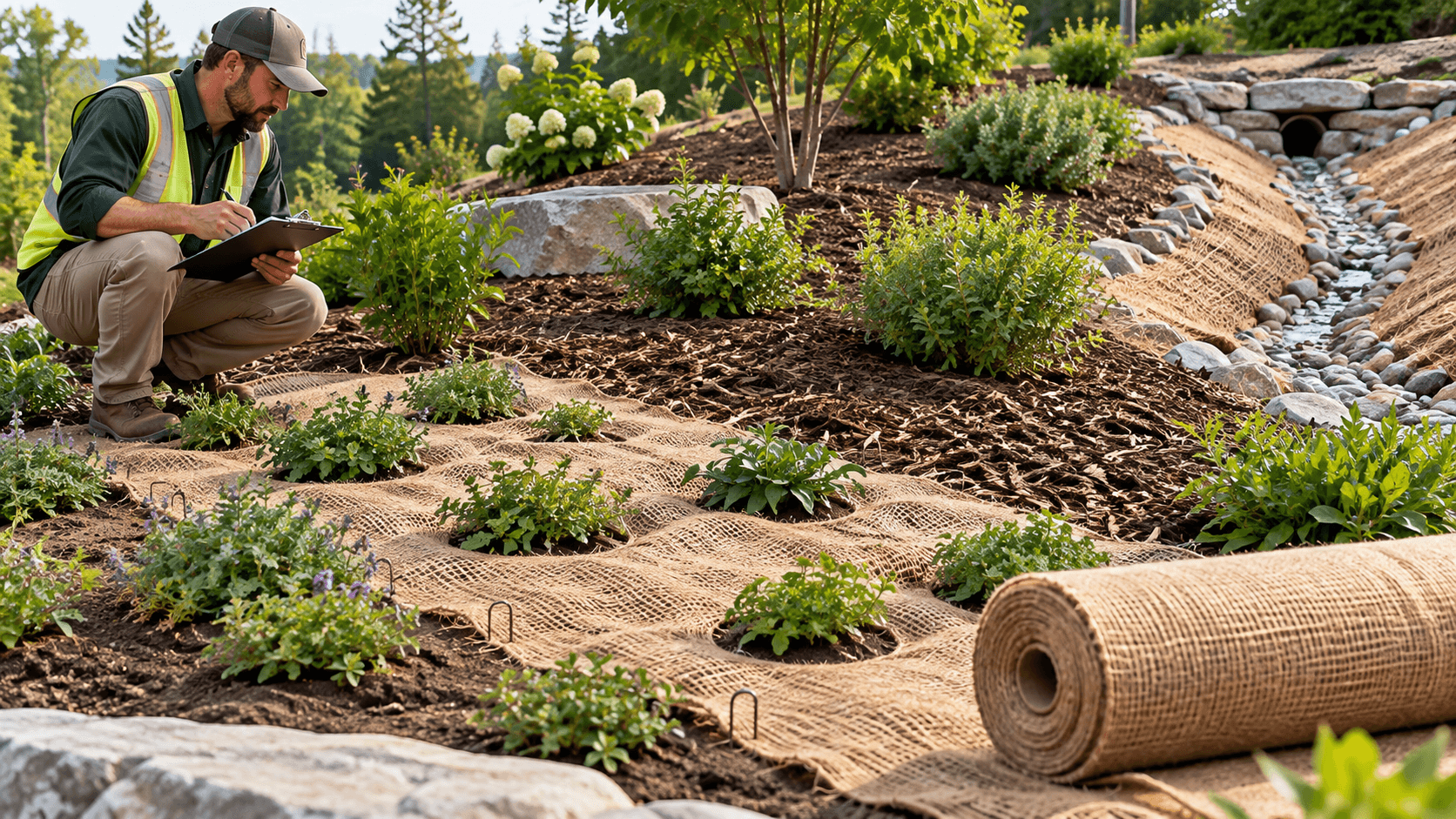
Decide Whether the Ground Needs a Cover
An exposed planting bed and an eroding drainage route need different responses. Walk the area and identify what you are trying to change: soil movement, gaps between young plants, an unfinished bed surface, or weed pressure. Do not combine all four into a vague requirement for “landscape fabric.”
Use the following choices to narrow the scope before ordering material.
| Site situation | Initial decision | What to resolve before proceeding |
|---|---|---|
| New groundcovers with exposed soil between plants | Consider a temporary covering where protection is needed | Confirm untreated fabric, a defined need for interim soil protection, clearance around plants, and a plan to reassess the cover as the groundcover develops [1] |
| A low-erosion-risk bed with scattered bare patches | Full fabric coverage may be unnecessary | Whether erosion risk and the planting plan allow selected gaps to remain uncovered [1] |
| A planted bed receiving an appropriate mulch | Do not add fabric automatically beneath the mulch | Select and maintain the mulch for the intended planting; a fabric underlayer is not inherently required [2] |
| A site with visible washout, a defined flow path or a specified stabilization requirement | Pause generic burlap selection | Have the responsible designer or site professional identify the required system and product criteria [3] |
The first three choices concern planting-bed management. The last requires a site-specific erosion-control decision; a general gardening roll should not be treated as an approved substitute merely because it looks similar to the material in a drawing.
Identify the Temporary Role Before Choosing Burlap
For an establishing groundcover bed, the intended end condition is growing vegetation, not a permanent sheet of fabric. Decide which exposed zones need interim protection and how the cover will fit around the planting.
Maryland’s guidance allows uncovered space around new plants for air circulation. Apply that advice to the actual layout rather than covering right up to every stem. Check the product’s treatment information before selecting it for a use that calls for untreated burlap. A natural color does not verify that specification. 1
If the main objective is managing weeds, use our burlap weed-barrier guide for that separate decision. The presence of fabric on a bed does not, by itself, establish a weed-management plan.
If the material will stand beside foliage or wrap a plant or container rather than lie on soil, start with our guide to burlap for outdoor plants. Those layouts have different purposes from covering a landscape surface.
Check Whether Mulch Alone Addresses the Need
A layer of burlap beneath mulch should have a defined purpose, not be an automatic extra line in the material order. Colorado State University Extension advises that appropriately applied mulch does not require a fabric underlayer and explains that underlayers can interfere with water and air exchange. Its guidance concerns landscape mulching, not every specialized agricultural or construction use. 2
For a planting bed, write down the intended finish and maintenance method first. Will the bed be replanted regularly? Is the priority appearance, moisture management or a transition to living groundcover? Select the surface treatment around those needs. If the proposed burlap layer adds no separate function, leave it out of the plan.
This is a scope decision, not a claim that one material is universally better than another. Avoid ordering an extra layer simply because a product is sold as “burlap fabric for landscaping.”
Separate Landscape Covering From Engineered Stabilization
Runoff problems should not be reduced to a choice between a lighter and heavier roll. Caltrans’ construction BMP field manual identifies site conditions, environmental compatibility, durability and maintenance among the criteria for selecting blankets and mats. The manual calls for measures to limit excessive runoff and separately warns against using the described treatments to stabilize areas with swift-moving concentrated flows. 3
Where a drainage route, unstable slope or project specification governs the work, pause material substitution and obtain the responsible professional’s direction. This guide does not establish an acceptable slope, flow rate or load for ordinary burlap.
Our burlap erosion-control guide explains the distinction between ordinary fabric and purpose-made erosion-control products. Use the selected product’s instructions and the project documents for installation details, rather than borrowing an overlap or anchor pattern from a different blanket.
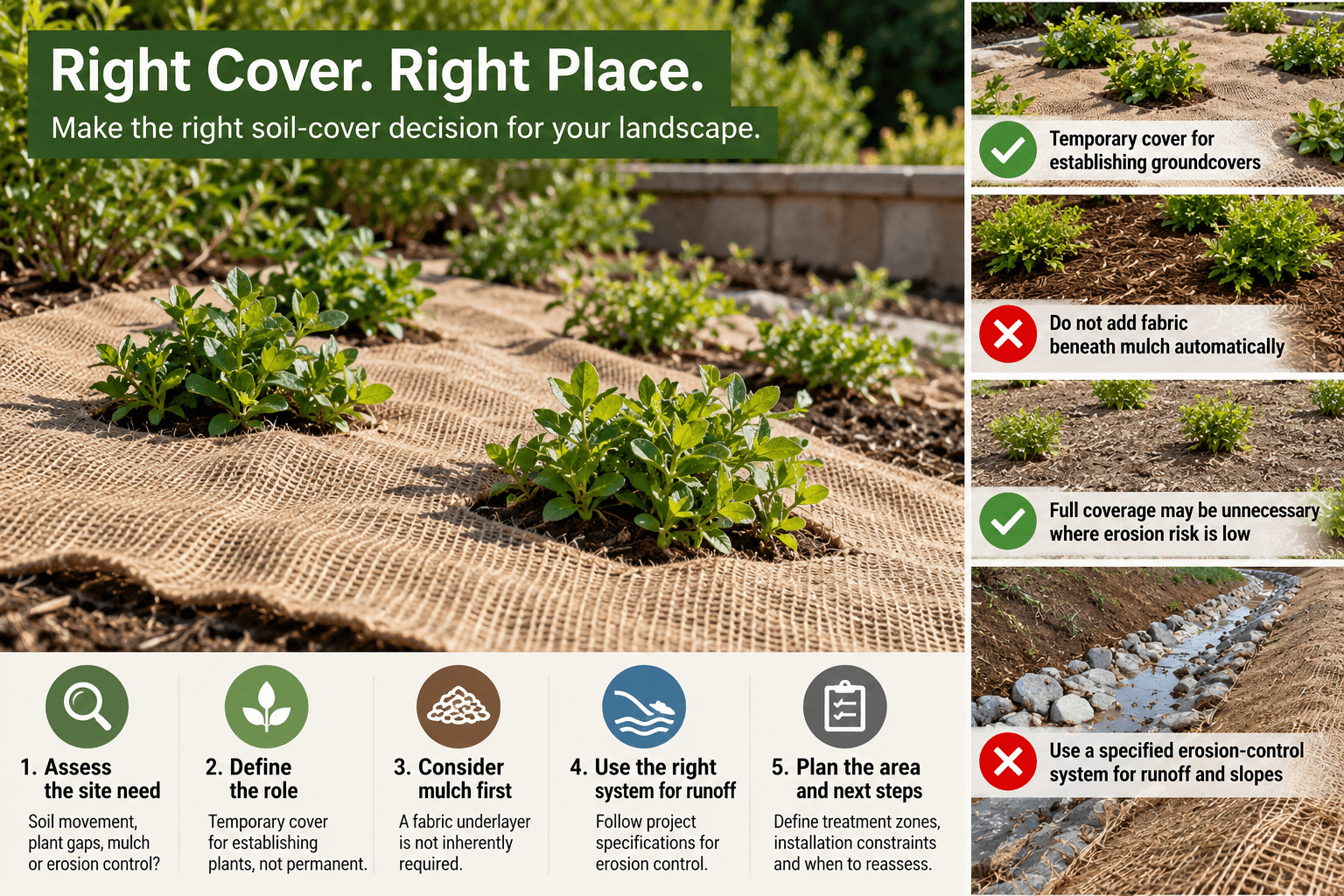
Define the Area and the End of the Job
Before turning a site sketch into a roll order, mark three things:
- The treatment zones: Identify the actual ground areas needing cover, separately from paths, existing planting and areas receiving another treatment.
- The installation constraints: Note irregular shapes, access restrictions and any product-specific edge or joint requirements. Net ground area alone is not a final roll quantity.
- The handover condition: State who checks the cover, when its purpose will be reassessed, and who handles adjustment or removal if required by the selected system.
Reassess the cover if soil movement continues, the material shifts, or it interferes with plant growth. Decide any adjustment or removal under the selected plan.
Treat these as planning questions, not a universal installation pattern. Do not add a fixed waste allowance, overlap dimension or service-life promise without a basis in the chosen layout and product.
For work involving several beds, keep a separate scope for each. A groundcover establishment area should not inherit the same material requirement as a runoff route simply because both sit within one landscaping contract.
Send Us a Defined Burlap Requirement
Once the application is clear, review our burlap roll product details and send us:
- The intended use and a photo or sketch of the treatment area.
- Required roll dimensions or the area to be covered.
- Any specified material, treatment or other fabric requirements.
- Quantity, packaging needs, delivery destination and requested timing.
- Any project document that controls material selection.
Email [email protected] to confirm product options for your requirement. Keep project suitability and installation approval with the person responsible for the site design.
References
- University of Maryland Extension: Groundcovers. See “Erosion control” for temporary cover during establishment and conditions where full coverage may not be necessary.
- Colorado State University Extension: Mulching, GardenNotes #245. See “Mulch Selection” and “General Use” for landscape mulch and underlayer guidance.
- Caltrans: Construction Site BMP Field Manual and Troubleshooting Guide, January 2003, SS-7, printed pages 30-33. Historical guidance on selection and limitations, not a current project