
- September 10, 2026
- Posted by: wellcoindustries
- Categories: Burlap, Erosion Control
If you are evaluating burlap for winterizing plants, start with the exposure you need to reduce. A burlap screen or a loose wrap can help protect selected trees and shrubs from drying winter wind, blowing salt and some snow-related damage. It is a physical barrier, not a heater or a guarantee against freeze injury.
The right approach depends on the plant, site, weather and product construction. Burlap should be used with adequate watering, appropriate mulch and a plant-specific winter plan. It should not be treated as a permanent cover or as a substitute for a specified erosion-control, frost-protection or insulation system.
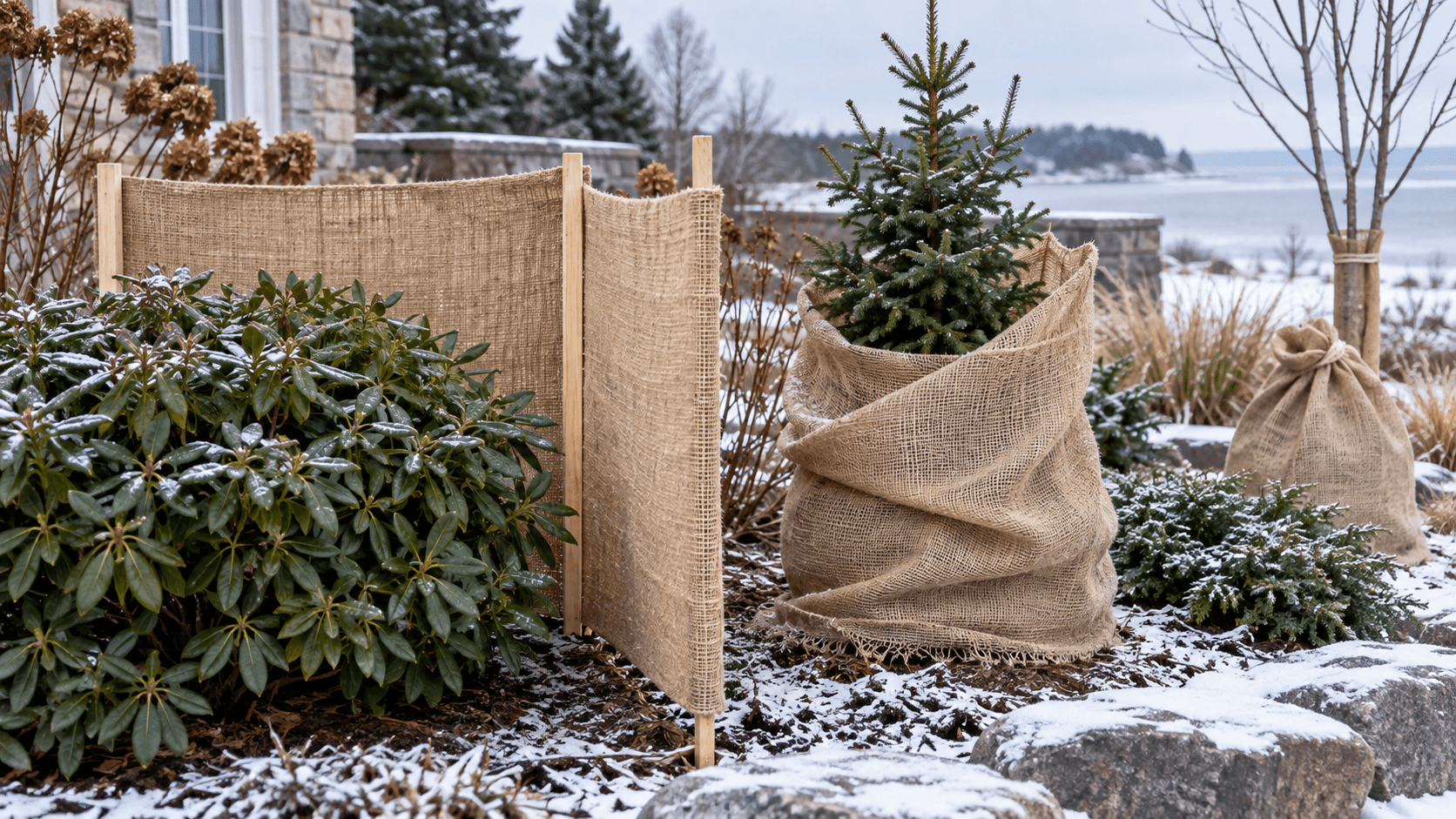
What Winter Problem Are You Trying to Reduce?
Winter damage does not come from cold temperature alone. Before selecting a roll, identify the main exposure at the site.
Wind and winter moisture loss
Evergreen foliage can continue to lose moisture when the ground is cold or frozen. Dry soil, strong wind and exposed locations can increase stress, especially for recently planted plants and exposed evergreens.[1][2] A properly placed burlap screen can reduce direct wind exposure while leaving space for air movement.
Winter sun and temperature changes
Sun on a cold, exposed plant can contribute to uneven warming and moisture loss. A screen may reduce exposure on the windward or sunny side, but the appropriate treatment depends on the species and site. Do not assume that wrapping a trunk with ordinary burlap is the correct solution for every tree; follow local extension or arboricultural guidance for species-specific trunk protection.
Road salt and salt spray
Plants beside roads, parking areas and walkways may be exposed to salt spray or salt-laden snow. A burlap barrier can help intercept some spray when it is positioned between the plant and the source.[2] It does not remove salt from the soil or protect foliage that extends beyond the barrier, so watering, drainage and site management still matter.
Snow and ice loading
Wet snow and ice can bend or break branches. For some upright or columnar evergreens, soft wrapping materials such as burlap may be used to hold branches together and reduce spreading or breakage under snow load when recommended for that plant form.[3] This is different from using a freestanding burlap wind or salt screen, and it should not be treated as a universal snow-load support method. Do not pull the material tightly around branches or use it to hold a heavy load in place. Remove accumulated snow carefully when conditions and plant safety allow.
Root-zone exposure
Wrapping the foliage does not insulate the root zone. Root-zone protection depends on soil moisture, mulch, snow cover, plant hardiness and site conditions.[1][2][3] Water the soil before the ground freezes when conditions allow, and use an appropriate mulch layer to help moderate soil temperature and moisture. Keep mulch away from direct contact with the trunk or crown.
When Is Burlap a Reasonable Choice?
Burlap is often considered for exposed evergreens, young landscape plants, shrubs near roads and other situations where wind or salt exposure is the primary concern. It is most useful when the material can be installed securely without rubbing against the plant or blocking required access.
Consider another or additional method when:
- The plant needs a controlled temperature increase rather than a wind screen.
- The site has severe freeze risk, deep root-zone exposure or species-specific protection requirements.
- Heavy snow, ice or concentrated wind could collapse the material onto the plant.
- The project requires an engineered frost blanket, shade structure, erosion-control product or documented installation detail.
- The plant is in a container and needs protection for the pot and root ball as well as the foliage. For that situation, use the separate potted plant burlap winter guide.
The goal is not to cover every plant in the same way. The goal is to reduce a known exposure while maintaining airflow, access and practical inspection.
Burlap Screen or Loose Wrap?
Both loose burlap wrapping and freestanding windbreaks are used for winter protection, but they solve somewhat different site problems.[1] For many shrubs and evergreen plantings, a freestanding screen is easier to manage than a tight wrap.
Burlap wind screen
A screen is installed on stakes or a simple support structure so the fabric stands between the plant and the prevailing wind, winter sun or salt source. It can protect an exposed side while leaving the top open and reducing direct fabric contact with foliage. The screen should be stable in the expected weather and positioned according to the plant’s size and the exposure being addressed.
Screens are useful when:
- Wind or salt comes mainly from one direction.
- The plant needs airflow and room to move.
- You need to inspect, water or adjust the plant during winter.
- A full wrap would press against foliage or trap moisture.
Loose burlap wrap
A loose wrap may be suitable for some small shrubs or branches when the product and plant guidance support it. Leave enough room for airflow, avoid compressing the foliage and secure the material so it cannot unravel or rub in the wind. A wrap that is too tight can create contact damage and make inspection difficult.
Do not use a generic wrap method for a tree, shrub or evergreen without considering its mature form, branch structure and local weather. When in doubt, a supported screen is often easier to inspect and adjust than a sealed-looking cover.
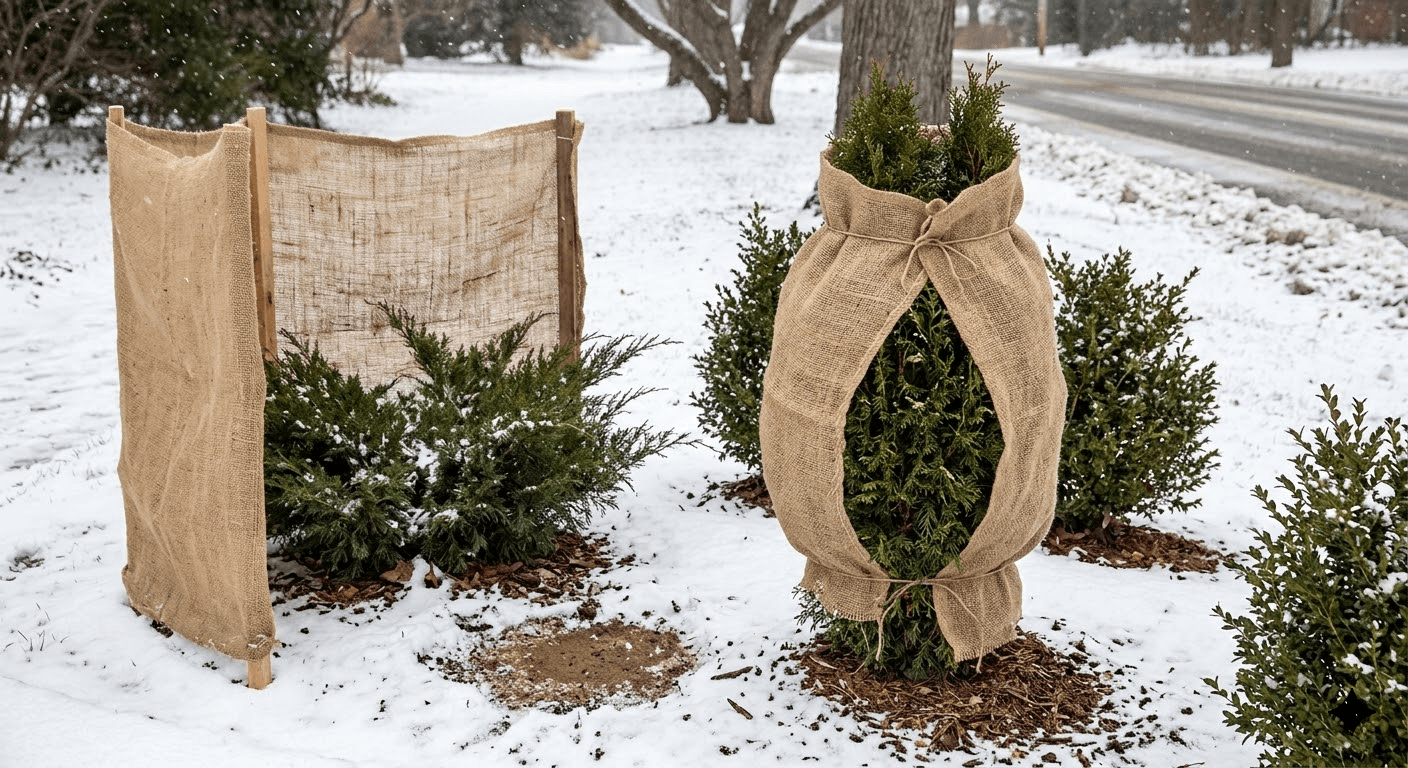
How to Plan a Burlap Winter-Protection Installation
1. Assess the plant and exposure
Record the plant type, approximate height and width, planting date, exposed sides and nearby sources of wind, sun or salt. Note whether the plant is established, recently transplanted, evergreen or especially vulnerable to winter drying. A local extension office, arborist or landscape professional can help when the species or site has unusual requirements.
2. Confirm soil moisture and root-zone protection
Check the soil before the ground freezes. If conditions are dry and watering is appropriate for the season, water deeply enough to moisten the root zone without creating standing water. Mulch can help moderate soil temperature and moisture, but do not pile it against the trunk.
3. Define the coverage you actually need
Measure the side, arc or perimeter that needs protection. For a screen, calculate the fabric area needed for the supported face and allow material for secure edges. For a loose wrap, measure the plant’s usable coverage area without assuming that more layers are always better.
Select a manageable roll format. A wider roll may reduce seams, while shorter or narrower sections may be easier to carry, place and inspect. The best choice is the one that can be installed securely without excess fabric on the ground or unsupported material above the plant.
4. Install a supported screen where practical
Place stakes or a support structure outside the plant’s main growing space. Attach the burlap so it remains stable in wind but is not stretched into the foliage. For a supported winter screen around an evergreen, leave the top open for air and light unless plant-specific guidance calls for another arrangement.[2] Leave enough clearance for airflow and inspection.
For locations beside roads or parking areas, place the barrier between the plant and the likely salt source. Avoid blocking sight lines, drainage, walkways or required access.
5. Use a loose wrap only when it fits the plant
If a loose wrap is appropriate, gather or tie branches gently where needed and place the fabric without crushing foliage. Secure the material at the bottom and along exposed edges, but do not create a tight, sealed enclosure. Check that rain, snow and irrigation can be managed and that the plant can still be inspected.
6. Record the inspection and removal plan
Before winter weather arrives, note where the anchors, seams and access points are located. Plan to inspect after high wind, heavy wet snow, ice or salt events. Seasonal protection should be removed or adjusted when local spring conditions and plant activity make the covering unnecessary. Do not leave a temporary cover in place simply because it is still intact.
Winter Inspection Checklist
Inspect the installation after significant weather and whenever the plant appears stressed. Check for:
- Lifted edges, loose anchors or torn fabric.
- Fabric rubbing against bark, branches or foliage.
- Snow or ice pressing the screen or wrap into the plant.
- Water pooling at the base or blocked drainage.
- Salt deposits on foliage or soil near a roadway.
- Dry soil despite the presence of a winter cover.
- Plant growth or changing spring conditions that mean the temporary barrier should be reassessed, adjusted or removed.
Correct the cause of a problem instead of adding more layers. A larger amount of burlap cannot compensate for dry roots, poor drainage, unstable supports or a plant that needs a different protection method.
How to Specify Burlap for a Landscape or Commercial Requirement
If you are sourcing burlap rolls for multiple plants, a landscape program or a project, prepare the information needed to match the material to the application:
- Plant types, approximate dimensions and the number of plants.
- Whether the requirement is for screens, loose wraps or another use.
- Required coverage, roll width, roll length and quantity.
- Expected wind, salt, snow and handling conditions.
- Fabric specification, including any required weave, weight basis or treatment.
- Packaging, delivery destination and required timeline.
- Project specifications or documentation that must be reviewed.
We can review natural burlap fabric roll requirements for plant protection, gardening, landscaping and selected erosion-control applications. Product form, dimensions, fabric specification, packaging and quantity should be confirmed for the specific requirement. Start with our burlap fabric roll product page and send the application, dimensions, quantity and delivery location for review.
FAQ
Does burlap keep plants warm in winter?
Burlap can reduce direct wind, sun or salt exposure, but it is not a heat source and does not guarantee protection from freezing temperatures. Use it as one part of a site-appropriate winter plan that also considers soil moisture, roots and plant type.
Should burlap touch plant foliage?
Avoid a tight wrap that presses against foliage or branches. A supported screen can provide separation and airflow. If a loose wrap is appropriate for the plant, install it with enough room for inspection and secure it so wind cannot cause repeated rubbing.
Is a burlap wind screen better than wrapping a shrub?
It depends on the plant and exposure. A screen is often easier to position on the windward or salt-facing side, inspect and remove. A loose wrap may fit some compact plants, but it should not compress foliage or create a sealed enclosure.
Can burlap protect plants from road salt?
A properly positioned barrier may intercept some salt spray, but it does not remove salt from soil or protect every part of a plant. Combine the barrier with appropriate watering, drainage and site management, and follow local recommendations for salt-affected landscapes.
When should burlap be removed from plants?
There is no universal removal date. Reassess the barrier when the winter exposure it was installed to reduce – such as drying wind, road-salt spray or snow risk – has passed, and remove or adjust it before it interferes with growth, airflow or inspection.[1][2] Leaving burlap in place too long can interfere with inspection, growth or airflow.
Can I wrap a potted plant with burlap?
Container plants have additional root-zone and moisture concerns. Use the separate potted plant burlap winter guide for a step-by-step container-focused approach rather than applying a landscape screen method.