
- October 21, 2026
- Posted by: wellcoindustries
- Category: Fiberglass fire blanket
Loose fiberglass fibers can irritate the skin, eyes, nose, and throat. If you notice fiberglass fire blanket splinters or feel itching after handling the fabric, limit further contact rather than shaking the material clean. General fiberglass guidance supports taking those concerns seriously, but it does not measure how much fiber a particular finished blanket releases. [1, 2]
The practical response is to limit further contact, avoid stirring up dust, and follow the actual product’s handling instructions. If loose fiberglass dust or fibers enter the eye, NIOSH occupational guidance calls for immediate rinsing and immediate medical attention. For sudden or unexpected breathing difficulty, call 911 or your local emergency number right away. [1, 3, 6]
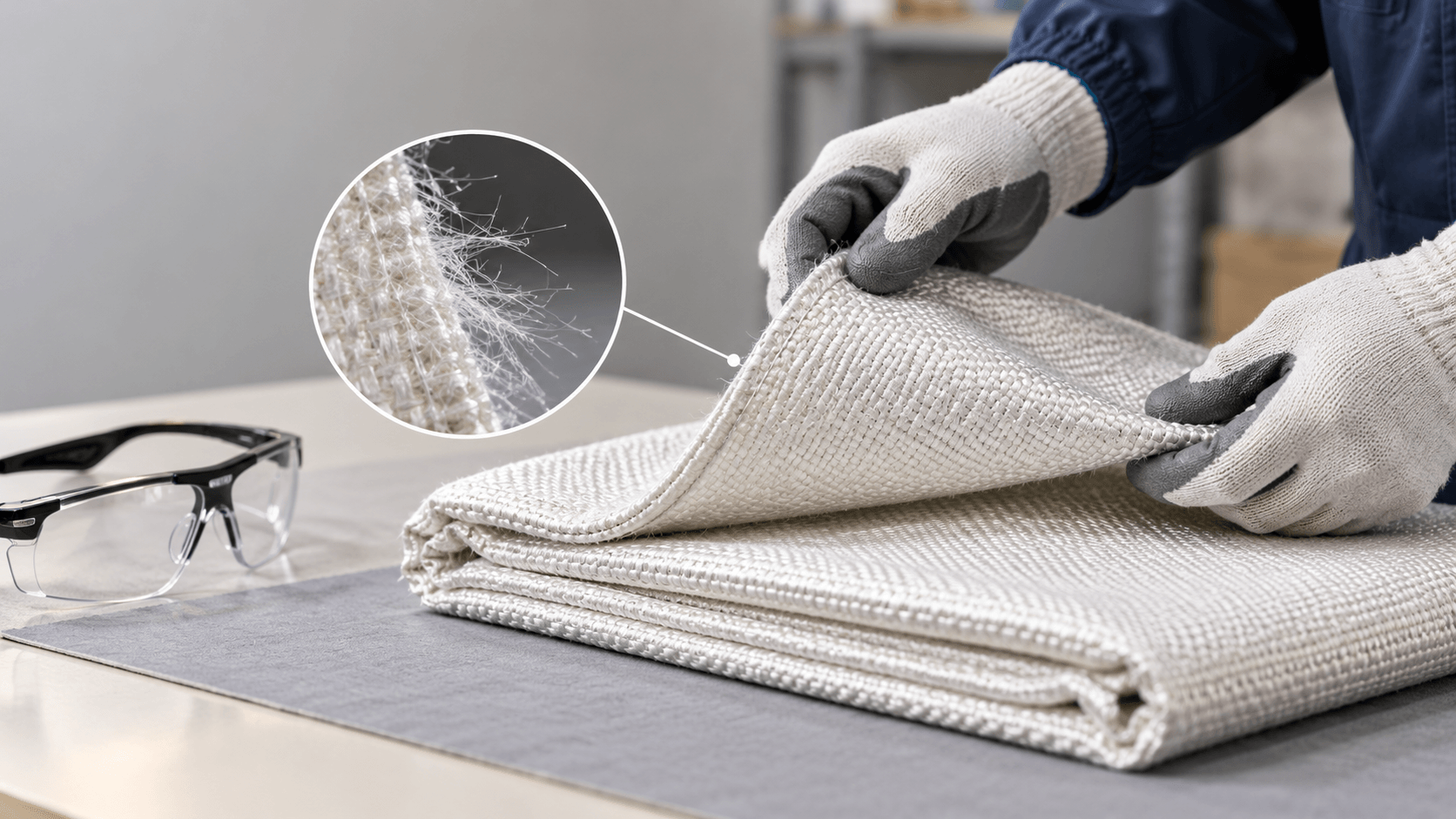
What “fiberglass splinters” means
Fiberglass consists of fine glass fibers. In everyday discussion, “splinters” may describe loose strands or the prickly sensation associated with contact; the word alone does not identify the material, exposure level, or cause of a rash. Fiberglass contact can cause irritation, and airborne exposure can affect the respiratory tract. [1, 2]
Keep the material question separate from the product question. Knowing that a blanket contains fiberglass does not tell you its shedding rate, whether a coating prevents contact, or whether it is suitable for a specific fire. Those conclusions need evidence for the actual finished product, not a general description of glass fibers.
Reduce contact during routine handling
Avoid unnecessary disturbance of fiberglass-containing material. For direct-contact work, public-health guidance recommends protective clothing, gloves, and suitable eye protection. Wash exposed skin with soap and water, and wash clothing used for fiberglass work separately from other clothing. [2]
For a fire blanket, use those principles alongside its own instructions:
- Check the label and handling information before a planned inspection or demonstration.
- Do not shake a blanket to remove loose fibers. Avoid activities that disperse dust.
- Do not cut, brush, or modify it as a do-it-yourself remedy for shedding.
- Follow its specified storage and packing method rather than assuming every blanket should be rolled, folded, or stored in a different container.
These are routine-handling precautions, not a fire-deployment procedure. During an emergency, follow the emergency plan and the product instructions; do not delay leaving an unsafe area to inspect the fabric.
What to do after contact
The actions below are initial exposure guidance, not a diagnosis or a product-specific procedure. The eye-contact recommendation comes from NIOSH’s occupational guidance for fibrous glass dust. It does not establish how much fiber a particular finished blanket releases. [1, 3]
| Contact situation | Initial action | When to get help |
|---|---|---|
| Fibers on the skin | Stop further contact and wash exposed skin with soap and water. Change out of affected work clothing. [2] | Seek medical advice if irritation persists, worsens, or you are concerned about an injury. |
| Loose fiberglass dust or fibers in the eye | Immediately flush with plenty of clean water. Do not rub the eye. [3, 4] | Get medical attention immediately. Changes in vision or a painful, red eye require emergency care. [3, 4] |
| Breathing airborne dust | Leave the exposure and move to fresh air. [1] | For sudden or unexpected breathing difficulty, call 911 or your local emergency number right away. Do not wait to see whether it improves. [6] |
If an object appears embedded in or has pierced the eye, do not try to remove it or apply pressure; seek emergency care. The rinsing advice above is for loose material, not an embedded object or penetrating injury. [4]
Clean the surroundings, not the blanket by default
For fiberglass dust on surrounding surfaces, NYC Health recommends wet cleaning or a HEPA-equipped vacuum and advises against dry sweeping or other dust-stirring activities. That is environmental-cleanup guidance, not permission to wet, vacuum, or wash the fire blanket itself. [2]
If a routine inspection reveals unexpected fiber release, fabric damage, or another reason to doubt the blanket’s condition, stop unnecessary handling. Have the responsible person assess it against the applicable product instructions before it is relied on for emergency use. Do not shake it clean or return it to service based on appearance alone. If it is taken out of service, the responsible person should arrange suitable replacement fire-safety equipment rather than leave the location unprotected. Any cleaning, repacking, or replacement decision must follow the applicable instructions.
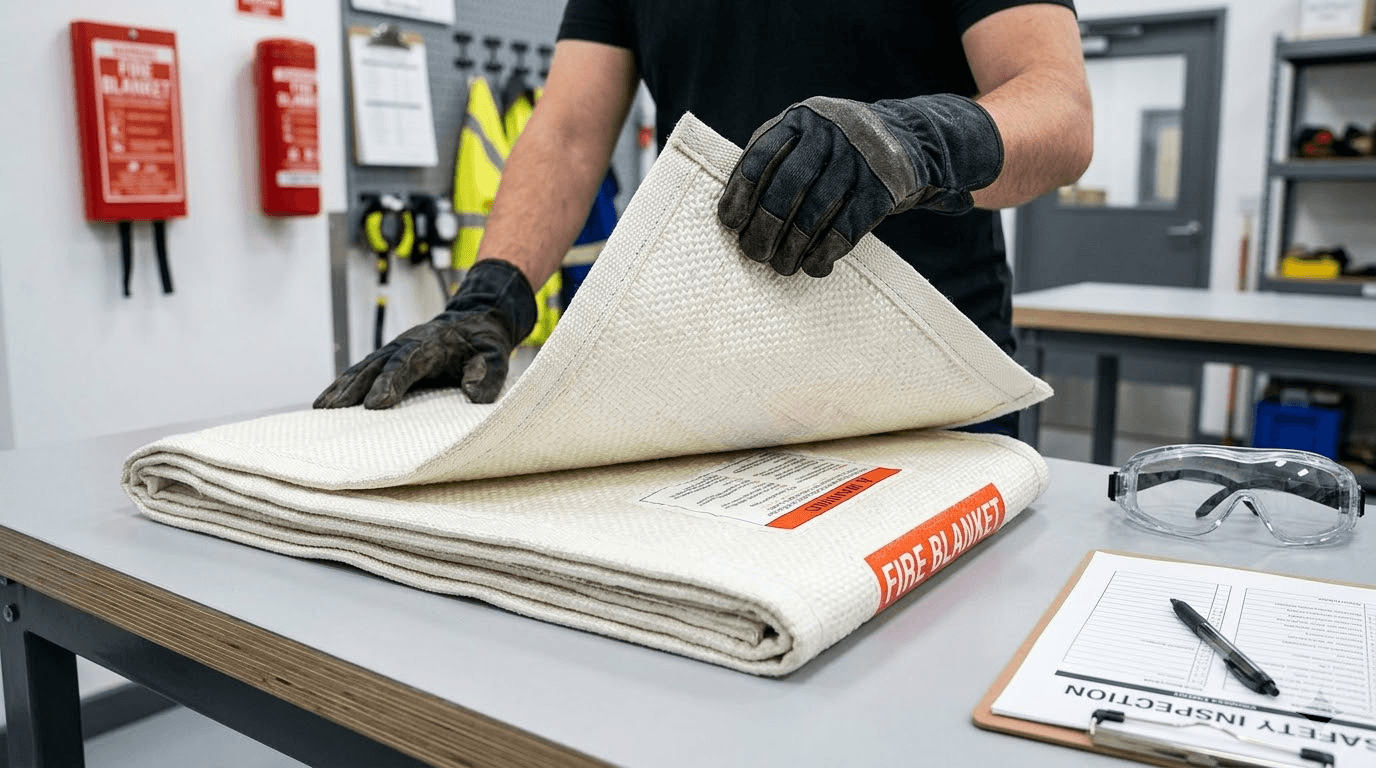
Workplace controls come before a one-size-fits-all PPE list
For repeated workplace handling, address how exposure is generated and controlled. NIOSH’s hierarchy prioritizes eliminating or controlling hazards at the source before relying on procedures and personal protective equipment. PPE selection should follow the workplace hazard assessment and include training in correct use. [5]
That means a generic glove rating or respirator name is not a complete handling plan. The responsible safety professional should consider the task, available product hazard information, and controls needed for the actual exposure. Routine inspection and dusty material processing should not be treated as interchangeable tasks.
What buyers should ask about loose-fiber claims
Before accepting a “low-shedding” claim, ask which finished product was evaluated, how it was handled during the test, and what the result actually measures. A fabric description, coating name, or fire-performance claim is not itself a measurement of fiber release.
Also ask for the selected product’s handling, storage, inspection, and post-use instructions. If those instructions are unavailable, do not invent a cleaning or reuse method from general fiberglass advice.
For a product inquiry, explore our fiberglass fire blanket options and tell us which model or configuration you are considering. Keep the purchasing discussion separate from medical advice or workplace exposure assessment.