
- November 16, 2026
- Posted by: wellcoindustries
- Categories: Erosion Control, Jute Mesh
Whether you can mow an area containing jute netting depends on the installed product’s maintenance guidance, the mower’s operating requirements, and conditions on the ground. Grass growing through the mesh leaves a separate need to check remaining netting and anchors.
Before bringing in equipment, identify the product and inspect for loose strands, lifted edges, exposed anchors, and erosion. Keep the mower outside an affected area while material handling or equipment questions remain unresolved.
Tacoma’s erosion-control guidance warns that residual netting in some blankets can interfere with mowers. Its example concerns photodegradable blanket netting, so identify the material actually installed before applying maintenance advice. 1
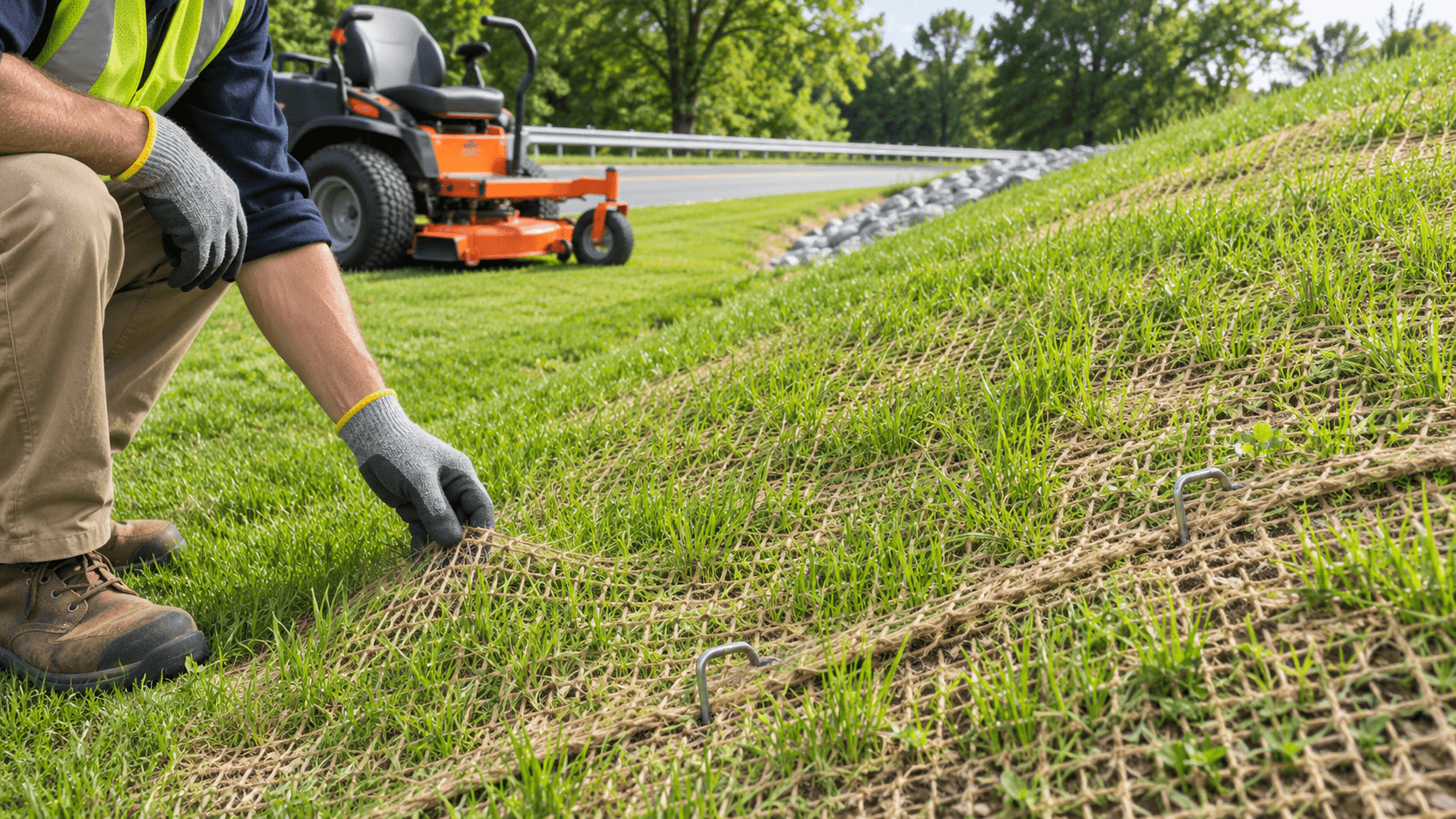
Identify the netting before planning the first cut
Find the roll label, invoice, specification, or installer record. Determine whether the area contains open-weave jute mesh, a straw-filled blanket with a separate net layer, or another product. A label such as “grass netting” leaves the material and construction unclear.
Record the mesh material and any backing, stitching, anchors, or added components. Ask the netting supplier or installer how remaining mesh and anchors should be handled during mowing and at the end of their use. Ask the mower manufacturer about operating restrictions for the identified material and terrain. Where removal could affect slope protection, ask the person responsible for the erosion-control plan how to maintain stabilization. A biodegradable fiber description provides material information. Equipment compatibility still requires its own review.
For mesh placement and anchoring, use the project requirements and our jute netting installation guide. The checks below address preparing for the first mow.
Check the grass and the equipment route separately
Find the first-mowing guidance for your grass species and whether the lawn was seeded or sodded. Check the recommended first-cut height and establishment conditions. Assess remaining netting and anchors separately from those grass-care requirements. Then inspect the route the mower would take, including turning areas, edges, overlaps, and changes in ground level. Grass can conceal remaining mesh or fixing components.
Leave the mower switched off outside the affected area while you inspect it on foot. Look for lifted edges, slack strands, broken mesh, raised anchors, and fresh erosion. Where mesh is installed over specified mulch, check how it follows that intended surface and whether unsupported gaps have developed.
Use this checklist to identify unresolved issues and plan corrective work. Product and equipment compatibility require their own supporting instructions, alongside the site inspection.
| What you find | What to resolve before mowing |
|---|---|
| The installed product or its maintenance instructions are unknown | Identify the product and obtain the applicable mowing or removal instructions before entering the area with equipment |
| Loose strands, lifted edges, or raised fixing components | Keep equipment away and ask the netting supplier or installer which securing, repair, or removal method applies |
| Grass hides the mesh, overlaps, or anchors | Use installation records and accessible inspection points to identify remaining components. Resolve uncertain locations or condition before mowing that area |
| Mesh has shifted or soil has washed out underneath | Address the damaged surface and water path before planning equipment access |
| Mesh is intertwined with established vegetation | Determine the end-of-use method that protects the rooted surface and clears the intended maintenance route |
Tacoma’s maintenance guidance calls for restoring damaged areas and ground contact and correcting poorly controlled water flow. Those checks help identify work needed before maintenance access. 1
Check remaining netting and anchors before adjusting the mower
Check how the selected mower’s deck, wheels, and other exposed components will travel across the inspected surface. Use its operating instructions for cutting height, terrain limits, and pre-operation checks. Follow the installed netting’s maintenance instructions at the same time.
As one equipment-specific example, Toro’s TITAN MAX riding-mower manual requires the operator to inspect the work area and remove objects that could interfere with operation or be thrown. That manual applies to the models it identifies. Use the manual for your own mower when checking the actual site. 2
These sources support residual-material checks and equipment hazard prevention. Compatibility between a particular jute-netting product and mower still requires evidence for that combination.
Does raising the mower deck resolve netting risks?
A higher cutting setting leaves loose mesh, raised anchors, and uneven ground to be assessed against the mower’s actual operating requirements. Check the intended route, including turns and changes in ground level, and address those conditions using the netting guidance and mower instructions before proceeding.
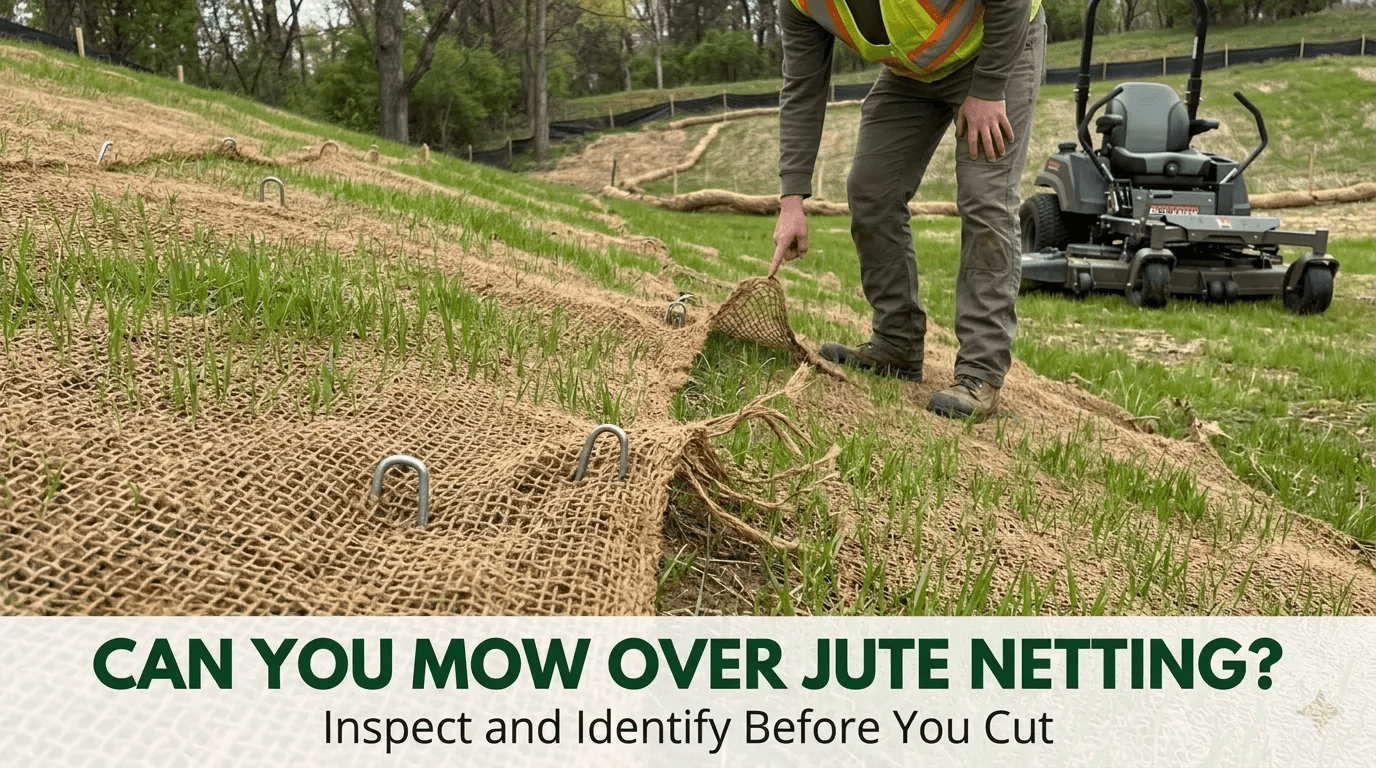
If the mower catches material or behaves abnormally
Stop work and use the mower’s prescribed shutdown and isolation procedure before approaching the cutting system. Wait for moving parts to stop and follow the manual’s requirements for preventing accidental restart before inspection or clearing. Keep hands clear of moving components.
For the cited Toro models, the blade inspection and servicing procedure includes parking on level ground, disengaging the blade-control switch, engaging the parking brake, shutting off the engine, removing the key, and disconnecting the spark-plug wires. Follow the complete inspection or servicing procedure for your own machine before attempting to clear trapped material. Have damage or unresolved entanglement assessed by the manufacturer’s recommended service provider before restarting. 2
Decide how to handle remaining mesh
Review residual mesh and anchors when the site reaches its stabilization goal. In its wildlife-protection guidance, the U.S. Fish & Wildlife Service recommends removing temporary erosion-control products once they are no longer needed. Apply that recommendation alongside the product instructions and site requirements. 3
Where mesh has grown into vegetation, agree on the handling method with the responsible site professional before disturbing the area. Maintain soil protection while resolving material that could interfere with future maintenance. Record any remaining components and the follow-up work needed.
Include maintenance requirements in the product inquiry
If the area will be mowed after establishment, include that requirement when planning the erosion-control treatment. View our jute netting product page and send us your requirements, including the application, area, slope and runoff conditions, planned maintenance equipment, quantity, and delivery location. Our team can review the product options for your requirement.