
- August 20, 2026
- Posted by: wellcoindustries
- Categories: Burlap, Erosion Control
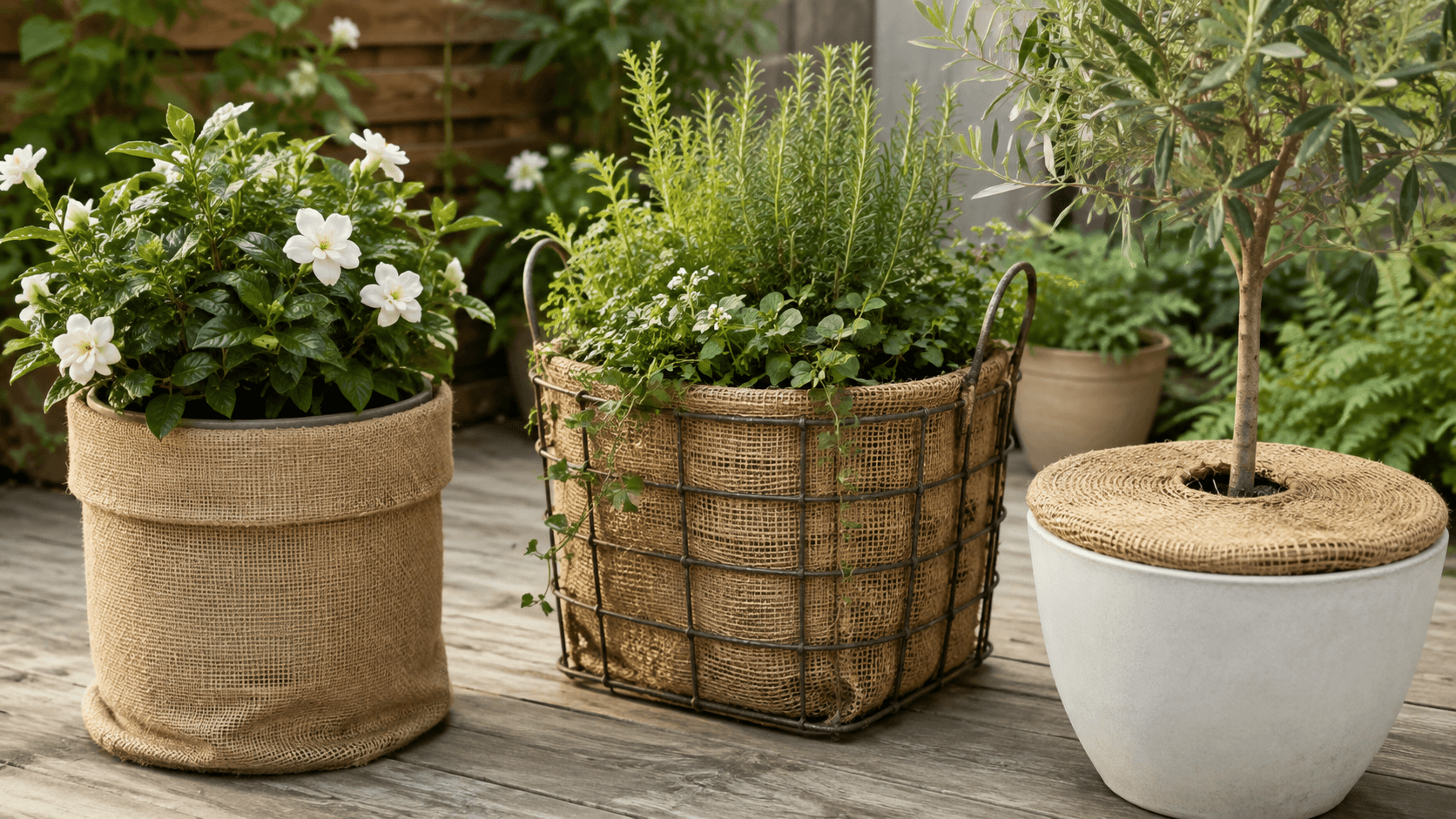
Burlap can be used around planters as a removable outer sleeve, a liner for an open basket or frame, a surface cover, or a temporary project wrap. The right setup depends on what the fabric must do. A decorative cover needs a clean fit and easy removal; a liner must retain growing media without blocking drainage; an outdoor wrap must tolerate wetting, drying, abrasion, and sun exposure.
A burlap pot cover is a piece of burlap fabric placed around an existing planter or used within a supported planter assembly as a removable sleeve, liner, surface cover, or temporary display wrap.
This guide explains how to choose among those uses, what happens when burlap gets wet, and how to decide whether an outdoor cover can stay in service. It does not replace our separate step-by-step winter wrapping guide for potted plants.
Start With the Job the Burlap Must Do
The phrase “burlap pot cover” can describe several different assemblies. Defining the job first prevents drainage problems and helps you specify the correct fabric dimensions.
| Use | What the Burlap Does | Key Design Check |
|---|---|---|
| Removable outer sleeve | Covers the visible nursery or decorative pot | Keep the base removable or open enough for drainage and inspection. |
| Liner for a wire basket or open frame | Helps retain growing media while allowing water movement | Support the fabric so wet soil does not pull it out of shape. |
| Surface cover for specific container applications | Covers part of the growing-medium surface when the container setup calls for it | Keep material away from stems and leave space to check moisture. |
| Temporary project wrap | Provides a natural-texture finish for displays, nursery staging, or landscape installations | Define exposure time, attachment method, and replacement access. |
University of Minnesota Extension includes natural fabric such as burlap among possible mulch materials for sufficiently large containers. Iowa State University Extension also identifies burlap as one possible liner for framed hanging baskets.[1][2] These are different uses: a surface layer, a basket liner, and an outer sleeve should not be treated as interchangeable without checking drainage and support.
Choose a Planter-Cover Configuration
Removable Sleeve Around an Existing Pot
A sleeve is the most flexible option when appearance is the main goal. The plant stays in a conventional pot with its own drainage holes, while burlap wraps around the outside.
Use a removable sleeve when you need to:
- cover a nursery pot for a display;
- add a natural finish to planters for an event or commercial display environment;
- standardize the appearance of mixed container types;
- remove the fabric easily for watering, cleaning, or inspection.
Do not fasten the fabric across the drainage holes. If the pot sits in a saucer, remove accumulated water rather than allowing the lower edge of the burlap to remain submerged.
Liner Inside an Open Basket or Frame
A liner has a structural job as well as a visual one. It must hold growing media while fitting the basket or frame. Before using burlap this way, check:
- whether one layer can retain the selected growing medium;
- whether seams, folds, or overlaps need support;
- where drainage will leave the assembly;
- whether the liner can be replaced without damaging the frame;
- whether the expected service period matches the material and exposure.
Natural-fiber liners can change after repeated wetting and drying. University of Georgia Extension notes that moisture movement, exterior algae or fungal growth, strength when wet, and decomposition rate are relevant considerations for alternative plant-container materials.[3] That does not establish a fixed lifespan for a specific burlap product, but it explains why a liner should be inspected as a working component rather than treated as permanent.
Surface Cover for Specific Container Applications
A loose surface layer can help reduce evaporation and soil splash, but it should not hide the container from routine moisture checks. University of Minnesota Extension advises that most container plants prefer moist, not soggy, growing media and emphasizes keeping containers from remaining waterlogged.[1]
For a surface cover:
- Leave a clear space around stems and crowns.
- Make sure water can enter the growing medium rather than running off a folded or tightly layered surface.
- Lift the cover when checking moisture.
- Remove wet debris that accumulates on top.
- Replace the fabric if it becomes contaminated, matted, or difficult to inspect beneath.
Can Burlap Get Wet?
Yes. Untreated natural burlap can be wetted, but “can get wet” does not mean “waterproof” or “maintenance-free.” A planter system still needs a path for water to enter the growing medium, drain from the pot, and evaporate from exposed surfaces.
Use this wet-weather check:
| Observation | Action |
|---|---|
| Fabric is wet after irrigation or rain but drains and dries | Keep it in place and recheck after conditions improve. |
| Lower edge remains in standing water | Empty the saucer or change the sleeve position. |
| Water runs off folded fabric instead of reaching the growing medium | Reduce layers or move the cover before watering. |
| Fabric stays wet against a finished surface | Lift or remove it to dry and inspect both surfaces. |
| Musty odor, visible growth, or persistent discoloration appears | Remove the cover, clean the surrounding area, and decide whether replacement is more practical. |
| Fabric has stretched, torn, or no longer supports growing media | Replace it before the liner fails. |
Material identity matters. University of Kentucky Extension explains that nursery burlap may be natural jute, synthetic, or a mixture, and that those materials do not behave the same way.[4] Confirm composition and treatment when the application depends on decomposition, prolonged soil contact, or a particular end-of-life method.
Drainage Comes Before Appearance
A burlap planter cover should never correct or conceal a drainage problem. The pot or liner system must work first; the fabric is then fitted around that system.
Before installation, verify:
- the inner pot has open drainage holes;
- no fabric fold covers the outlets;
- saucers can be emptied;
- the planter is stable after the fabric becomes wet;
- the top remains accessible for watering and moisture checks;
- the cover can be removed without lifting or damaging the plant.
Container size and material affect watering frequency, and growing media can become waterlogged when excess water has nowhere to go.[1] Avoid assuming that a breathable-looking textile automatically guarantees adequate drainage.
How Long Does Burlap Last Outside?
There is no reliable single answer for all burlap pot covers. Outdoor service life changes with fiber composition, weave, treatment, UV exposure, rainfall, humidity, soil contact, abrasion, load, and how often the material cycles between wet and dry. A decorative sleeve under cover and a soil-filled basket liner exposed to rain are different service conditions.
Use condition-based replacement instead of a promised number of months or seasons.
Keep It in Service When
- the fabric still holds its intended shape;
- ties and seams remain secure;
- drainage and inspection access remain open;
- there are no tears that affect coverage or support;
- the material dries between wet periods;
- there is no persistent odor or visible contamination.
Repair or Refit When
- a sleeve slips and begins covering drainage outlets;
- ties loosen or edges fray locally;
- folds direct water away from the growing medium;
- the fabric rubs against the pot or supporting frame;
- the assembly is still functional but no longer fits correctly.
Replace It When
- wet fabric has lost enough strength to deform or tear;
- the liner can no longer retain growing media;
- damage prevents secure attachment;
- contamination cannot be removed appropriately;
- the application changes and the existing fabric specification is no longer suitable.
Is Burlap a Good Insulator for Planters?
Do not treat a basic burlap sleeve as rated insulation. The effect of a complete planter-protection system depends on the plant, container, climate, wind, moisture, number of layers, air spaces, and any other insulating materials. Unless a specific assembly has verified thermal data, it should not be assigned an R-value or used to guarantee root-zone temperatures.
If the real task is protecting a potted plant through winter, use our potted-plant winter wrapping guide. That page owns the measuring, wrapping, fastening, drainage, and seasonal inspection process. This page remains focused on planter-cover selection and general outdoor care.
Planter-Cover Specification Checklist
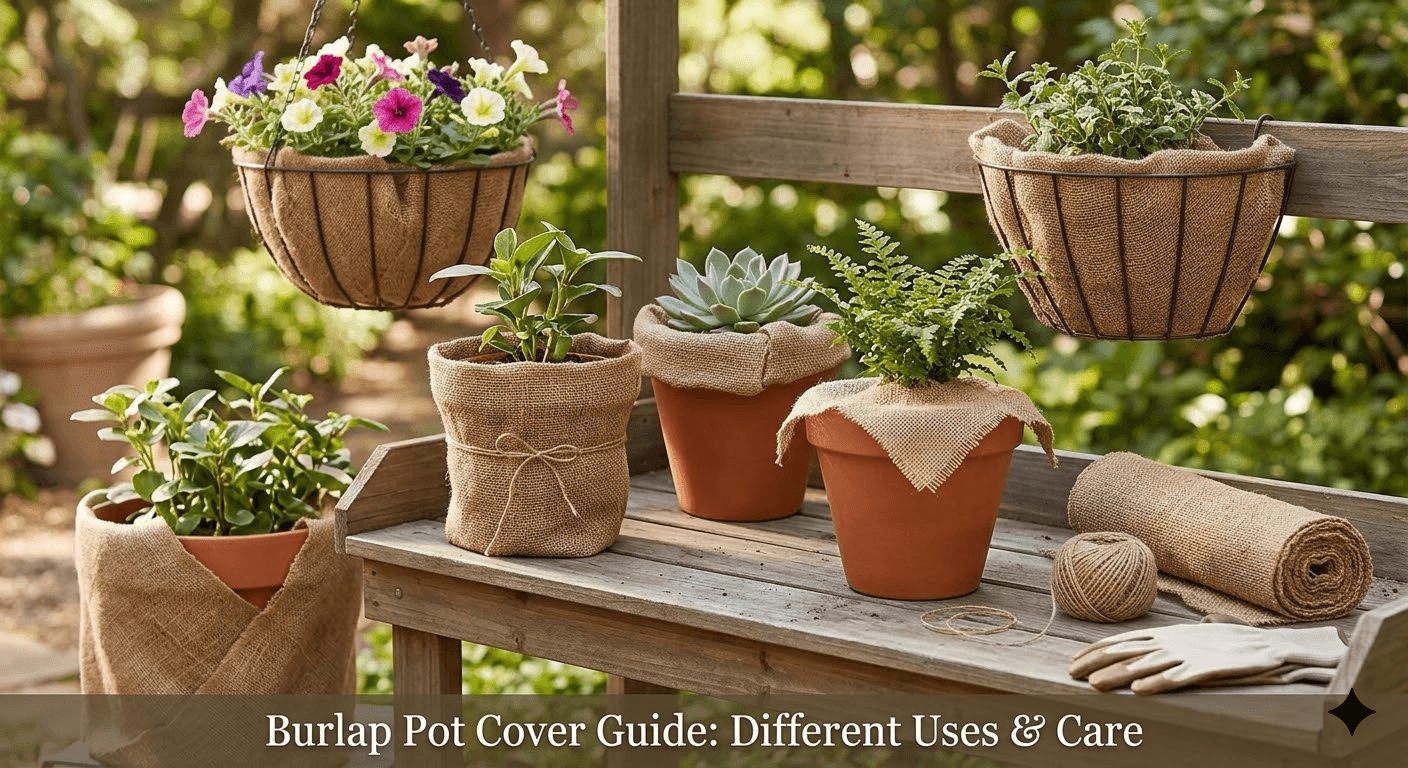
For a repeatable project, record these inputs before choosing roll dimensions or packaging:
| Requirement | Details to Record |
|---|---|
| Intended use | Sleeve, liner, surface cover, display wrap, or another defined use |
| Planter type | Nursery pot, decorative pot, wire basket, frame, or custom container |
| Dimensions | Height, circumference or perimeter, opening size, and number of planters |
| Coverage method | Full wrap, partial wrap, liner, overlap, seams, and fastening points |
| Exposure | Indoor, covered outdoor, open outdoor, irrigation frequency, and likely wetting |
| Material requirement | Composition, weave, fabric weight, treatment, color, and handling needs |
| Functional load | Decorative only or required to retain growing media |
| Drainage | Outlet locations, saucer access, and removal method |
| Quantity and packaging | Number of units, roll lengths, cut-piece needs, and packing requirements |
| Delivery | Destination and required timeline for review |
The checklist separates a visual request from a functional liner request. It also gives our team enough information to review suitable burlap roll options without assuming that one fabric specification fits every planter application.
Frequently Asked Questions
Can I use burlap as a planter liner?
It can be used as a liner in some open baskets or frames, but the assembly must retain the growing medium, drain properly, and remain supported when wet. Match the material and layer arrangement to the basket, media, exposure, and required service period.
Can a burlap cover stay on while I water the plant?
Only if water can reach the growing medium and leave through the pot’s drainage outlets. Remove or reposition any cover that sheds water away from the soil, hides standing water, or blocks access for moisture checks.
Is natural burlap the same as synthetic burlap?
No. Natural jute, synthetic burlap, and blended materials can differ in appearance, behavior, and decomposition. Confirm the composition and treatment instead of identifying the material by color or texture alone.[4]
Can I reuse a burlap pot cover?
Reuse depends on condition. Dry it thoroughly, inspect its strength, seams, ties, cleanliness, and fit, and confirm that it still performs the intended job. Do not promise a fixed number of uses for an unspecified fabric and exposure.
Request Burlap Roll Details for a Planter Project
For nursery, landscape, and commercial display projects, send us the intended use, planter dimensions, quantity, exposure conditions, required fabric specification, packaging needs, and delivery location. We can review suitable burlap roll options for the stated application.
View our burlap fabric rolls or contact our team at [email protected].
References
- University of Minnesota Extension: Fertilizing and Watering Container Plants
- Iowa State University Extension: Creating and Growing Hanging Baskets
- University of Georgia Extension: Alternatives to Petroleum-Based Containers for the Nursery Industry
- University of Kentucky Cooperative Extension: Planting Balled and Burlapped Trees and Shrubs